Dubai’s humid outdoor conditions can make smooth hair puff up when you step outside. To understand how to prevent hair frizz when stepping outdoors in Dubai, let your hair dry at least partly, smooth on a small amount of lightweight serum, and avoid sitting directly beneath strong air-conditioning vents. These simple steps help limit the effects of moisture and repeated indoor-to-outdoor shifts.
If your style looks polished indoors but loses its shape outdoors, you’re not imagining the change. Humidity can make the hair cuticle swell and lift, while moving between air-conditioned rooms and warm outdoor air adds another challenge. A few adjustments to drying, heat styling, and product use can make frizz easier to manage. This guide explains how Dubai’s coastal climate affects your hair, what to do before heading out, and how to build a routine for smoother, more defined results.
Key Takeaways
- Use a soft towel to blot hair, then detangle damp strands gently from the ends upward to limit friction and breakage.
- Reduce repeated heat styling and apply heat protectant before using a blow dryer, straightener, or curling tool.
- Choose a lightweight frizz-control product that suits your hair texture, and avoid applying so much oil that strands feel greasy.
- On humid days, try a loose braid, bun, or low ponytail to help keep your style manageable outdoors.
- When home care isn’t giving you the finish you want, explore a salon hair package or a treatment suited to your curl pattern and styling goals.
1. Will any treatment make my hair 100% frizz-free in Dubai?
No treatment can keep hair completely frizz-free in every outdoor condition. Outdoor humidity can make the hair cuticle swell and lift, contributing to frizz. Strands then absorb moisture unevenly, disturbing a smooth finish and encouraging flyaways. Coastal humidity can peak at 80–90% or higher in August and September, so even carefully styled hair may respond when you step outside.
Your hair’s condition also influences its response. Strands with 10–15% water content respond minimally to ambient humidity, while hair with 5–6% water content can have an extreme moisture deficit. That deficit can cause the cuticle to open aggressively at moderate humidity levels. Dryness and previous damage can therefore shape how hair behaves outdoors, alongside the weather.
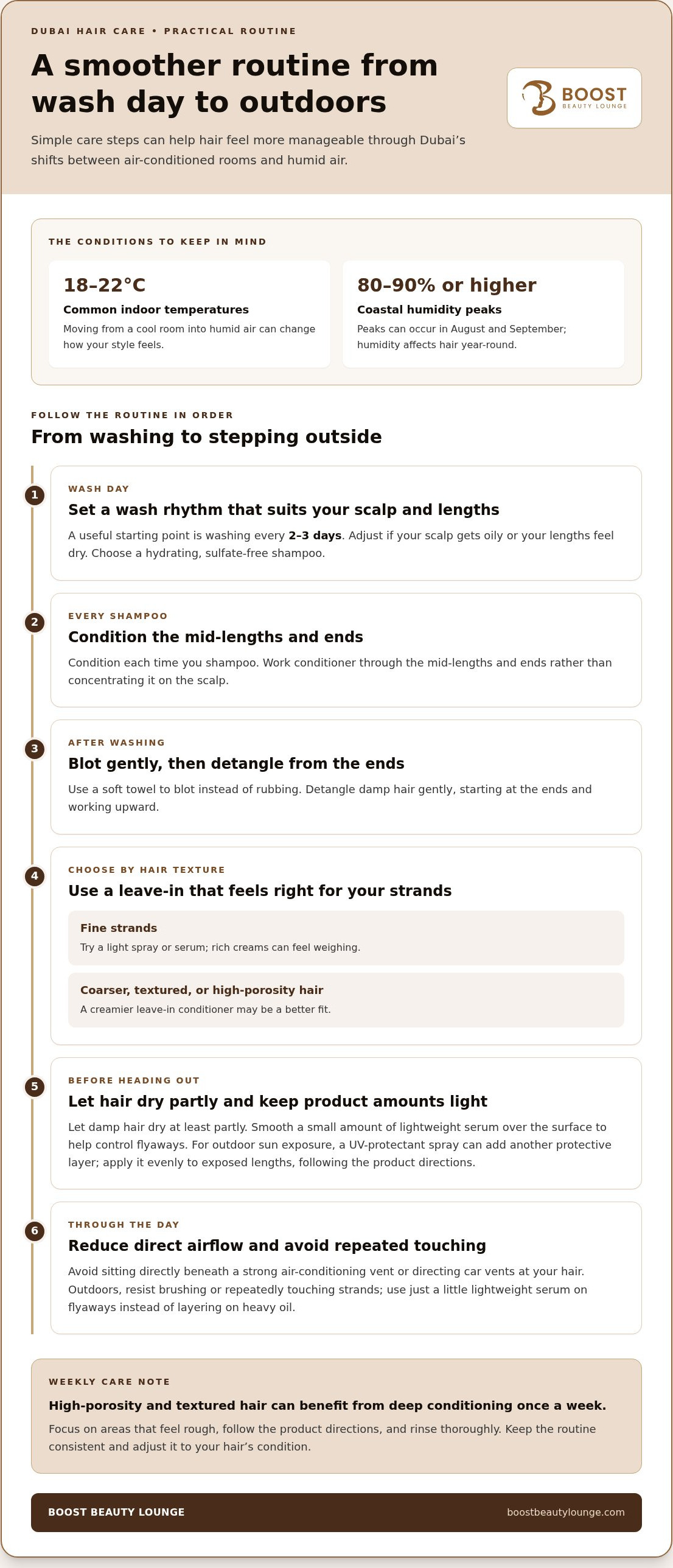
Indoor air-conditioning adds another change. Dubai indoor temperatures are commonly 18–22°C, and moving from a cool room into humid air can alter how your style feels. Before leaving, let damp hair dry at least partly, then smooth a small amount of lightweight serum over the surface. It creates a soft barrier that helps control flyaways. Avoid sitting directly beneath a strong air-conditioning vent.
Which humidity and seasons make frizz worse? Humidity affects hair year-round in Dubai, with coastal peaks of 80–90% or higher in August and September. On humid days, use serum sparingly; too much oil can make strands greasy without smoothing the cuticle. A light curl cream can help manage wavy hair, while leave-in conditioner and curl cream can help define curly edges.
Can keratin or smoothing treatments help, and what are the risks? A smoothing treatment can make hair easier to style, but it cannot block all outdoor moisture. Before choosing one, discuss your hair’s condition, previous chemical processing, natural texture, and desired finish. Consider how the treatment may fit your preferred curl pattern and everyday styling routine. If humidity makes daily styling difficult, Boost Beauty Lounge’s Keratin Package is one salon option to consider.
Which ingredients should you avoid in humid weather? There is no universal ingredient blacklist for every hair type. Avoid layering heavy oils if they leave your strands greasy, and choose a lightweight formula suited to your texture. Where can you buy anti-frizz products in Dubai, and what do they cost? Beauty retailers, pharmacies, and salon counters carry hair products; prices vary by brand, formula, and size.
A practical routine for how to prevent hair frizz when stepping outdoors in Dubai starts with noticing how your hair reacts after you leave home. Use what you observe to adjust the product amount or style instead of adding several products at once. The best steps are manageable and suited to your hair’s texture and condition.
2. Dubai's changing indoor and outdoor conditions
Dubai days often move between cool, air-conditioned rooms and humid outdoor air, and each change can affect how your hair feels and behaves. Air conditioning may leave strands feeling dry, while outdoor moisture can make them swell and lose definition. Instead of adding product at every transition, keep your routine simple: condition after washing, dry gently, then apply a lightweight leave-in before heading out. It can help hair feel smoother through daily changes.
Choose a leave-in based on your hair’s texture. Fine strands can feel weighed down by rich creams, so try a light spray or serum. Coarser, textured, or high-porosity hair may benefit from a creamier leave-in conditioner. For outdoor sun exposure, a UV-protectant spray can add another protective layer. Apply it evenly before leaving, following the product directions, and focus on exposed lengths. These products can help manage moisture shifts, but they do not make hair immune to humidity.
Air-conditioned comfort doesn’t require sitting with your hair directly beneath a vent. If a steady stream of cold air hits one section, move away or change your parting. At your desk or in the car, avoid directing vents at your hair. After stepping outdoors, resist brushing or repeatedly touching your strands. Instead, smooth flyaways with a small amount of lightweight serum. This helps limit friction and preserve your style without layering on heavy oil.
Build a wash routine around your scalp and hair condition. A useful starting point is washing every 2–3 days, then adjusting if your scalp gets oily or your lengths feel dry. Use a hydrating, sulfate-free shampoo, and condition each time you shampoo. Work conditioner through the mid-lengths and ends rather than concentrating it on the scalp. After washing, blot with a soft towel instead of rubbing. Detangle damp hair gently, starting at the ends.
High-porosity and textured hair can benefit from deep conditioning once a week. A mask with proteins and lipids supports the hair’s internal structure, while a moisture-rich weekly mask can help dry lengths feel softer. Apply conditioner or a mask as directed, focusing on areas that feel rough, then rinse thoroughly. Consistency matters more than switching products after every humid day. Give your routine time to show how your hair responds to Dubai’s indoor and outdoor conditions.
Keep the routine practical: condition after each wash, use a suitable leave-in before going outdoors, and deep condition weekly if your hair is high-porosity or textured. If your ends feel dry but your roots become oily, apply leave-in only from mid-lengths downward. When moving between a chilled office and outdoor errands, carry a small serum and use just a little on flyaways. This measured approach helps keep strands manageable without a heavy finish.
3. Air drying and reducing heat exposure
Air drying can reduce your reliance on hot tools, which matters in Dubai’s hot climate. Intense heat can accelerate moisture loss from the hair shaft, leaving strands drier and more brittle over time. That dryness can make frizz harder to control. After washing, let your hair dry naturally when your schedule allows, and avoid using a hot tool just to smooth small flyaways.
Start with damp hair, not dripping lengths. Use your fingers or a wide-tooth comb to detangle from the ends upward, then arrange strands into the shape you want. For waves, gently scrunch sections; for straighter hair, smooth them into place without repeated brushing. Allowing hair to dry at least partly before going outdoors may make frizz easier to manage. If you need a blow dryer, rough-dry to 80% before styling, rather than beginning with soaking-wet hair.
Air drying isn’t always the fastest option, especially when you’re getting ready to leave. The aim is to reduce unnecessary heat exposure, not to force one method on every hair type. If your roots remain damp, direct the dryer at those areas first and keep the airflow moving. Avoid holding hot air on one section. Uneven drying can leave some strands damp while others get more heat, making the final texture less consistent.
Heat styling can create a smooth finish, but repeated use may leave hair more vulnerable to dryness and breakage. Give your strands a rest between hot-tool sessions and choose a lower-heat styling method when it achieves the look you want. For example, shape damp hair with a loose braid instead of curling every section. Apply heat protection before blow-drying, straightening, or curling, as explained in the next section.
Cooling matters after a curl leaves the barrel. Hold each curl in your palm for 15 seconds, then leave it undisturbed while it cools. Hair bonds take 60–90 seconds to fully reform as hair cools after heat styling. Touching or separating curls too soon can disturb their shape. Wait at least 3 minutes after styling before handling them, then separate gently with your fingers if needed.
For a practical routine, rough-dry to 80%, style only the sections that need shaping, and let each curl cool before touching it. If your hair is already dry or feels brittle, skip another pass with the iron and use a loose braid or bun instead. These choices reduce repeated exposure while helping your finish stay smooth. Air drying won’t prevent every humidity response, but it can avoid adding heat-related dryness to the challenge.
4. Heat protection and styling temperature
Protect hair from Dubai’s heat, sun, and humidity in three ways: apply heat protectant before using hot tools, limit styling temperature, and cover your hair during peak sun hours. A hat, scarf, or UV-protective hair product can help protect strands outdoors, particularly if your hair is colour-treated or chemically processed.
Apply heat protectant before blow-drying, straightening, or curling. Use it as directed and distribute it through the sections that will meet the tool. It can help protect hair from heat exposure, but it does not make repeated high-heat styling harmless. If you use several tools in one routine, apply protection before the first one and avoid unnecessary passes over the same section.
Keep hot tools at a maximum temperature of 180°C unless absolutely necessary. Choose the lowest setting that shapes your hair type, and move the tool steadily rather than holding it in one spot. Repeated heat can make hair more porous, so avoid straightening every day. For example, alternate a straightened look with a loose braid or bun to reduce how often your strands meet direct heat.
Drying technique matters, too. Rough-dry hair to 80–90% before finishing with a blow dryer, then make sure it’s 100% dry before styling. Damp sections can respond unevenly to heat, so part the hair and dry each area thoroughly. Keep the dryer moving rather than concentrating hot airflow on one patch. This sequence helps you avoid repeatedly applying heat to strands that still feel damp.
Sun protection is part of frizz control. UV rays can break down hair proteins that support strength and elasticity, and degrade colour pigments. During peak sun hours, wear a hat or scarf, or apply a UV-protective hair product as directed. A head covering also limits direct exposure to sun and wind. Choose a style that keeps lengths tucked away, especially if your hair is colour-treated or chemically processed.
Try a loose braid, bun, claw clip style, or sleek low ponytail before outdoor errands. These styles reduce exposure and friction on especially humid days. Avoid pulling your hair tightly; keep the tie comfortable and loosen it when you’re indoors. For overnight protection, a silk or satin pillowcase can reduce friction that contributes to frizz and breakage. A satin scrunchie is another gentle way to secure a loose style.
Make the routine fit your hair type and plans. On a day involving blow-drying and curling, apply protectant first, keep the tool at or below 180°C, and let each curl cool before handling it. For a long outdoor stretch, choose a protective style and headwear instead of relying on styling products alone. These steps won’t block every effect of Dubai’s weather, but they help limit avoidable heat and sun exposure.
5. Dubai's coastal climate and outdoor frizz
Near Dubai’s coast, humid air can challenge a finished style as soon as you step outdoors. At humidity of 80% or more, a smooth blowout or defined curls may lose shape quickly. The practical takeaway is to plan for movement and moisture, not just the mirror finish you see indoors. On a coastal outing, choose a style that can still look intentional if strands soften or expand.
Before leaving, decide how much of your hair you want exposed. A loose braid, bun, claw clip style, or sleek low ponytail can keep lengths together and reduce friction from wind. These styles don’t stop humidity, but they limit how freely strands move and tangle. Keep the tie comfortable rather than tight, and tuck dry ends into a bun if you’ll be outside for longer.
For a loose style, smooth a small amount of lightweight serum over flyaways before you go. On especially humid coastal days, avoid repeatedly adding oil; too much can make strands greasy without smoothing the cuticle. If you’ll be outdoors for several hours, carry a small amount of your chosen product and use it sparingly on flyaways. Aim for a flexible finish, not a stiff coating that makes hair feel heavy.
Swimming adds another coastal challenge. Salt or pool water can affect coloured hair, so rinse with fresh water before and after swimming to help preserve colour vibrancy. Once you’re out, blot rather than rub, then gently detangle damp lengths from the ends upward. If you’re not swimming, a scarf or hat can reduce direct sun and wind exposure while keeping your hair gathered.
Protect your style overnight, too. A silk or satin pillowcase can reduce friction that worsens frizz and breakage. Don’t sleep with wet, loose hair; it can tangle, flatten, or become frizzy overnight. If you wash after a beach or pool visit, dry your hair before bed and loosely secure longer lengths. This gives your next morning routine a smoother starting point.
Use the weather shift as a styling cue. For a coastal lunch, set curls or smooth hair indoors, let the style cool, then gather it loosely before heading out. Pack a claw clip for a quick change if the finish starts to soften. At humidity of 80% or higher, accept that flexible texture may hold better than a rigid, perfectly straight look. A touchable braid or low bun can remain polished even as the air changes your hair.
Choose your approach around the outing: keep hair gathered for a long walk, protect coloured lengths when swimming, and avoid sleeping on wet strands afterward. If Dubai’s coastal humidity keeps disrupting your finish, explore hair care options for frizz-prone hair and find a routine suited to your texture.
Boost Beauty Lounge offers hair packages for anyone looking to complement an at-home frizz routine with salon care. If humidity keeps disrupting your finish, the Keratin Package may suit your interest in smoothing treatments. For curls that need shape-focused care, consider the Curl Package. The Hair Extension Package offers another option for a hair transformation. Each serves a different styling goal, so consider your natural texture, preferred finish, and how you usually wear your hair outdoors in Dubai.
Pairing a salon choice with gentle drying and heat-conscious styling can help you build a routine around your hair’s needs. Explore the available options at Boost Beauty Lounge’s website or contact Boost Beauty Lounge to learn more.
Make your next hair day your own
A personal approach to how to prevent hair frizz when stepping outdoors in Dubai starts with noticing what your hair does after you leave home. Does it lose definition, feel rough at the ends, or puff around the crown? Use those clues to adjust one part of your routine at a time. A lighter finish, a different way of gathering your hair, or less frequent heat styling may suit your texture better. Keep the steps that leave your hair comfortable and manageable, and drop those that feel heavy or difficult to maintain.
If you’d like salon guidance as you shape a routine around your hair and preferred finish, contact Boost Beauty Lounge. Your next step can be simple: choose an approach that feels like you, then head outdoors with confidence.
Frequently Asked Questions
Ready for Smooth, Sleek, Weather-Proof Hair?
You can aim for smoother, more manageable hair, but no style can stay completely unchanged in Dubai’s humid outdoors. Choose a finish that suits the day: defined curls can soften naturally, while a loose braid can stay presentable as strands shift. If maintaining a perfectly straight look takes repeated heat, consider whether a softer style may be easier to wear comfortably indoors and outdoors.
So, Why Does My Hair Go Frizzy As Soon As I Leave the House?
Outdoor moisture can affect the hair surface after it has felt smooth indoors. Notice where frizz appears first, such as the hairline, crown, or ends. That pattern can help you identify whether an area needs gentler handling or a different product amount. For example, if the ends puff up first, focus styling product there rather than adding more at the roots.
Why Does Frizz Happens?
Frizz happens when strands lose a smooth, aligned shape and respond unevenly to moisture, friction, or damage. Rubbing roughly with a towel or brushing frequently can disturb the hair surface, while dryness may make the effect more visible. Notice what happens after washing: if your hair expands after you rub it dry, change that step first. If flyaways appear after brushing, try smoothing them with your fingers instead.
Will any treatment make my hair 100% frizz-free in Dubai?
No treatment can promise completely frizz-free hair in every outdoor condition. Smoothing treatments can make hair easier to style, but results depend on your hair’s texture, condition, and previous processing. Before choosing one, explain your usual styling routine and the finish you want. Ask how the treatment may affect your natural curl pattern, and consider whether you want to preserve that pattern or reduce daily styling effort.
Why does hair frizz when stepping outdoors in Dubai’s humid weather?
When hair meets humid air, strands can take up moisture unevenly and lose their smooth arrangement. The change may be more noticeable on exposed lengths than beneath a gathered style. Compare how your hair behaves on a day spent mostly indoors with how it looks after outdoor errands. That can help you adjust your hairstyle for the day instead of layering on product whenever frizz appears.
Which anti-frizz products work best in Dubai humidity?
The most useful product depends on your texture and the finish you want. Fine hair often needs a lighter touch, while curls may need a product that supports their shape. Start with one product rather than combining several at once. Apply it to a small section first, then see whether your hair feels smooth, weighed down, or greasy. This makes it easier to adjust the amount or formula.
How should you style and dry hair before going outdoors in Dubai?
Choose a style that can handle changes in texture. After washing, blot rather than rub, detangle gently, and let your hair dry before heading out. If you use a hot tool, apply heat protectant first and avoid repeating passes over the same section. On a busy day with outdoor stops, a braid or low ponytail can be easier to maintain than a style that needs constant smoothing.
Do leave-in conditioner, serum, or anti-humidity spray prevent frizz best?
Each product serves a different purpose, so the best choice depends on your hair. Leave-in conditioner can suit lengths that feel dry; serum can help smooth visible flyaways; and an anti-humidity spray is another option before going outdoors. Follow the product directions and start with a modest amount. If your hair feels coated or limp, use less or try a lighter formula rather than adding more.
Ready to book this look?
See this package