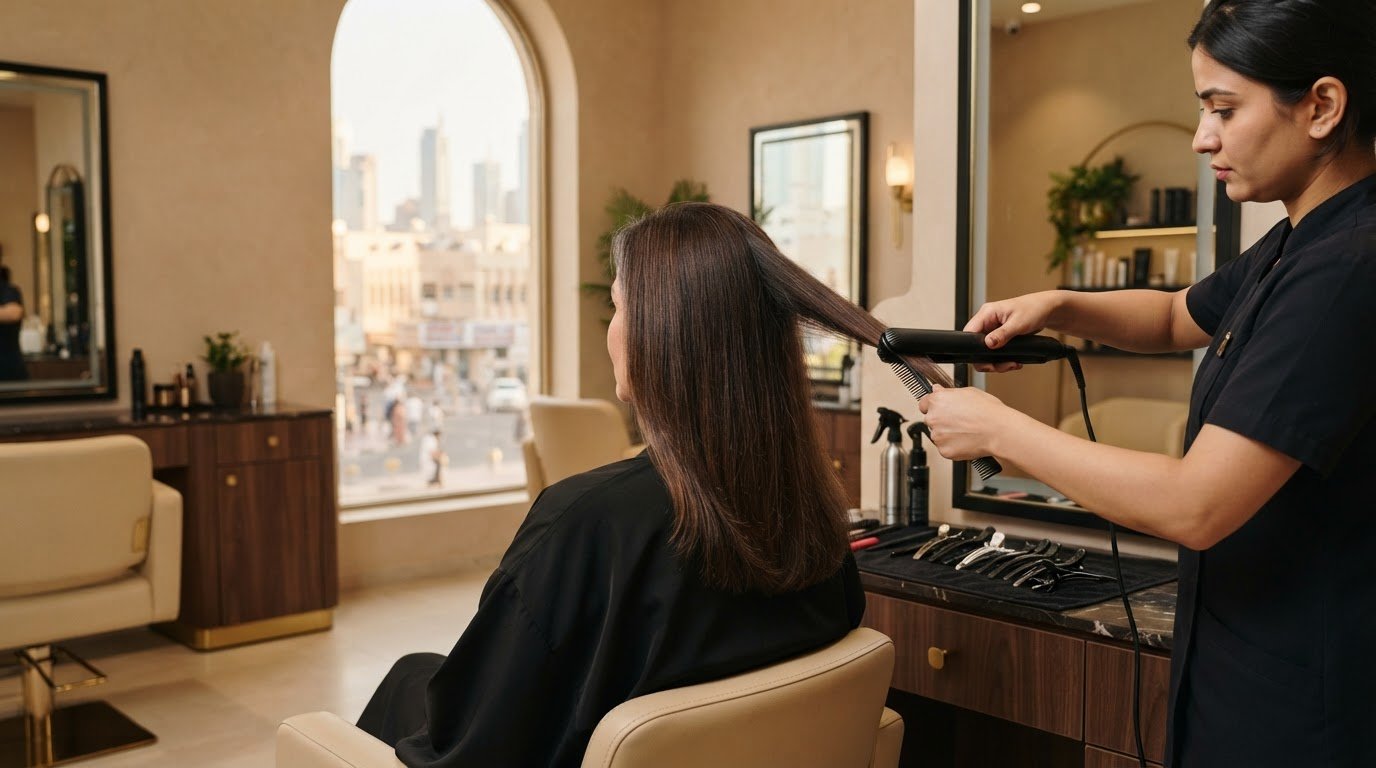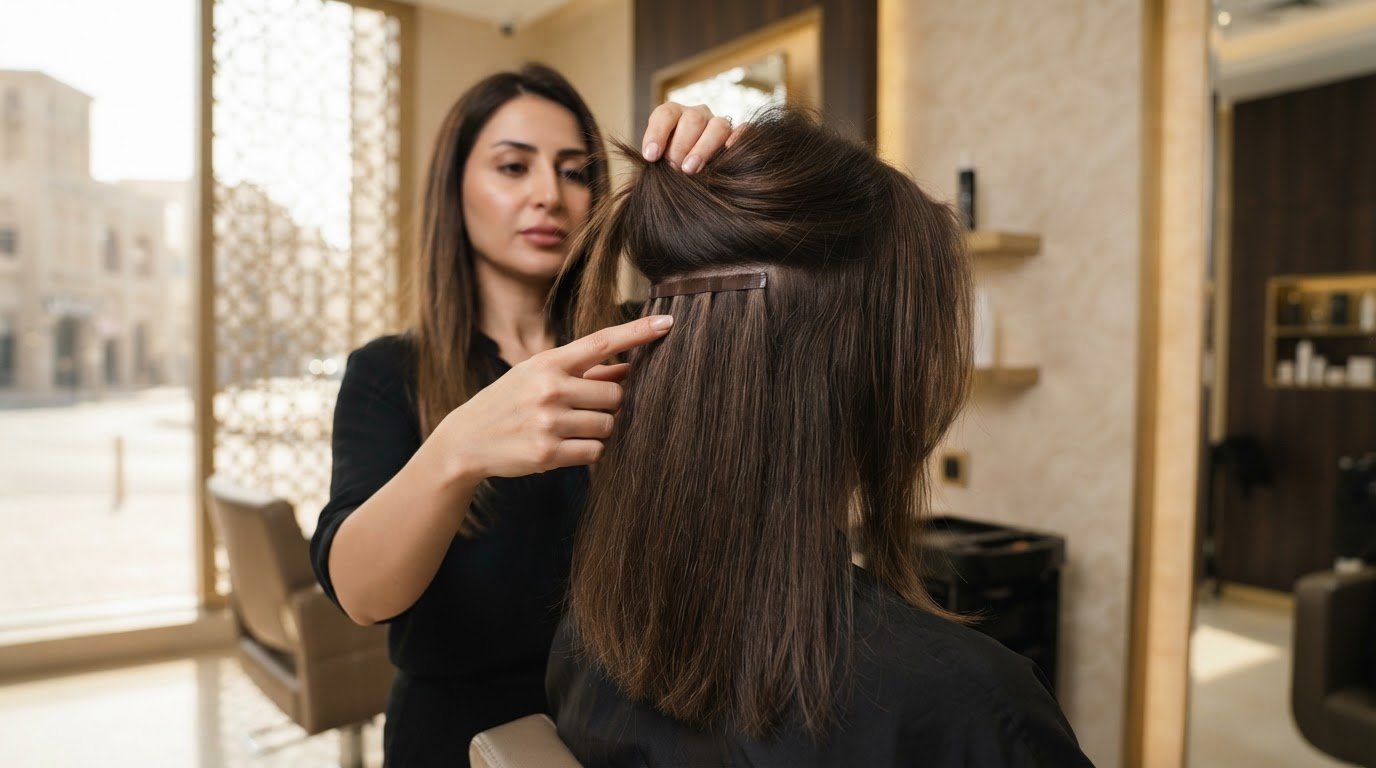
Fine hair doesn’t automatically rule out extensions. Natural volume hair extensions for fine crowns in Dubai may suit you if your natural hair can support the chosen method and added weight. The right approach depends on your hair’s condition, the volume you want and the care required.
A fuller look doesn’t have to mean extra length. Extensions can be selected close to your current length and placed through the mid-lengths and crown to add visible density while preserving your overall length. The key is matching placement and the amount of added hair to your natural coverage.
This guide explains how a professional assesses fine hair, which extension approaches may work for targeted crown volume, and when extensions may need to wait. You’ll also learn how to weigh volume against added length and understand the ongoing care involved, so you can make an informed choice for your hair.
Key Takeaways
- Fine hair can suit extensions when the method, placement and added weight match its condition and density.
- Learn how tape-ins, bonds and micro rings differ, and why some attachment methods may put extra stress on delicate strands.
- For fuller-looking hair without added length, extension strands can be chosen to blend with your current length and placed where you want more density.
- A professional assessment considers hair strength, scalp condition, breakage, coverage and your preferred result before recommending an approach.
- Extensions add cosmetic volume, but active hair loss or fragile hair may mean postponing them is the better choice.
Are Hair Extensions Suitable for Fine Hair?
Fine hair may suit extensions when its condition, density, desired volume and attachment method are considered together. Fragile hair, active or unexplained hair loss, or an irritated scalp can make extensions unsuitable for now, because attachments may add tension to delicate strands.
Natural-Looking Volume for Fine Hair
Natural-looking fullness comes from matching added hair to your existing density and placing it selectively. For example, a professional may add strands near sparse sides or through the mid-lengths rather than creating a heavy layer across the crown. The result should blend with your natural hair as it moves.
Hair selected near your current length can add body without making your hairstyle longer. A light application also helps avoid excessive weight, which matters when fine roots have less hair to support attachments. See how hair extension application can be shaped around the volume you want.
Choosing a Method for Thin Hair
Method choice starts with your natural hair’s condition and the area needing coverage. A halo uses one piece attached to a clear wire, which your natural hair can cover. Nano bonds are another option used for fine hair, with a light application intended to protect the roots.
Placement matters as much as the method. Bonds sit beneath the top layer to reduce visibility, while selective placement can target a sparse area instead of adding weight everywhere. The professional considers whether your hair can conceal each attachment and support its weight without undue tension.
Clip-In Fullness and Fragile-Hair Risks
Clip-ins offer a temporary way to create a fuller look, but repeated application and removal can stress thin hair. They may also loosen unexpectedly and contribute to breakage. For fragile strands, this repeated pulling can make clip-ins a poor match, even if the added fullness looks appealing at first.
A sensitive or irritated scalp needs careful consideration before attachments are applied. Scalp irritation or inflammation, severe breakage, very fragile hair, and active or unexplained hair loss are reasons to postpone extensions. When your scalp is uncomfortable or strands are already breaking, attachment tension may add further stress.
Natural-Looking Bonds and Results
Bonded extensions can look discreet when their size, placement and weight suit your hair. Nano bonds are used for fine hair to keep added volume light; heavy bonds can show and pull on delicate strands. A professional places attachments beneath the top layer, where surrounding hair helps conceal them.
The goal is balanced density, not simply adding as much hair as possible. A few well-placed strands can soften sparse ends or balance an uneven haircut, while excessive weight may create visible bonds or uncomfortable tension. The finished look depends on blending attachment areas with your natural coverage and chosen style.
Tape-in, clip-in, keratin bond and micro ring methods
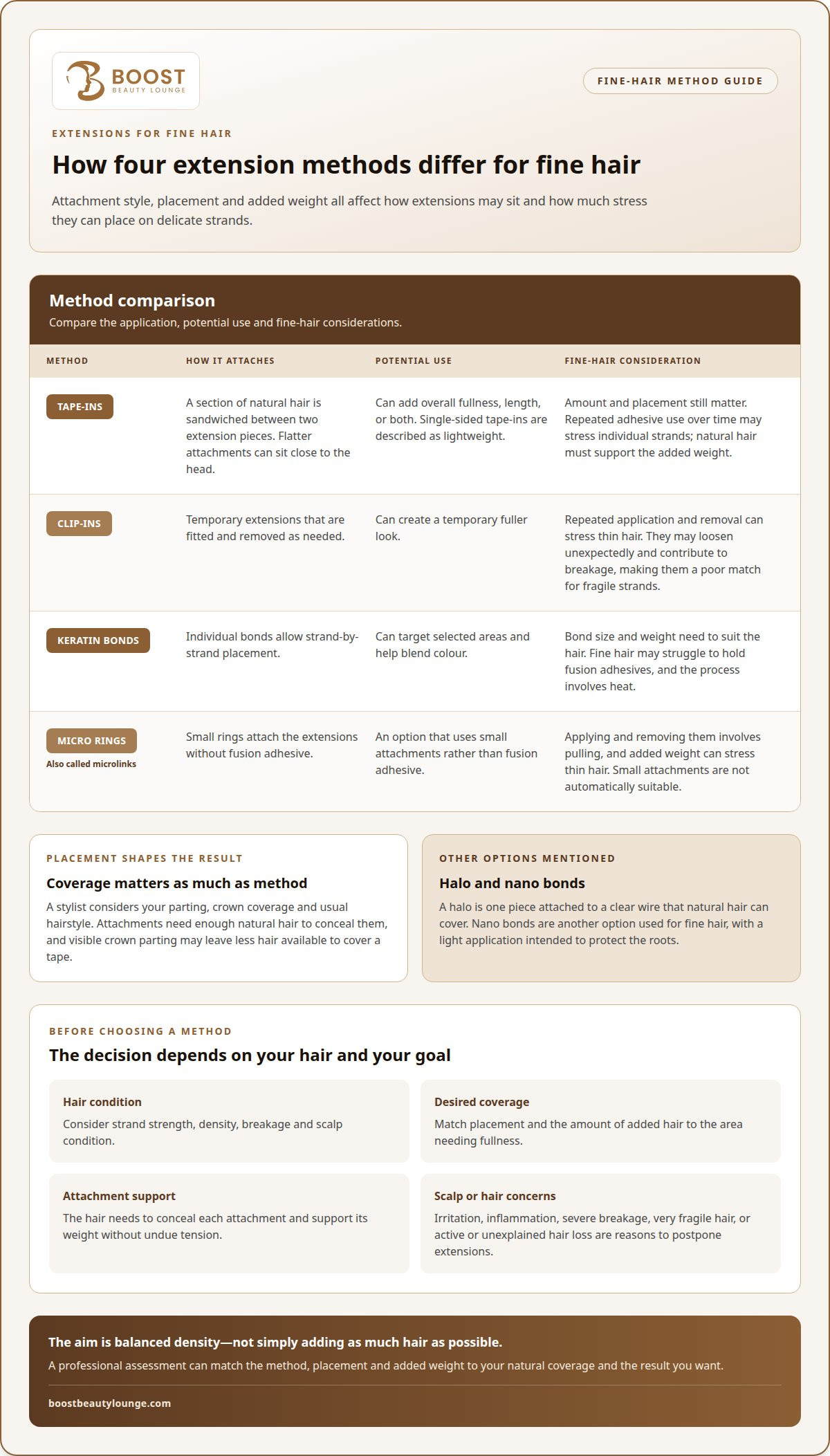
Each attachment method affects how extensions sit, move and distribute weight. For fine hair, the choice depends on the coverage you want, your natural hair’s strength and how often you’ll wear the extensions.
Tape-In Extensions for Overall Volume
Tape-ins can add overall fullness, extra length or both. A stylist applies them by sandwiching a section of natural hair between two extension pieces. Their flatter attachments can sit close to the head, helping the added hair blend beneath the top layer.
For fine hair, single-sided tape-ins are described as lightweight. That lighter feel may suit a look focused on volume, but the amount and placement still matter. Repeated adhesive use over time may stress individual strands, so a professional weighs the coverage you want against your natural hair’s condition.
Lightweight and Discreet Tape Placement
“Invisible” tape-ins depend on careful placement and enough natural hair to cover each attachment. A stylist considers your parting, crown coverage and hairstyle, then positions tapes to keep them concealed as you move. A flatter attachment can help, but it won’t be invisible in every placement or on every head of hair.
For example, a visible crown part may leave less hair available to cover an attachment than a lower placement. Sectioning and your usual styling therefore affect the result. Tape-ins are often considered for overall volume or relatively quick installation, but your natural hair still needs to support their weight.
Clip-In, Keratin Bond and Micro Ring Options
Clip-ins can create temporary fullness, but repeated fitting and removal may stress thin strands. They can also loosen unexpectedly and contribute to breakage. For fragile hair, the repeated pulling may outweigh the convenience of removing them.
Keratin bonds allow individual placement, which can help a stylist target selected areas and blend colour. Bond size and added weight need to suit your hair. Fine hair may struggle to hold fusion adhesives, and the process involves heat, so this method may not suit every delicate head of hair.
Micro rings, also called microlinks, attach extensions without fusion adhesive. Applying and removing them involves pulling, and the added weight can stress thin hair. A professional considers strand strength and placement before choosing this method, rather than assuming a small attachment is automatically suitable.
Match the Method to Your Goal
For broad fullness, tape-ins offer a flatter attachment; for targeted placement, individual bonds allow more control. Clip-ins provide temporary change, while micro rings use small attachments but can still add tension. The hair extension service is a natural next step when you want a professional to match the method to your volume goals and hair condition.
Adding volume without extra length
Extensions can add visible density without changing your overall length. For natural volume hair extensions for fine crowns in Dubai, a professional selects strands close to your current length and places them in areas needing fullness, such as the crown or mid-lengths. The goal is a balanced shape, not a longer silhouette.
Colour blending starts by comparing extension shades with your hair from roots to ends. One shade may not match hair with lighter ends or dimensional colour. For example, darker roots and warmer mid-lengths may call for a blend that follows both tones instead of matching only the ends.
Texture matters, too. Straight extensions can look disconnected beside naturally wavy hair, especially through the crown. A stylist considers how your hair falls in your usual style, then matches the added strands as closely as possible. This helps the extra fullness move naturally with your hair.
Placement is planned around the areas where density is most visible. For a fine crown, attachments need enough surrounding hair for concealment. Adding strands through the mid-lengths can create a fuller outline without placing every attachment at the crown. The stylist balances coverage with the weight your natural hair can support.
Length selection shapes the finish. Choosing extensions close to your existing length keeps the silhouette familiar while adding density to sparse ends or a flat area. If your haircut has layers, the professional considers where they fall and blends added strands into the shape to avoid a blunt, separate edge.
Your styling plans influence the match. A centre part, side part or frequently tied-back style changes which attachment areas may show. The stylist considers your usual parting and preferred finish, then places strands to suit that look. Heat styling is also considered alongside extension texture and your care routine.
Some tape-in systems are designed for reuse, but this depends on the system and its maintenance. The professional considers attachment type, your natural hair’s condition and your care schedule before planning future use. Reuse shouldn’t be assumed for every method. In Dubai, outdoor time and frequent styling can also shape day-to-day care.
A tailored plan brings shade, texture, length and placement together. The stylist identifies where added density will make the clearest difference, then selects strands that complement your current shape. Choosing natural volume hair extensions for fine crowns in Dubai means focusing on a fuller-looking crown while keeping your length unchanged.
Consultation and extension method recommendations
A focused consultation connects your desired crown coverage with what your natural hair can support. The professional assesses hair strength, strand thickness, scalp condition and styling habits before recommending a method. Each detail informs placement, attachment size and the weight selected for the finished look.
What the Professional Assesses
The assessment covers individual strand thickness, overall density, elasticity, breakage, hairline, parting and scalp condition. Previous colouring or bleaching matters because processing can affect how well your hair supports attachments. The professional discusses recent or active hair loss, your usual hairstyles, and whether you want volume, length or both.
These checks guide the plan. For example, a defined parting may limit where attachments can be concealed, while breakage around the hairline can rule out placement there. The professional also considers your preferred finish, such as wearing your hair straight, wavy or tied back, before choosing attachment locations.
Comparing Methods for Fine Hair
Method recommendations balance attachment visibility, weight, placement control and installation technique. Halo, hand-tied and tape-in extensions can be options for thin hair, while nano-ring extensions offer individual placement without adhesive or heat. Hand-tied extensions can lie flat against the scalp with straight or wavy styles.
For targeted coverage, the professional compares how each method suits the area needing density. Nano rings have small attachment points; tape-ins offer flatter attachments; and a halo uses a clear wire covered by natural hair. The best fit depends on concealment, hair condition and the look you want, not simply the method’s name.
Cold-Application Options and Targeted Placement
Ice extensions may suit clients seeking small attachment points, customised strand weight or precise placement. Their cold installation method can be considered for added volume or length in selected areas. This makes them a special option to discuss when the plan calls for focused coverage rather than uniform fullness.
Nano rings also allow individual strand placement without adhesive or heat, with professional adjustment and maintenance. The consultation compares these features with your hair’s strength and the areas needing support. For example, a sparse side area may call for precise placement, while broader coverage may need a different layout.
When to Postpone Extensions
Extensions should wait if you have active or unexplained hair loss, severe breakage, very fragile or overprocessed hair, or scalp irritation. Insufficient density to hide attachments, hair unable to support the required weight, and an unassessed scalp or hair condition also affect suitability. In these cases, postponement helps protect natural hair from avoidable strain.
By the end of the consultation, the professional has matched your goal with your hair’s condition, parting and care routine. This clear plan sets the method, placement and maintenance approach before any extensions are applied.
Volume extensions for fine, flat or thinning hair
Fine or thinning hair can gain cosmetic fullness from carefully selected extensions. For natural volume hair extensions for fine crowns in Dubai, the priority is targeted placement and an amount of added hair that avoids excessive weight. Extensions change appearance, but they don’t address the underlying causes of thinning or hair loss.
Natural Crown Volume Without Added Weight
Lightweight, selectively placed strands can add visible density without changing your overall length. A professional can focus on sparse sides, a thin perimeter or selected areas instead of adding hair across your entire head. Placement and strand weight should suit your natural coverage, haircut shape and preferred finish.
CombLine extensions may be considered for low-density areas, hairline gaps and targeted volume where larger attachments could show. For example, a client with sparse sides may need focused coverage there, while someone with fine ends may benefit from a fuller perimeter. Extensions add cosmetic volume, not a treatment for thinning.
Salon Specialization in Fine or Thinning Hair
A salon experienced with fine or thinning hair tailors placement to density, breakage, parting and scalp condition. The professional assesses where attachments can be concealed and how much weight your natural hair can support. These considerations help distinguish a targeted volume plan from one designed mainly to add length.
For example, someone with a fine crown but fuller sides may need focused placement near the crown, not uniform additions. A professional plan can also address an uneven haircut by adding density where the outline looks unbalanced. Natural volume hair extensions for fine crowns in Dubai should match these individual goals and your hair’s capacity.
Before application, the professional maps the areas needing more body and considers your usual parting and hairstyles. Insufficient density to conceal attachments can make extensions unsuitable. Severe breakage, active or unexplained hair loss, scalp irritation, or hair unable to support the required weight are reasons to postpone application.
Method choice also shapes how targeted fullness is created. Nano bonds are used for fine hair to keep added volume light, while hand-tied, halo and tape-in extensions may also suit thin hair. A halo uses a clear wire covered by natural hair. The professional weighs placement, concealment and hair condition before choosing an approach.
In Dubai, daily hair management may need more attention if you spend time outdoors or style your hair frequently. Care varies by method, natural hair and routine. The professional can set a maintenance schedule and explain attachment care, including keeping attachment areas clean and dry, supporting roots while detangling, and avoiding excessive tension.
For a tailored plan, book a professional hair-extension consultation and discuss your preferred fullness, current length and hair condition.
Boost Beauty Lounge: Hair Extension Package
Boost Beauty Lounge’s Hair Extension Package is a natural next step when you’re ready to explore added fullness for fine hair. The service gives you a professional way to discuss your preferred volume, current length and the areas you’d like to enhance, such as a sparse crown or finer ends.
Come prepared to describe your usual hairstyle and any concerns about breakage or scalp sensitivity. These details help shape an application plan suited to your hair’s current condition. If you have active hair loss, severe breakage or scalp irritation, postponing extensions may be the more suitable choice.
For a considered next step, contact Boost Beauty Lounge about the Hair Extension Package.
Choose a Fuller Look That Feels Like You
Your next step is to decide what “fuller” means for your everyday style. You might want subtle crown coverage, more body through the ends, or a balanced shape that keeps your current length. For a fine-crown volume plan in Dubai, share your goal with the professional so the approach can suit your hair and routine.
Think beyond the appointment, too. Your usual parting, preferred styling and willingness to maintain attachments all influence whether an extension plan feels practical over time. A considered choice should work with the way you wear your hair, not just create a striking first impression.
Boost Beauty Lounge also offers Keratin and Curl Packages for different hair goals. If you’re ready to discuss extensions and the look you want, contact Boost Beauty Lounge. Take the next step at your pace and move toward a look that feels polished, personal and confidently yours.
Frequently Asked Questions
Can extensions add both volume and length?
Yes, extensions can add volume, length or both, depending on the look and placement. For example, longer strands can create a fuller, longer silhouette, while strands close to your current length can boost density without a noticeable length change. A professional can also combine placement areas to balance thin ends with a crown that needs more body, instead of adding the same amount everywhere.
How Do Weight, Placement and Blending Affect the Result?
Weight, placement and blending determine whether added hair looks balanced with your natural shape. Too much added weight can strain fine strands, while attachments near a visible part may be harder to conceal. Colour and texture should blend from roots to ends. For instance, a side part or regular updo affects which areas need careful placement and discreet coverage.
How do the bonds look and move up close?
Well-positioned bonds should blend beneath surrounding hair, but how discreet they look depends on their size, placement and your natural coverage. Individual bonds can allow precise placement and natural movement when their size and weight suit your strands. A parting, wind or tied-back style may reveal attachments hidden when your hair is down, so the stylist considers how you usually wear it.
How long does the volume last?
There isn’t one lifespan for every extension method; natural hair growth, attachment type, styling habits and care affect how long the result remains in place. Capsule volume extensions in Dubai typically last 2 to 4 months before correction. That timing applies to capsule extensions, not every method. Your maintenance schedule should reflect the specific attachments and how your natural hair changes as it grows.
How often do extensions require maintenance?
Maintenance timing depends on the attachment method, your natural hair, styling habits and care routine. Follow the schedule recommended for your extensions, because capsules, tape-ins and other systems may need different attention. At home, support the roots while detangling, brush from the ends upward, and keep attachment areas clean and dry. Don’t remove or adjust attachments yourself.
What About Humidity and Maintenance?
Dubai’s climate can make daily hair management more demanding, particularly if you spend time outdoors or style your hair often. Keep attachment areas dry, avoid sleeping with wet hair, and use heat protection on the lengths when styling. Tight hairstyles can add tension, while oils and heavy products near tapes or bonds may affect attachment areas. Care needs vary by method and routine.
What types of extensions are best for fine or thinning hair at the crown?
There’s no single best method for every fine crown. Nano bonds may be used to keep added volume light, while halo, hand-tied and tape-in extensions can also suit thin hair. CombLine extensions may be considered for targeted density or areas where larger attachments could show. A professional weighs your natural coverage, scalp condition and hair strength before choosing a placement plan.
Are clip-in, tape-in, halo, or hand-tied extensions suitable for fine hair?
Halo, tape-in and hand-tied extensions can be options for thin hair, while repeated clip-in application and removal may stress delicate strands. A halo’s clear wire can be covered by natural hair; tape-ins have flatter attachments, and hand-tied extensions can lie flat with straight or wavy hair. Suitability still depends on your hair’s condition, coverage and ability to support the method.
Ready to book this look?
See this package