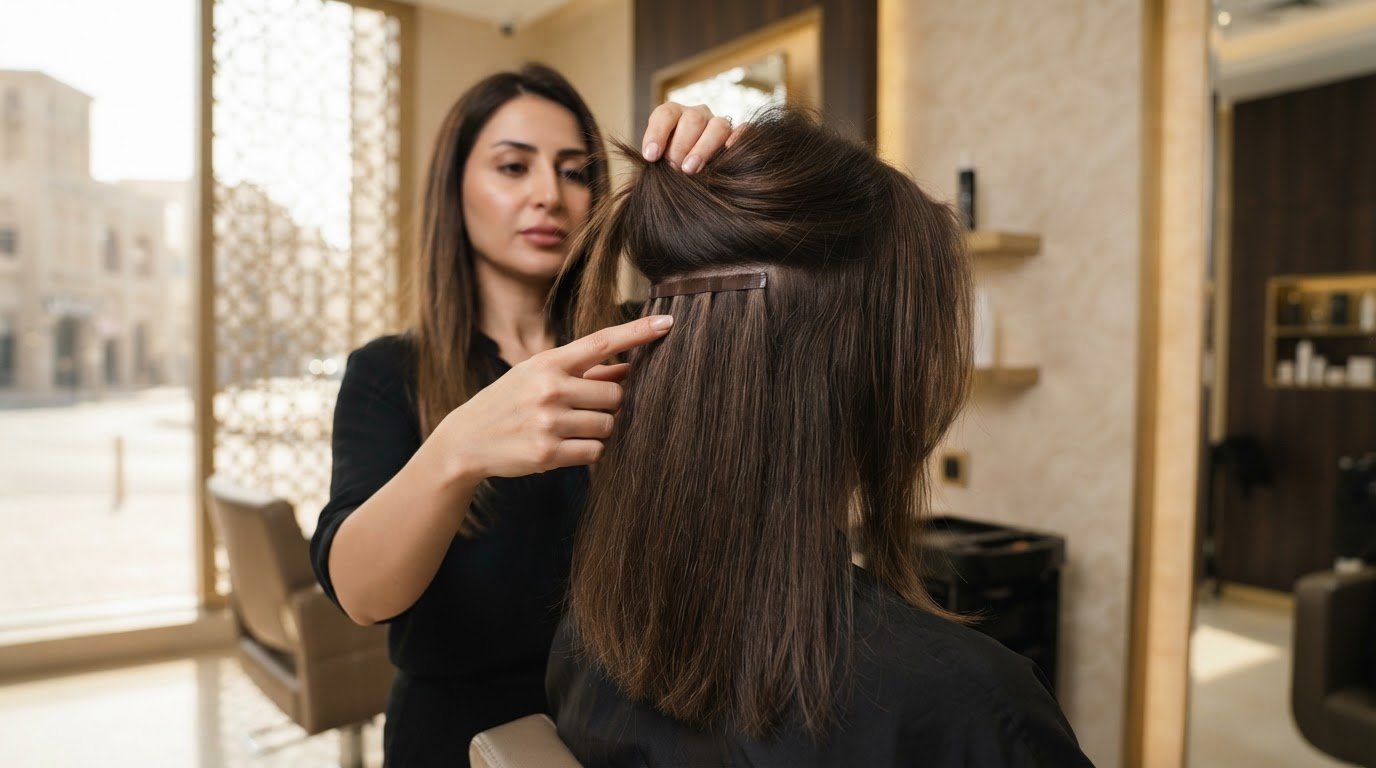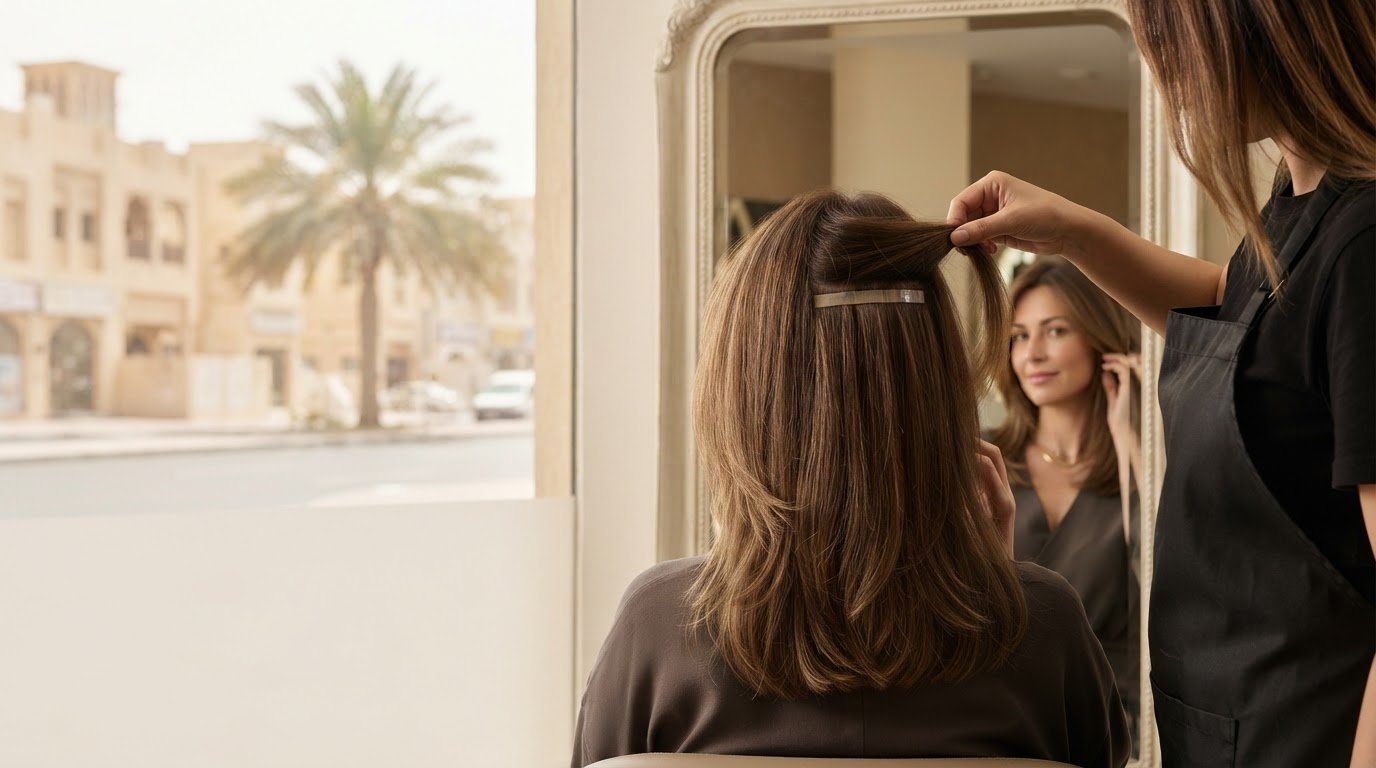
No extension method is risk-free, and there’s no single best fit for fine hair. Non-damaging hair extensions for thin, fine hair in Dubai start with matching the attachment method and weight to your hair’s strength, density and coverage. CombLine, ice, keratin and nano-ring methods may suit different needs, but a small attachment alone doesn’t make a method right for you.
Want more fullness without putting fragile strands under avoidable strain? That’s a thoughtful goal, especially during Dubai’s summer, when sweat, swimming and heat make careful upkeep part of the plan. This guide compares methods for fine hair, explains practical ways to care for extensions in the heat, and outlines when to pause and consider an alternative. You’ll also learn which signs can point to excessive tension, helping you make a more informed choice about your look.
Key Takeaways
- Choose an extension method by considering strand thickness, density, hair strength and attachment coverage, not by attachment size alone.
- Tape-in extensions may add overall volume or length, but their flatter attachment still needs suitable placement and coverage.
- For summer wear, keep attachment areas clean and dry, rinse hair with fresh water after swimming, and avoid tight styles that pull on roots.
- Follow the maintenance schedule for your fitting, and leave attachment adjustments and removal to a professional.
- Active or unexplained shedding, scalp irritation or severe breakage may make extensions unsuitable for now; extensions don’t treat the cause of hair loss.
1. Which Hair Extension Method Is Best for Fine or Thin Hair?
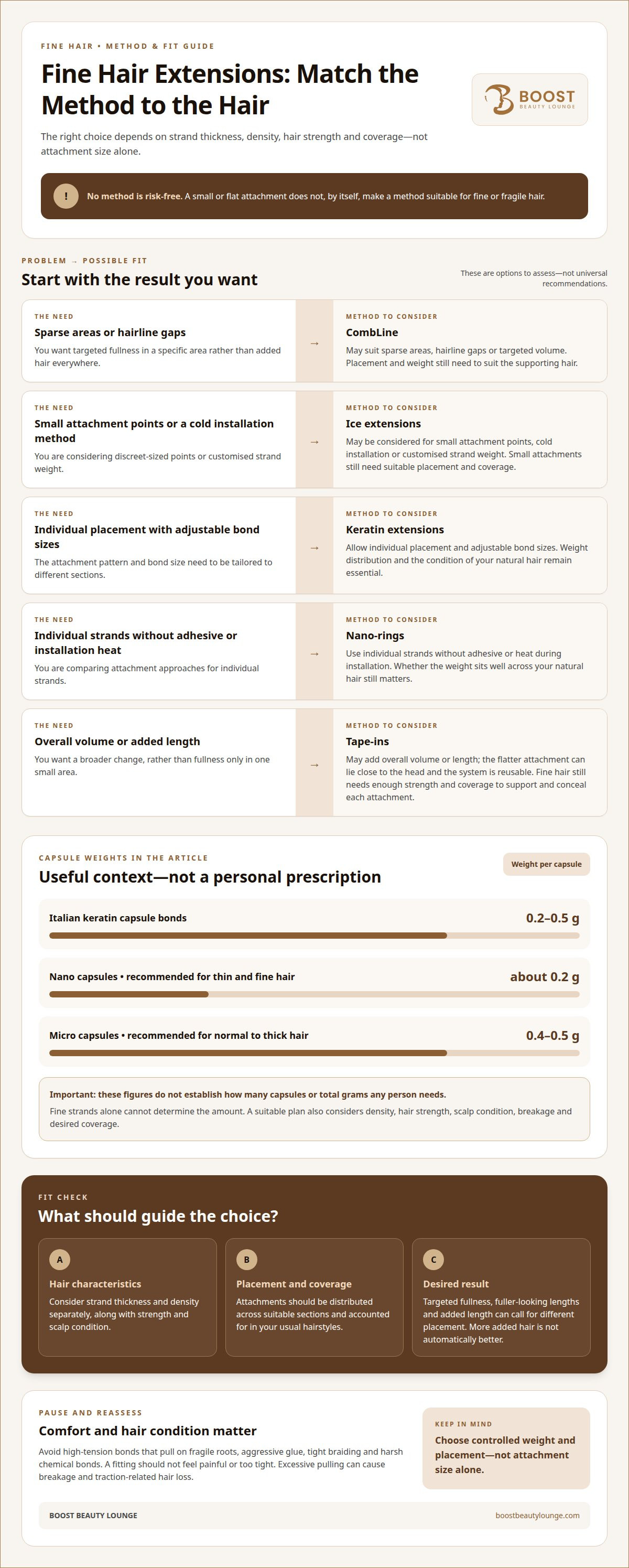
There’s no single best method or set number of grams for everyone with fine hair. Fine describes the thickness of individual strands; density describes how much hair covers an area. A suitable plan considers both, along with hair strength, scalp condition, breakage and the hairstyles you wear. For non-damaging hair extensions for thin, fine hair in Dubai, focus on controlled weight and placement rather than choosing an attachment by size alone.
CombLine extensions may suit sparse areas, hairline gaps or targeted volume. Ice extensions may be considered when you want small attachment points, a cold installation method or customised strand weight. Keratin extensions allow individual placement and adjustable bond sizes, while nano-rings use individual strands without adhesive or heat during installation. Each method has trade-offs; the right fit depends on how its weight sits across your natural hair.
Capsule size gives context, not a universal prescription. Italian keratin capsule bonds are described at 0.2 to 0.5 grams each. Nano capsules are recommended for thin and fine hair at about 0.2 grams per capsule, while micro capsules at 0.4 to 0.5 grams are recommended for normal to thick hair. These figures don’t establish how many capsules or total grams a person needs. Fine strands alone cannot determine the amount.
Placement matters as much as the attachment. A customised volume application can fill thin sides, make sparse ends appear fuller or build a fuller perimeter without excessive weight. The stylist needs to distribute attachments across suitable sections and account for coverage in your usual styles. Colour matching and styling also affect visibility. A small or flat attachment isn’t proof that it will be hidden or suit your hair.
Which methods should people with fine or thinning hair avoid? Avoid high-tension bonds that pull on fragile roots, along with aggressive glue, tight braiding and harsh chemical bonds. Excessive pulling can cause breakage and traction-related hair loss; no method is risk-free. A fitting should not feel painful or too tight. The hair extension service details provide a relevant starting point for understanding extension options before choosing an approach.
For example, someone with sparse sides but stronger hair elsewhere may need targeted placement, not uniform added weight. Someone with fragile roots may need to avoid extensions that create tension altogether. The method, strand weight and attachment pattern should work together. That’s why a tailored, carefully distributed application is more useful than selecting capsules by size alone.
2. Tape-in extensions for overall volume
Tape-in extensions may suit someone seeking overall volume or added length rather than targeted fullness in one small area. Their flatter attachment can lie close to the head, and the extension system is reusable. But a flat profile doesn’t automatically make tape-ins suitable for fine hair. Hair strength, density, desired coverage and how attachments sit beneath your usual styling all matter.
For fine strands, the key question is how much natural hair supports each attachment. A stylist considers whether the sections can conceal the tapes and distribute their weight comfortably. For example, if your parting or regular ponytail exposes attachment points, the placement may not work for your everyday look. A discreet result depends on coverage, colour matching and styling, not the attachment’s shape alone.
Tape-ins can create a broader change than extensions added only to sparse ends. Someone wanting fuller-looking lengths may prefer a balanced arrangement across the head; someone seeking volume only near the sides may need more selective placement. The requested result should guide how much hair is used. More added hair isn’t automatically better, especially if your natural strands are fragile or already breaking.
Fine hair also calls for an honest suitability assessment before booking. Hair that is weak, breaking or too sparse to cover attachments may not support tape-ins well. Excessive tension from extensions can contribute to breakage and traction-related hair loss. If the fit feels painful or too tight, tell the stylist immediately rather than accepting discomfort as part of the method.
Price depends on the case and is given after a quote request; factors include the amount and length of hair, desired volume, placement and fitting work. A single industry price wouldn’t account for those differences. For a meaningful estimate, the desired result and the condition and coverage of your natural hair need to be considered together.
Care habits affect how tape-ins feel and look between maintenance visits. Keep oils and heavy products away from attachment areas, avoid tight hairstyles that pull at the roots, and use heat protection on the lengths. Brush from the ends while supporting the roots. These steps help reduce tangling and unnecessary strain without treating any extension method as risk-free.
Consider your actual routine before choosing this method. Someone who often wears their hair up needs attachment coverage that works with those styles, while someone who usually wears it down may have different placement priorities. Your chosen length, colour blend and desired fullness should also look balanced against your own hair.
For a tailored choice, an assessment can connect your desired volume with hair strength, density and styling habits. Explore these hair extension options as a relevant next step when considering an extension fitting.
3. How Can You Add Hair Extensions in Dubai Safely This Summer?
Dubai’s summer brings swimming, heat and perspiration into your extension routine. Start with a clear care and removal plan before leaving the salon. Agree on how to brush, wash and style your hair, when to schedule reviews, and how attachments will be professionally removed. The right timing depends on your individual fitting, not someone else’s calendar.
After swimming in a pool or the sea, rinse your scalp and extensions with fresh water to wash away chlorine or salt. Before entering a pool, wet your hair with fresh water to limit chlorine absorption. Wash away sweat and sebum regularly, since buildup around attachments can contribute to micro-irritation. Keep attachment areas clean and dry after washing.
Brush from the ends upward, supporting the roots as you detangle. This reduces pulling where extensions meet natural hair. Avoid tight ponytails or other styles that tug on attachment points, especially if your scalp already feels tender. Keep oils and heavy products away from tapes and bonds, and use heat protection on the lengths before styling.
Heat needs care, too. Use heat protection and avoid extreme styling-tool settings, which can damage attachment bonds. If you’ve been swimming, detangle gently after rinsing rather than pulling through wet knots. Don’t sleep with wet hair. A deliberate routine protects the finish and helps limit unnecessary tension on natural strands.
Maintenance timing varies by method and fitting. Capsule extensions are described as maintaining full volume for 2 to 4 months before planned correction; capsule correction appointments are recommended every 3 to 4 months. These timings apply to capsule extensions, not automatically to every attachment type. Follow the schedule recommended for your specific fitting, since placement and natural hair growth affect when maintenance is appropriate.
Plan removal; don’t improvise at home. Never pull, cut or adjust attachments yourself. Keratin capsule bonds can be removed by dissolving the keratin rather than ripping the bonds from the hair. Professional removal matters because repeated pulling can cause breakage and traction-related hair loss. A precise removal method protects natural strands from avoidable force.
Pay attention to discomfort between appointments. Persistent scalp tenderness, localised redness or unusual shedding may indicate excessive tension around an attachment. If a fitting hurts or feels too tight, tell the stylist immediately. Don’t wait for the next maintenance visit. If you notice changes in comfort or shedding, seek advice promptly.
Summer care is easier with a routine matched to your extension method. Fresh-water rinses after swimming, clean and dry attachment areas, gentle brushing and scheduled professional removal all support more careful wear. Add those steps to your care plan before leaving the salon, then follow the schedule for your fitting.
4. Hair assessment and alternative restoration options
A useful hair assessment separates strand thickness from overall density. Fine hair means each strand is small in diameter; thin hair means fewer strands cover an area. You can have fine hair with good density, or thicker strands with sparse areas. That distinction affects how much coverage attachments need and whether extra length or targeted fullness is a better goal.
The assessment should consider strand thickness, density, strength and elasticity, as well as breakage and scalp condition. Previous colouring or bleaching can affect how resilient your hair feels. A stylist also needs to understand your usual hairstyles, desired length and volume, and how colour will blend. These details help shape a transformation around your real hair, not just a reference picture.
Think about the styles you actually wear. A centre part, high ponytail or swept-back look can expose attachment points that stay hidden under loose hair. Attachments need enough coverage in your everyday styles. For example, if you regularly tie your hair up, placement should stay concealed when lifted, not only when viewed from behind.
Hair condition can change the decision. Active or unexplained hair loss, severe breakage, fragile or overprocessed hair, scalp irritation or sores, and insufficient density to conceal attachments may mean postponing a fitting. These are practical reasons to avoid adding weight or tension while your hair or scalp needs attention. Existing extensions should also be removed professionally, not by pulling bonds or attachments at home.
If you notice new shedding, widening gaps or unexplained thinning, seek a dermatologist’s advice before adding extensions. Hair extensions add length or volume, but they don’t treat the cause of hair loss. That distinction matters: extensions can change how your hair looks while leaving the underlying reason for shedding unaddressed.
What can you choose instead while you pause? Keep your natural hair in focus and discuss a cut, styling approach or colour placement that works with its current density. For example, a softer shape around the face may suit your everyday style without adding attachment weight. These are appearance choices, not treatments for hair loss, and shouldn’t be presented as restoration.
Bring clear priorities to the assessment: the length you want, where you’d like more fullness, your preferred colour blend and the styles you wear most. A precise plan weighs those goals against strength, elasticity, scalp condition and coverage. If the assessment points to fragile roots or active thinning, waiting and addressing the concern first is more suitable than forcing an extension transformation.
5. Dubai hair extension salons
In Dubai, a careful extension appointment should begin with your natural hair, not a preset package of strands. A useful assessment considers density, strand strength, breakage, scalp condition and the hairstyles you wear. It also connects your desired length and volume with attachment placement. That discussion helps establish whether the plan suits your hair or risks adding too much weight.
How can you assess a salon’s experience and hygiene standards? Look for a clear consultation that explains the proposed method, placement and care plan in terms you understand. Notice whether the work area is orderly and tools are clean and prepared before the fitting begins. These practical signs help you understand the process without relying on a polished photo alone.
Ask to see examples that match your hair type and desired result. A photo of dense, long hair may not show how attachments look against fine strands or lower density. Before fitting, the stylist should discuss colour matching, coverage and how your usual parting or ponytail affects visibility. A natural blend depends on those details, not just added length.
Check how the salon approaches comfort and tension during application. Attachments shouldn’t feel painfully tight, and discomfort deserves immediate attention. A careful fitting also includes a clear explanation of brushing, washing, styling and professional removal. If the plan skips aftercare, you may be unsure how to manage tangling or protect your natural hair at home.
Hygiene shows in small steps. Notice whether the workstation is clean, tools are handled carefully, and loose hair or product residue is cleared before the next stage. During the consultation, observe whether the stylist examines your scalp and natural hair rather than placing extensions without an assessment. Those steps make the appointment feel considered and help tailor the fitting.
Dubai’s summer makes maintenance part of the salon conversation. Before leaving, understand how to keep attachment areas clean and dry after washing or swimming, and when to return for a review. The maintenance schedule should match your fitting. Capsule corrections, for example, follow a different timeline from other methods, so a generic appointment schedule may not suit your extensions.
A useful salon experience leaves you with a realistic plan: a method suited to your hair, placements that work with your regular styling, and clear care and removal guidance. If the assessment identifies active shedding, scalp irritation or severe breakage, adding extensions may need to wait. For a next step, arrange a hair extension consultation focused on your goals and natural hair.
Boost Beauty Lounge: Hair Extension Package
Boost Beauty Lounge’s Hair Extension Package is a natural next step if you’re considering added length or fullness after comparing methods. Bring your goals into the conversation: the look you want, your natural hair’s density, and the styles you wear most. These details help frame the choice around your own hair and routine, rather than a one-size-fits-all transformation.
If you’re after a different kind of hair refresh, Boost Beauty Lounge also offers Keratin and Curl Packages. The right direction depends on whether you’re seeking extensions, a treatment or curl-focused styling. Ready to discuss your hair extension goals? Contact Boost Beauty Lounge.
Choose a Look That Works With Your Hair
Your next step doesn’t have to be a dramatic change. Start with how you want your hair to feel each day: a little fuller, longer, or easier to style. For non-damaging hair extensions for thin, fine hair in Dubai, the goal is a considered choice that respects your natural hair and fits your routine.
If extensions aren’t the right fit for your hair today, another hair approach may still help you feel refreshed. Boost Beauty Lounge offers hair, keratin and curl services, giving you alternatives to consider as you shape your next look. The best choice is one that feels comfortable, suits your hair’s condition and supports the change you want.
Ready to talk through your options? Contact Boost Beauty Lounge today and take the next step toward a look that feels like you.
Frequently Asked Questions
How Can You Add Hair Extensions in Dubai Safely This Summer?
Keep summer care practical: rinse with fresh water before pool swimming and again afterward to limit chlorine or salt buildup. Wash away sweat and sebum, then dry attachment areas thoroughly. Brush gently while supporting the roots, and avoid tight styles or heavy oils near bonds. Use heat protection on the lengths. Before fitting, agree on care, review and professional-removal arrangements. Tell the stylist immediately if an attachment feels painful or too tight.
Which Hair Extension Method Is Best for Fine or Thin Hair?
No single method suits every fine or low-density head of hair. CombLine may suit targeted volume or sparse areas; ice extensions allow customised strand weight and precise placement. Keratin extensions offer individual placement, while nano-rings use individual strands without adhesive or installation heat. Compare how each method’s weight and attachments work with your natural hair, desired coverage and usual parting, rather than choosing by attachment size alone.
Does capsule extension damage your hair?
Capsule extensions can damage natural hair if attachments create excessive tension or are pulled out. Repeated pulling can cause breakage and traction-related hair loss, and no extension method is risk-free. A fitting that hurts or feels too tight needs immediate attention. For keratin capsules, removal involves dissolving the bonds rather than ripping them away. Don’t try to remove or adjust capsules at home, as force can strain natural strands.
How long do the extensions last in the Dubai climate?
Capsule extensions are described as maintaining full volume for 2 to 4 months before planned correction. The recommended correction schedule for capsules is every 3 to 4 months. These timings concern maintenance, not a guaranteed total lifespan for the extension hair. In Dubai, swimming, sweat and styling habits make regular rinsing, washing and drying important parts of wearing extensions. Follow the maintenance schedule set for your specific fitting and method.
Which hair extension methods are least damaging for thin, fine hair?
No extension method is universally risk-free, so “least damaging” means a fitting that limits tension and distributes weight appropriately. Nano-ring, ice and keratin methods offer individual placement options, while CombLine may be considered for targeted areas. Their names alone don’t establish suitability. The attachment pattern, strand weight and coverage must work with your natural hair. Avoid tight braiding, aggressive glue and bonds that pull on fragile roots.
Are tape-in extensions safe for fine hair, and what are their pros and cons?
Tape-ins may add overall volume or length, with a flatter attachment and reusable system. They aren’t automatically suitable for fine hair: natural density must conceal the tapes, and your hair must support their weight without excessive tension. Placement also needs to account for your parting and regular hairstyles. Oils and heavy products near tapes can complicate care, while tight styles may add pulling at the roots.
Are hand-tied weft or micro-ring extensions suitable for thin hair?
Suitability depends on natural hair strength, density, scalp condition and whether attachments can stay concealed in your regular styles. Nano-ring extensions use individual placement without adhesive or heat during installation, but a small ring doesn’t prove it suits thin hair. For hand-tied wefts, assess whether your hair can support and cover the attachment without excessive tension. Pain, tightness or pulling are warning signs.
How much do fine-hair-friendly extensions cost in Dubai?
Price depends on the case and is given after a quote request. In Dubai, cost factors include the extension method, the amount and length of hair, placement and fitting work, and desired volume. Fine hair may call for a customised plan rather than a standard quantity, so the intended result and your natural hair condition shape the estimate. Don’t use a generic price as a guide to your own fitting.
Ready to book this look?
See this package