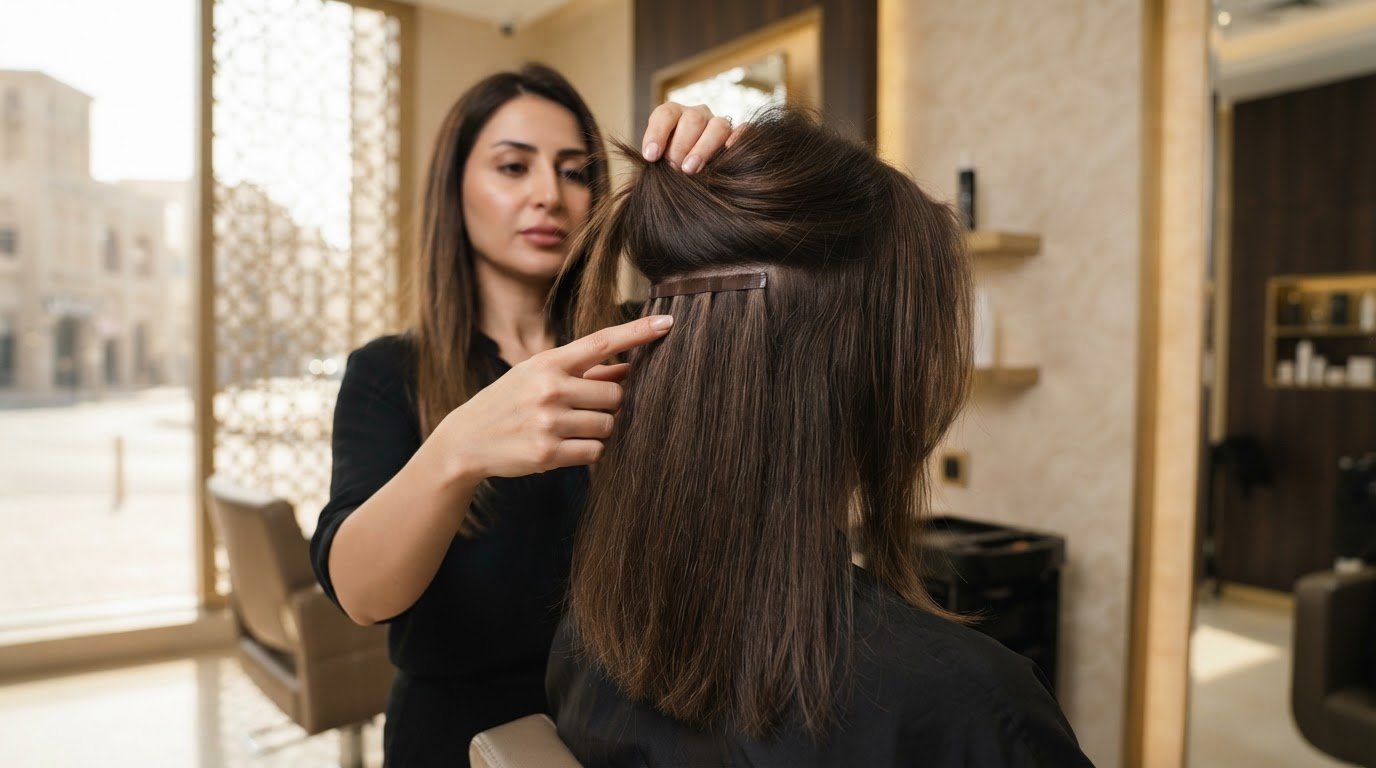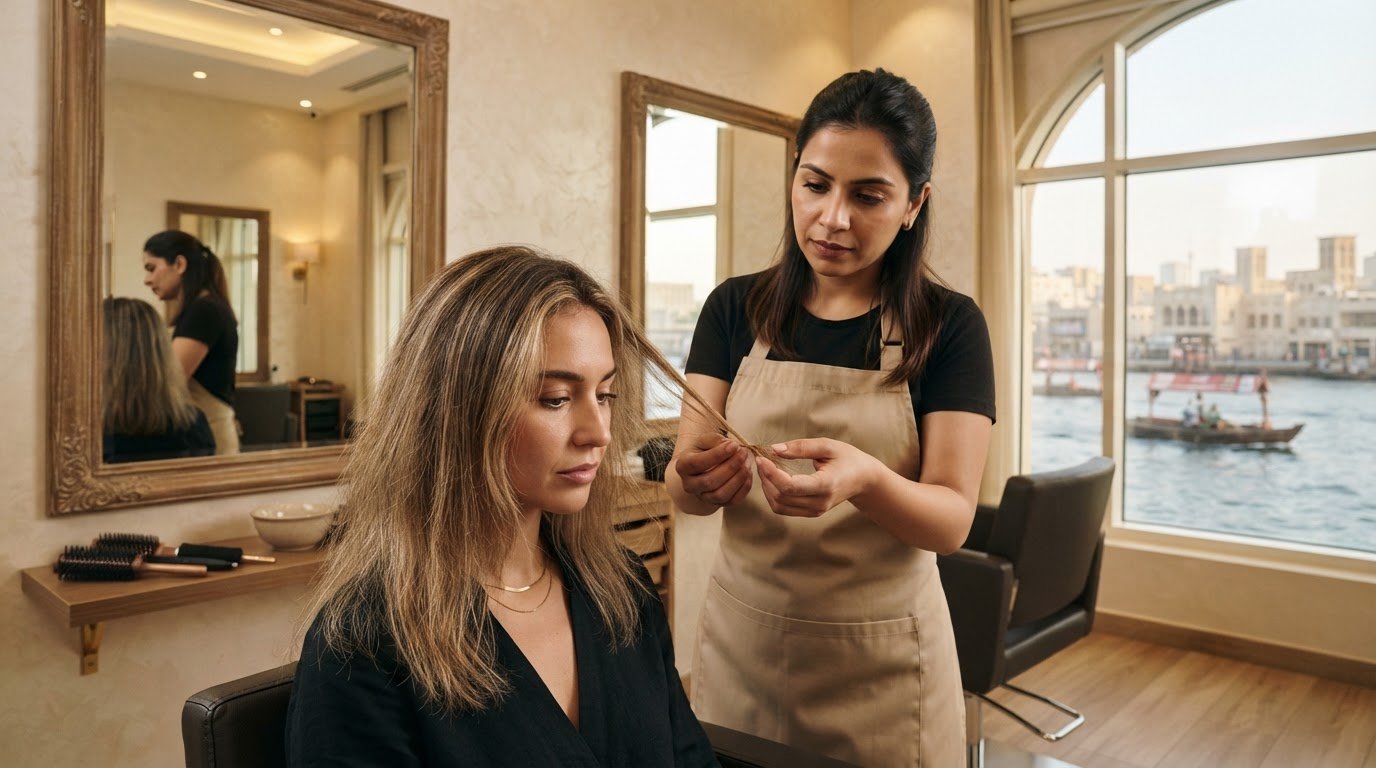
For safe hair smoothing for sensitized, fragile hair in Deira, the right choice depends on the hair’s current condition, previous chemical services and the finish you want. Fragile hair doesn’t automatically rule out smoothing, but a major chemical service in the previous 2 weeks is a reason to wait before keratin treatment.
If your hair feels dry, weakened or difficult to manage, it makes sense to want a smoother finish without adding unnecessary stress. The answer to “Who should get hair smoothening?” starts with an honest assessment of your hair, not a one-size-fits-all treatment.
Here, you’ll learn how options such as keratin, protein and hair Botox differ, what to consider before choosing one, and how Dubai’s climate and water may affect your hair. You’ll also find signs that may mean postponing treatment, helping you make a considered decision and work towards a polished result that respects your hair’s limits.
Key Takeaways
- Choose smoothing based on your hair’s condition and treatment history, not just the finish you want.
- If you’ve had a major chemical service in the previous 2 weeks, wait before keratin treatment.
- Learn how humidity and water buildup can affect frizz, manageability and your smoothing plan.
- Compare keratin, protein and hair Botox by the result you’re seeking and the stress your hair can tolerate.
- Understand which signs of fragility call for a gentler approach or postponing treatment.
What is the best hair straightening treatment in Dubai?
For fragile hair, the right choice depends on its condition, treatment history and your preferred finish. Protein, keratin and other smoothing options are designed for different goals.
Suitability for Fragile or Over-Processed Hair
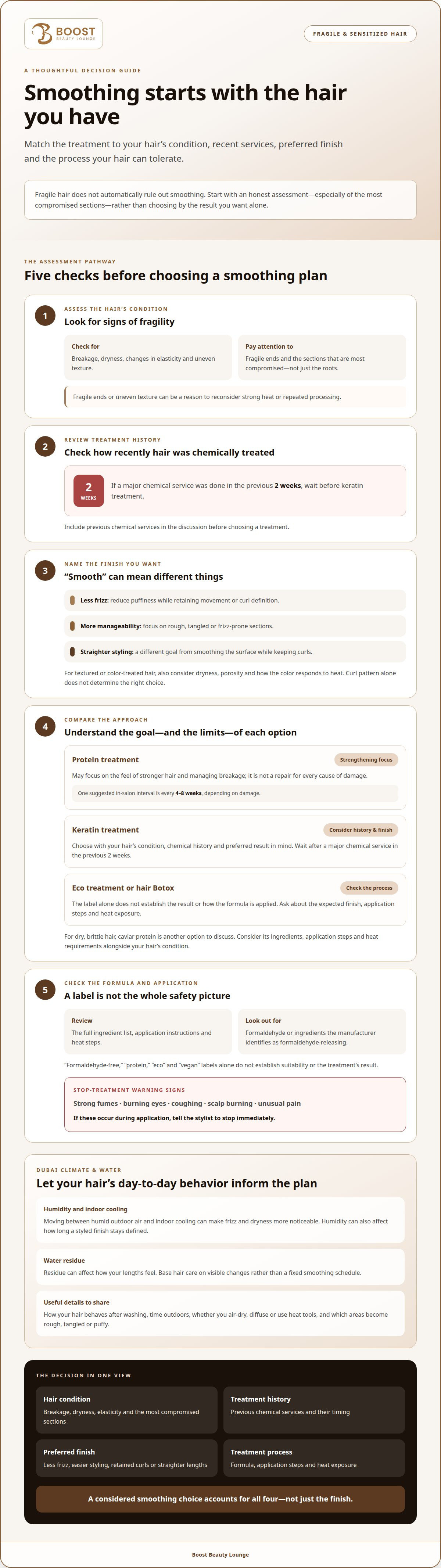
Before choosing a hair treatment, assess breakage, dryness, elasticity and previous chemical services. Fragile ends and uneven texture can signal that strong heat or repeated processing needs reconsideration. A major chemical service in the previous 2 weeks is a reason to wait before keratin treatment. The treatment plan should account for the most compromised sections, not just the roots.
Protein treatments focus on strengthening the hair’s feel and managing breakage, but they aren’t a repair for every cause of damage. One suggested interval for in-salon protein treatments is every 4-8 weeks, depending on damage. For example, hair with brittle ends may need a different plan from hair that feels strong but frizzes in humidity.
Options for Textured or Color-Treated Hair
Textured hair can be smoothed while retaining movement, or straightened more fully, depending on the finish you want. For color-treated hair, consider dryness, porosity and how the color responds to heat. Choose a keratin treatment based on these factors, not curl pattern alone. The stylist can also focus on areas that need more control, such as a frizz-prone crown.
For dry, brittle hair, a caviar protein treatment is another option to discuss. Its name alone doesn’t show whether it suits colored or fragile strands. Consider the ingredient list, application steps and heat requirements alongside your hair’s condition.
Eco Treatments as Keratin Alternatives
An eco hair treatment may be an alternative if you want smoothing without a traditional keratin treatment. “Eco” describes a category, not a guaranteed result or a single formula. Compare the expected finish, application process and heat exposure with your hair’s needs. For example, reducing frizz while retaining curl definition calls for a different result than achieving straighter styling.
Ask what the treatment is designed to change: frizz, manageability, curl pattern or straightness. Weigh that goal against signs of fragility, such as snapping during detangling. The best match is one whose process and finish suit your hair’s current condition.
Product Ingredients and Treatment Warning Signs
A formaldehyde-free label alone doesn’t establish that a smoothing product is safer. Review the full ingredient list and application instructions, and avoid products listing formaldehyde or ingredients the manufacturer identifies as formaldehyde-releasing. Strong fumes, burning eyes, coughing, scalp burning or unusual pain are warning signs during application.
If these signs occur, tell the stylist to stop the treatment immediately. A product’s name, including “protein” or “eco,” isn’t enough to judge its suitability. The formula, heat steps and your hair and scalp’s response all matter.
Hair smoothing options for frizz and humidity
In Dubai’s humid weather, first decide whether you want less frizz, easier styling or a straighter finish. Safe hair smoothing for sensitized, fragile hair in Deira also depends on your hair’s condition and the texture you want to preserve.
Smoothing Options for Frizz and Damage
For frizzy or damaged hair, match the process to the finish you want. One option may reduce puffiness while retaining movement; another may leave your lengths sleeker. During a consultation, describe how your hair behaves after washing and which sections tangle or feel rough. These details keep the discussion focused on your hair, not just the result in a reference photo.
Vegan hair Botox is an option some people consider for frizz control. The “vegan” label alone doesn’t tell you how the formula is applied or what finish it creates. Discuss the application steps, heat use and intended result. Smoother lengths with retained body call for a different goal than a straighter look.
Frizz Reduction and Curl Pattern
Reducing frizz doesn’t have to mean removing your curl pattern. A consultation should distinguish between smoothing the surface and changing your hair’s overall shape. Defined waves with fewer flyaways are a different goal from straighter lengths. Describe which areas matter most, such as curls around your face or a crown that tends to puff up.
Humidity can affect how long a styled finish stays defined. Explain how your hair behaves after time outdoors and describe your usual routine. Do you air-dry, diffuse or use heat tools? These details help shape a realistic finish around your day, rather than treating “smooth” as one result for every texture.
Before choosing a formula, weigh your goal, hair condition and the process involved. A product marketed for frizz control may still require heat or affect your curl pattern. For safe hair smoothing for sensitized, fragile hair in Deira, raise these points during the consultation. Mention colored sections, dry ends or areas that become difficult to manage in humidity.
If you want to discuss a hair plan, hair care options can help you connect your preferred finish with your texture and styling habits. Be specific about whether you want to preserve curls, soften them or wear a straighter look. That gives the conversation a clear starting point before selecting a smoothing approach.
Dubai climate and water-related hair stress
Dubai’s climate can make frizz and dryness more noticeable, especially as hair moves between humid outdoor air and indoor cooling. Water residue can also affect how your lengths feel, so base your hair care on visible changes rather than a fixed smoothing schedule.
Don’t assume a specific UAE formaldehyde limit from a product label. A “formaldehyde-free” claim alone doesn’t reveal the full ingredient profile. Review the product label and ingredient information before a chemical smoothing service.
In Deira, choose a salon that assesses your hair’s condition and treatment history before recommending smoothing. A useful consultation considers color, previous chemical services, breakage and your preferred finish, rather than choosing a formula by name alone.
Dubai’s humidity can make strands swell and lose a freshly styled shape. Hair that looks smooth indoors, for example, may become puffy after time outside. Share this pattern during the consultation, along with whether you want to preserve your curls or wear a straighter finish. This helps shape a plan around your daily exposure to the climate.
Water-related buildup can leave hair feeling coated or dull. If you notice buildup, a chelating or clarifying step once monthly is a practical option to consider. The aim is to address residue, not repeatedly strip already fragile lengths. A stylist can account for dryness, color and previous chemical treatments before adding this step to your routine.
To limit extra stress between salon visits, use a gentle washing routine and condition the mid-lengths and ends. After swimming or a sweaty day, rinse your hair and avoid rubbing it roughly with a towel. Detangle carefully from the ends upward. These steps reduce pulling on fragile areas and make it easier to notice changes in dryness or breakage.
Hair length matters in a smoothing assessment because longer lengths can show more wear at the ends. A stylist should look for uneven texture, roughness and snapping, then adapt the application to the sections that need the most care. Previously colored ends, for example, may need a more cautious approach than untreated roots.
Repair-focused care and smoothing aren’t interchangeable. If breakage is your main concern, prioritize your hair’s condition before pursuing a sleeker finish. If frizz is the primary issue and the strands remain resilient, discuss a less intensive approach. In either case, include Dubai’s climate, water exposure and your styling habits in the treatment conversation.
Keratin, Brazilian blowout and nanoplasty alternatives
Keratin, Brazilian blowout and nanoplasty are labels for smoothing approaches, not guarantees of a shared result. Compare the formula, process and finish before choosing.
Keratin and Hair Botox Versus Straightening
Keratin and hair Botox are often considered for smoother-looking, more manageable hair. Straightening describes a result: a noticeably straighter shape. During a consultation, clarify whether you want reduced frizz, easier brushing or a change to your curl pattern. Softer waves, for example, call for a different finish than sleek, straight lengths.
The word “Botox” doesn’t mean a treatment restores hair to its original strength. A smoother feel can improve the appearance of dry lengths, but it doesn’t prove that the hair’s internal structure has been repaired. Compare the application steps and heat use, then match them to your desired result and the condition of your ends.
Keratin for Coloured or Bleached Hair
Colored or bleached hair needs a closer assessment before keratin. Previous lightening, overlapping color and dry ends can affect how your hair responds to another chemical process. Identify which lengths have been colored and whether the roots differ from the ends. That history helps determine whether one approach suits your whole head.
Bleached mid-lengths, for example, may feel more fragile than untreated roots. The stylist should consider these differences before applying product or heat. Discuss whether preserving your current shade matters and how much straightening you want. A sleek finish shouldn’t be the only measure of a suitable treatment.
Keratin Compared With Nanoplastia
Keratin and nanoplastia are distinct service names, but the label alone doesn’t tell you how a particular formula works. Compare the ingredient list, application method, heat steps and intended finish. Ask how each option is expected to affect curl shape, frizz and manageability, rather than assuming “nanoplastia” always means a gentler treatment.
Brazilian blowout is another smoothing label, so assess its specific process in the same way. Write down your priorities: less puffiness, retained curls or straighter lengths. Then compare the method’s described finish with those priorities. The treatment name cannot replace an assessment of your hair.
Use a simple decision sequence: define your preferred finish, review your color and chemical history, then compare each product’s process. If breakage and strength are your main concerns, prioritize your hair’s condition over dramatic straightening. If manageability matters most, explain how you style your hair and which sections resist styling. These details make the comparison more useful.
Assessing fragile, damaged hair before smoothing
A smoothing decision should start with your hair, not the treatment name. Check the roots, mid-lengths and ends separately, since color, heat and chemical services can affect each area differently.
During an assessment, consider how strands behave when wet and dry. Hair that stretches unusually, snaps during gentle detangling or has visibly rough ends needs a cautious plan. Bleached ends, for example, may be more vulnerable than untreated roots. This difference matters when choosing where to apply product and heat.
Previous services are part of the picture. Note color, bleaching, relaxers and earlier smoothing, including which sections were treated. A major chemical service in the previous 2 weeks is a reason to wait before keratin treatment. Overlapping processes can put already sensitized lengths under added stress, so timing and hair condition should guide the next step.
Texture and breakage tell different stories. Frizz alone doesn’t show that hair is damaged, while short broken pieces around the crown can signal fragility. A stylist can assess whether the concern is surface roughness, tangling, split ends or a weakened feel. These signs help distinguish a smoothing goal from the need to pause chemical processing.
Before treatment, use a gentle routine that limits pulling and excess heat. Detangle from the ends upward, condition the lengths and avoid another chemical service while your hair feels brittle. Nourish the mid-lengths and ends with suitable conditioning care. The aim is to assess your hair clearly, not disguise damage with styling.
After smoothing, follow the product’s care directions and handle your hair gently. Avoid rough towel drying and tight styles that tug on fragile sections. If your ends feel dry, focus conditioning there rather than layering on multiple strong treatments. A wide-tooth comb and careful detangling, for example, can reduce unnecessary tension during daily styling.
How should fragile hair be cared for before and after a smoothing treatment? Beforehand, reduce heat and chemical stress, condition the lengths and disclose previous services. Afterwards, follow the treatment’s care directions, detangle gently and nourish dry ends without adding another intensive process.
The clear takeaway: visible breakage, rough ends and recent chemical work should shape the plan before any smoothing begins. If you’re ready to discuss a treatment suited to your hair’s current condition, explore hair treatment options.
Boost Beauty Lounge
Boost Beauty Lounge offers Keratin, Curl and Hair Color packages for different hair goals. If your hair is fragile, over-processed or color-treated, discuss its condition and treatment history before choosing smoothing. The aim is to match your preferred finish with your hair’s needs, rather than treating straightness as the only goal. A curl-preserving look and a sleeker style call for different conversations. Contact Boost Beauty Lounge to discuss your hair smoothing options.
Take Your Next Step Towards a Smoother Finish
The next step is to turn your preferred look into a clear plan. Think about how you want your hair to move, how much styling suits your routine and what you want to preserve. For safe hair smoothing for sensitized, fragile hair in Deira, the conversation should center on your priorities and your hair’s current condition.
You don’t need to arrive with a treatment name already chosen. Share what feels difficult to manage and describe the finish you hope to achieve. A focused discussion can help you approach your hair transformation with greater clarity and confidence.
Contact Boost Beauty Lounge to discuss your next step. Your smoother-hair journey can begin with a thoughtful conversation and a look that feels like you.
Frequently Asked Questions
Who Should Get Hair Smoothening?
Hair smoothening may suit someone seeking easier styling, reduced frizz or a more polished finish. The right candidate has a clear goal and hair that can tolerate the chosen process. If you want to keep your natural waves, for example, ask for a smoother feel without changing their shape. If straight styling is your priority, discuss that finish specifically before choosing a treatment.
How long do results last?
Results don’t last the same amount of time with every smoothing method. The formula, application process, washing routine, heat styling and new hair growth all influence how long the finish looks smooth. Frequent washing or regular swimming, for example, may affect your routine differently from occasional washing and careful styling. Follow the treatment’s care directions and judge the result by how your hair behaves between washes.
How long does keratin treatment last?
Keratin results vary with the formula, application and aftercare, so there’s no single duration that applies to every treatment. Your washing habits and styling routine also affect how the finish changes over time. Ask which care directions apply to your chosen formula, including when to wash your hair. This gives you a more useful expectation than relying on a general duration for all keratin services.
What is the aftercare?
Follow the care instructions for the exact smoothing formula, since washing and styling directions can differ. Detangle gently and avoid pulling your hair into tight styles while it feels delicate. If you use heat tools, keep styling controlled and avoid repeatedly passing over the same section. For example, air-drying partway before styling can reduce time spent using a dryer.
What hair-smoothing treatments are safest for sensitized, fragile hair?
No treatment name is automatically the safest choice for every type of fragile hair. Suitability depends on the formula, heat involved, previous processing and your preferred finish. A lower-impact goal, such as easier brushing while keeping your texture, may call for a different approach than straightening. Discuss the options in light of your hair’s current condition, and postpone smoothing if the assessment shows it needs a gentler plan.
Can keratin or Brazilian blowout treatments damage fragile hair or cause breakage?
Smoothing treatments can add stress to fragile hair, particularly when the process involves heat or overlaps with previous chemical work. That doesn’t mean everyone will experience breakage: your hair’s condition and the application matter. Repeatedly processed lengths, for example, may respond differently from untreated roots. A careful assessment and strand test can show how a section responds before the stylist proceeds more widely.
How can a stylist assess whether sensitized hair is strong enough for smoothing?
A stylist can assess your hair in sections, noting breakage, roughness, tangling and differences between roots and ends. They can also consider color history, previous chemical services and how the strands respond to gentle handling. Fragile ends beneath healthier roots, for example, may call for a different plan than uniformly resilient hair. The assessment should guide whether to proceed, adjust the service or delay it.
What strand tests and precautions should be done before smoothing fragile hair?
A strand test applies the proposed formula to a small, less-visible section and checks how your hair responds during processing and styling. The stylist should note the section’s color, texture and strength before comparing how it feels afterward. Share your previous color and chemical services, and avoid adding another treatment before the test. If the test section becomes unusually rough, weak or difficult to manage, stop and reassess the plan.
Ready to book this look?
See this package