AED 1,499 Lived-In Blonde in Dubai: Bond Protection & 8–16 Week Care

Lived-in blonde is a salon-created blonde that looks naturally grown-in, with soft roots, brighter mid-lengths, and a grow-out that never looks like an obvious regrowth line. It suits anyone who wants brightness without a strict salon calendar, and most people can stretch appointments to a low-maintenance range of weeks depending on how fast their natural colour returns and how much contrast they’re comfortable with.
TL;DR:
- Achieving a lived-in blonde requires strategic placement of lightener through balayage, teasylights, or foils, with bond protection to maintain hair health.
- Most lived-in blondes fall into tonal categories such as bronde, honey, sandy, or cool stone, with tone adjustments made after lifting to ensure a natural, graduated look.
- Maintenance relies on using toners and corrective shampoos carefully, with frequent conditioning and less frequent washing to preserve colour and hair integrity.
- The typical grow-out window is three to five months, but most clients benefit from toner refreshes every 8 to 16 weeks for consistent brightness.
- Clear consultation and understanding of your hair’s history and porosity are essential before any lightening to prevent uneven fading and patchy regrowth.
Table of Contents
- What is lived-in blonde and how is it different from balayage?
- Which salon techniques create a lived-in blonde?
- What colour families and formulas suit a lived-in blonde?
- How do you maintain lived-in blonde hair at home?
- How do you brief your stylist for a lived-in blonde?
- Boost Beauty Lounge’s approach to lived-in blonde
- Our take on the lived-in blonde trend
- Book a lived-in blonde appointment at Boost Beauty Lounge
- Sources
- FAQ
What is lived-in blonde and how is it different from balayage?
Lived-in blonde describes the finished effect, not one specific method. A colourist can reach it through several routes, but the hallmarks are always the same: a soft, shadowed root area, graduated brightness that gets warmer or lighter towards the ends, and a colour that ages gracefully instead of showing a hard line at week six.
That’s the key distinction people miss. Balayage, babylights, and ombré are techniques, ways of applying lightener. Lived-in is the outcome those techniques are used to create, through careful placement and the right finishing toner. You could technically get a lived-in result from foils if the colourist places them with a freehand mindset and blends the root correctly.
- Soft root shadow that blends into the base colour instead of a sharp demarcation line
- Graduated brightness, usually building towards the face and ends
- Natural grow-out, so new growth reads as “sun-kissed” rather than “regrowth”
- A finish that fades gently over 8 to 16 weeks rather than looking patchy
Which salon techniques create a lived-in blonde?
Getting the effect right comes down to how the colourist places lightener and how they finish the tone. These are the methods that come up in almost every consultation:
- Balayage — hand-painted lightener applied in sweeping strokes, heaviest at the ends and lighter near the root, which naturally builds the graduated brightness lived-in blonde needs.
- Teasylights or babylights — fine, foiled sections woven through the hair for subtle dimension, often used alongside balayage to add depth without heavy contrast.
- Root shadow or root melt — a soft, deliberately darker tone painted or brushed close to the scalp that blends the natural base into the lightened lengths and buys extra weeks between visits.
- Traditional foils or freelights — used when a client wants more lift or brightness than freehand painting alone can achieve, particularly on darker starting shades.
Bond-protection additives matter here because lifting hair, especially in multiple sessions, weakens the internal structure. Schwarzkopf Professional’s BLONDME system builds bond protection directly into its lighteners, then pairs that with an acidic glow toner to seal the cuticle afterwards. That combination is why some lived-in blondes look glassy and healthy while others look chalky and dry, even at a similar lightness level.
Pro Tip: Ask your colourist which lightening method they’ll use before you sit down. If you have fine or previously coloured hair, root shadowing combined with lighter foiling usually gives more longevity than all-over balayage.
What colour families and formulas suit a lived-in blonde?
Most lived-in blondes fall into one of four tonal families, and naming the right one saves a lot of back-and-forth in the chair.
- Bronde — a blend of brown and blonde, ideal for brunettes who want warmth without committing to full lightening.
- Honey or golden blonde — warm, rich, and forgiving on olive or deeper skin tones.
- Sandy or neutral blonde — a balanced, low-drama shade that avoids both brassy warmth and icy coolness.
- Cool or stone blonde — muted, almost ash-grey undertones, best suited to lighter starting hair since it needs a clean lift to read correctly.
Wella Professional’s guidance on lived-in colour describes the process as staged: lightener is applied to lift the hair to the right level first, then a short acidic toner or gloss is applied afterwards to dial in the exact tone quickly, rather than trying to hit both lift and colour in one pass. That two-step approach is part of why the results look more custom than a box-dye blonde.
Face-framing brightness is worth discussing separately from the rest of the head. A touch more lightness around the face lifts the whole look without over-processing the mid-lengths, but it should only go as light as your hair’s porosity can handle safely. Vogue’s roundup of blonde balayage looks shows how differently these tonal families read across various starting shades and skin tones.
How do you maintain lived-in blonde hair at home?
Toner is deposit-only. It sits on top of the hair and adds pigment, it doesn’t lift or brighten, and that single fact explains almost every maintenance mistake people make with blonde hair. Kevin.Murphy’s care guidance is blunt about this: once a toner fades, you’re seeing the underlying lightened hair, not a “less toned” version of the same colour.

Purple and blue shampoos work the same way, correcting yellow or orange tones rather than making hair brighter. Overusing them, or leaving them on too long, can turn a warm blonde flat and lifeless or even slightly purple-grey. One hair colour guide recommends treating these as occasional correctors, once or twice a week, rather than a daily wash routine.
A few habits keep the colour looking fresh between salon visits:
- Use a purple or blue shampoo one to two times a week, not every wash
- Clarify or chelate monthly if you swim regularly or live somewhere with hard water, since mineral build-up stops toner pigment from depositing evenly
- Wash less often overall; stretching washes with dry shampoo extends both toner life and hair condition
- Use a bond-building mask weekly and always apply heat protection before styling tools
Salon glossaries commonly define the acceptable grow-out window for lived-in blonde as three to five months between full colour sessions, though most people book a quick toner refresh closer to the 8 to 16 week mark to keep brightness looking crisp rather than waiting for the full stretch.
How do you brief your stylist for a lived-in blonde?
Walking into a consultation with the right information turns a vague chat into a plan the colourist can actually price and execute.
- Bring two or three clear photos and name the tonal family you’re after (bronde, honey, sandy, or cool stone), since photos alone can be read very differently by different eyes.
- Be honest about your colour history, including box dye, henna, or previous lightening, so the stylist can assess porosity before touching bleach to your hair.
- Ask directly what lift level they’re planning, whether bond protection is included, and how long the appointment and price will realistically run.
- Request a written aftercare plan before you leave, covering wash frequency, which toning shampoo to use, and when to book your next refresh.
Boost Beauty Lounge’s approach to lived-in blonde
Every lived-in blonde consultation at Boostbeautylounge starts with a proper look at your hair’s history and porosity, because that’s what determines how much lift your hair can safely take. From there, the process follows the same logic covered above: bond protection goes in during lightening, tone gets refined with an acidic finish, and the cut and blow-dry are shaped to show off the placement rather than flatten it.
Every colour transformation is backed by a satisfaction guarantee period, so if the tone shifts or settles differently than expected once you’re home under different lighting, support is offered. Payment is made after the service, and clients leave with home-care guidance specific to their new shade.
Our take on the lived-in blonde trend
Most lived-in blonde advice online focuses on styling, the perfect wave pattern, the right root shadow width, and skips the part that actually determines whether the colour survives past week three: what happens to the hair structure during lightening. That’s backwards. A gorgeous placement on damaged, over-processed hair fades unevenly and breaks at the ends, no matter how skilled the painting was.

The conventional wisdom treats toner as a brightening product, which sets people up to be disappointed when it fades and their blonde looks “less blonde” a month later. It never was more blonde. Understanding that toner corrects tone rather than lifts it changes how you budget your maintenance, both in money and in patience.
If there’s one thing to prioritise before anything else, it’s porosity honesty with your colourist. Skipping that conversation to save five minutes is how people end up with patchy, brassy regrowth by week six instead of a graceful fade at week twelve.
— Boost
Book a lived-in blonde appointment at Boost Beauty Lounge
Boostbeautylounge is the fixed-price alternative to guessing your way through a lightening appointment. Instead of an hourly quote that grows once you’re in the chair, the Hair Package covers your full colour transformation, balayage, highlights, ombré, or all-over blonde, at one set price of 1,499 AED, decided before you sit down.
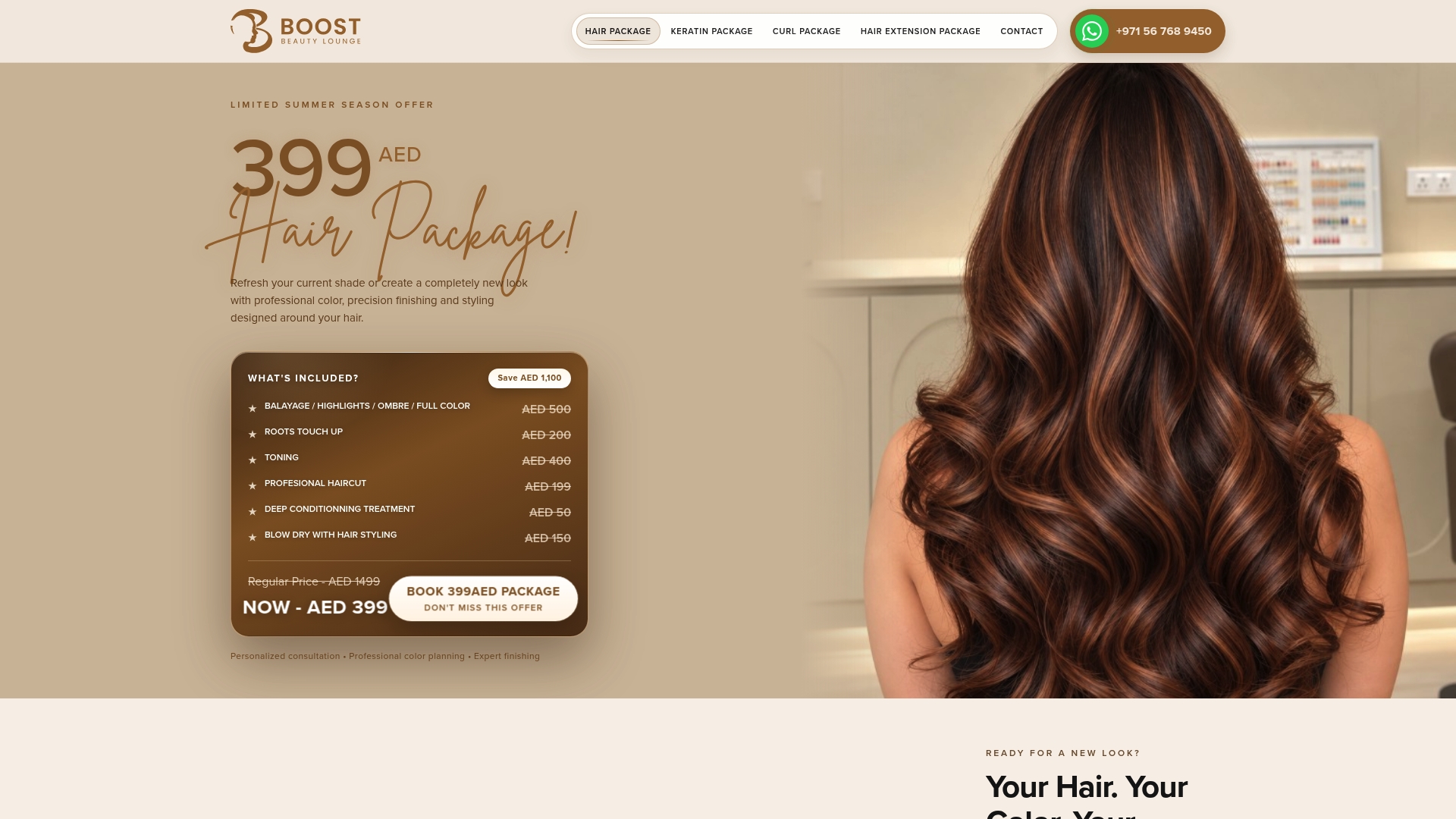
That package includes a consultation to plan your exact tonal family, roots touch-up, toning, a haircut, deep conditioning, and blow-dry styling, so you leave with the finished look rather than a half-done colour needing a separate styling appointment. Every treatment carries the 10-day satisfaction guarantee, and you pay after the service is complete, not before. If bond-support conditioning is something you want layered in afterwards, the Keratin/Protein/Botox Package is worth asking about at your consultation.
Send a photo of the lived-in blonde you want through WhatsApp or call the salon near Salah Al Din Metro Exit 1 to book your consultation this week.
Sources
Technical claims in this guide draw on professional colour resources rather than general styling blogs. Schwarzkopf Professional’s BLONDME range documents how bond protection and acidic toning work together. Wella Professional’s lived-in blonde guide provides sample lift-and-tone formulas. Kevin.Murphy’s maintenance advice explains toner behaviour and clarifying routines in detail.
- BLONDME color | Schwarzkopf Professional
- 5 Lived-in Blonde Hair Colour Ideas & Formulas | Wella professional store
- How to maintain lived-in blonde hair – KEVIN.MURPHY AU
FAQ
What does “lived-in blonding” mean?
Lived-in blonding refers to a blonde finish designed to grow out naturally, with a soft root and graduated brightness rather than a hard regrowth line. It’s an outcome achieved through careful placement and toning, not a single fixed technique.
Is lived-in blonde the same as balayage?
No, they’re related but not identical. Balayage is a hand-painting application technique, while lived-in blonde is the overall look; a colourist typically uses balayage, teasylights, or root shadowing, sometimes in combination, to reach that lived-in effect.
What does “blonde” mean as a styling term here?
In this context, “blonde” simply refers to the family of lightened hair colours, ranging from cool stone tones to warm honey shades, rather than any slang usage. Lived-in blonde narrows that further to describe how naturally the colour ages between salon visits.
How do you get lived-in blonde hair?
It starts with a consultation to assess your hair’s porosity and colour history, followed by strategic lightening (balayage, teasylights, or foils) with bond protection, then an acidic toner to finish the tone. Boostbeautylounge’s Hair Package covers this entire process, including the cut and styling, for a fixed 1,499 AED.
How often do you need to refresh lived-in blonde?
Most people book a toner top-up every 8 to 16 weeks, with a fuller colour refresh closer to the three to five month mark as regrowth becomes more noticeable. Washing less often and clarifying monthly if you swim or have hard water both help stretch that window.
Recommended
Ready to book this look?
See this package