Low porosity affects how readily your hair takes in moisture, not the shape of your curls. A curly hair consultation for low-porosity hair in Dubai helps a stylist assess how your curls behave and tailor washing, conditioning, and styling advice to your needs.
It can be tempting to judge porosity with a strand-in-water test, but the popular float test is unreliable. A more useful assessment considers how your hair wets, dries, and responds to products over time, along with its curl pattern and condition.
This guide explains hair porosity, what a professional may observe during a consultation, and how low-porosity curls can benefit from a considered care routine. You’ll also learn how washing, conditioning, and styling choices can work together to support defined, comfortable curls without guesswork.
Key Takeaways
- Hair porosity describes how readily hair takes in and retains moisture; a float test alone can give a misleading impression.
- A curl assessment considers how patterns vary across the head, since one head of hair can have more than one curl pattern.
- How quickly hair wets, dries, and responds to products helps shape a more suitable hydration approach.
- Heat styling, chemical treatments, and environmental changes can affect porosity, so care needs to reflect the hair’s current condition.
- Washing, conditioning, and styling choices work best when they account for both curl pattern and porosity.
Curl-pattern assessment during consultation
A curl-pattern assessment starts with how your hair forms across different areas, not just one curl near the front. A stylist examines the crown, sides, nape, and hairline because one head can show several patterns. A guide may describe textures from 2A to 4C, but these labels are starting points, not a complete care plan. A looser wave at the temples and tighter coils at the nape can need different shaping and styling approaches.
Curl pattern is only part of the picture. A stylist also considers density, or how much hair grows across the scalp, and strand texture, meaning whether individual hairs feel fine, medium, or coarse. These details affect how a shape sits and how much product may weigh it down. Dense curls, for example, can create a fuller outline, while lower-density hair may need a cut that preserves visible volume. Moisture response matters, too: the stylist observes whether curls feel dry, coated, soft, or stretched after cleansing and conditioning.
The cutting method depends on how your curls behave. Looser waves are often suitable for damp cutting, which lets the stylist shape the hair as it hangs naturally. Tighter curls are often assessed dry or dried in sections, making each curl’s resting position visible before length is removed. This helps account for shrinkage, the difference between a stretched strand and its spring-like dry shape. A curl that looks long when wet can sit much shorter once dry.
A curl-shaped haircut is planned around how sections fall, rather than forcing every part into a uniform line. The stylist checks balance from the front, sides, and back, then adjusts the outline to support your desired shape. Removing too much weight from one area, for example, can change how neighbouring curls sit. Assessing the hair section by section gives a clearer view of uneven patterns, density, and movement before the stylist refines the silhouette.
A consultation also connects your cut with a workable home routine. The stylist can discuss cleansing frequency, conditioner placement, detangling, and styling products based on your texture and moisture needs. Product buildup can make low-porosity curls feel coated, so focus on how products behave rather than automatically layering more. A useful discussion covers what you currently apply, where curls lose definition, and whether the finished style feels weighed down.
Leave with clear guidance for maintaining your shape between appointments. This may include refreshing flattened sections, applying styling products evenly, and protecting defined curls as they dry or overnight. A specific example, such as curls losing shape around the crown while the ends remain defined, helps the stylist tailor advice. The result is a cut and care plan based on your pattern, density, shrinkage, and moisture response.
What is hair porosity?
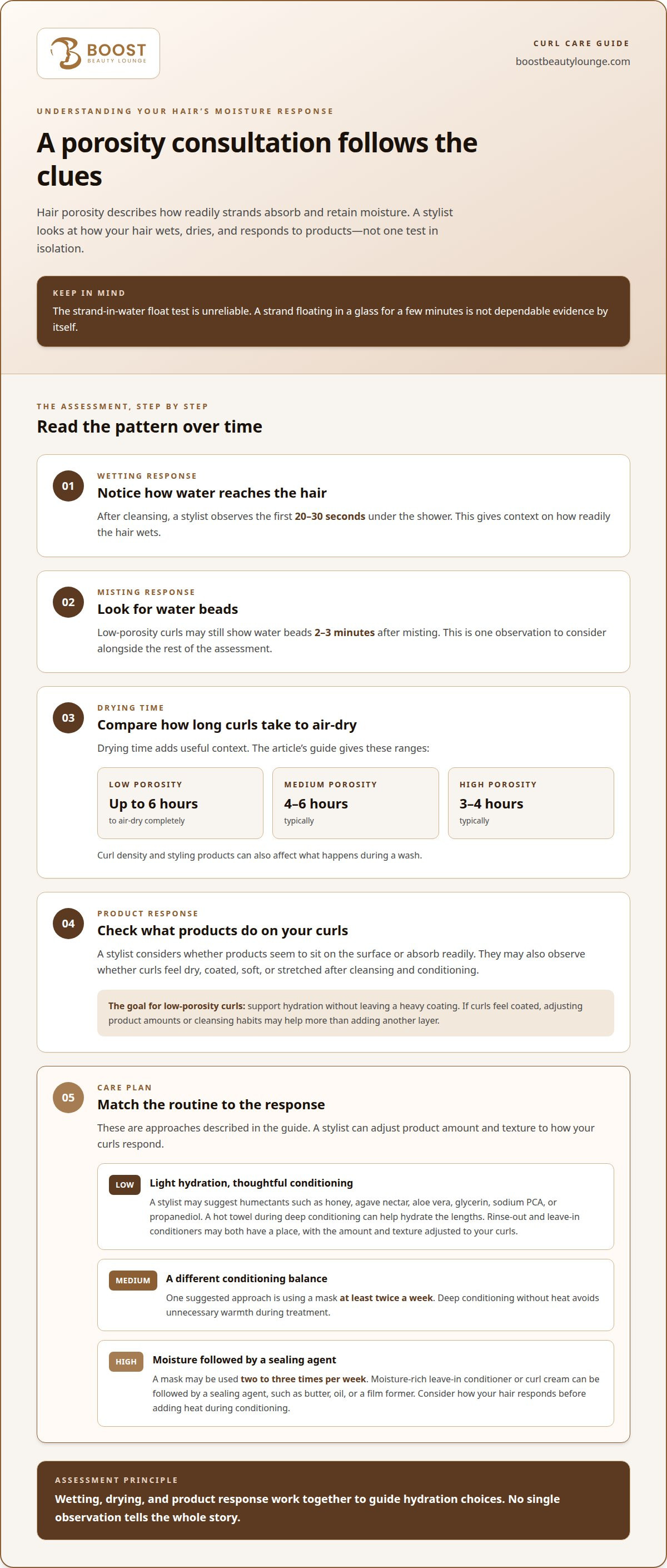
Hair porosity describes how readily strands absorb and retain moisture. During consultation, a stylist observes how hair wets, dries, and responds to products rather than relying on one test. The wetting assessment focuses on the first 20-30 seconds under the shower after cleansing. Low-porosity curls may still show water beads 2-3 minutes after misting. A strand floating in a glass for a few minutes is not dependable evidence by itself.
Drying time adds useful context. Low-porosity curls can take up to 6 hours to air-dry completely; medium-porosity curls typically dry within 4-6 hours, and high-porosity curls within 3-4 hours. A stylist also considers whether products seem to sit on the surface or absorb readily. These observations help shape hydration methods, though curl density and styling products can affect what the hair does during a wash.
For low-porosity hair, the aim is to support hydration without leaving a heavy coating. A stylist may recommend products with humectants such as honey, agave nectar, aloe vera, glycerin, sodium PCA, or propanediol. A hot towel during deep conditioning can help hydrate the lengths. Rinse-out and leave-in conditioners can both have a place in your routine, with the amount and texture adjusted to how your curls respond.
Medium-porosity curls generally need a different balance. One suggested approach is using a mask at least twice a week, while deep conditioning without heat avoids unnecessary warmth during treatment. High-porosity hair can benefit from a mask two to three times per week. Moisture-rich leave-in conditioner or curl cream can be followed by a sealing agent, such as butter, oil, or a film former. Consider how your hair responds before adding heat during conditioning.
Choose washing frequency based on buildup, scalp comfort, and how quickly your curls lose freshness. Curly hair care guidance advises against overwashing, but the right interval depends on your routine and products. A stylist can assess residue, dryness, and curl definition before suggesting adjustments. If low-porosity curls feel coated after frequent styling, changing product amounts or cleansing habits may help more than adding another layer.
Hydration supports consistent waves, curls, and coils, while helping define their shape and reduce frizz. During consultation, the stylist can connect wash-day observations with suitable treatments and a manageable home routine. For a professional discussion of curl care, explore curly-hair care and the options that suit your needs.
Curly-hair consultation and assessment
A useful consultation connects your goals with how your curls behave day to day. In Dubai, discuss your routine, styling preferences, and the changes you want from professional care.
Choosing a Curl Specialist in Dubai
A curl specialist assesses textured hair and tailors recommendations to its pattern, condition, and styling goals. Choosing someone for a curly hair consultation for low-porosity hair in Dubai matters because product choices and care methods should suit how your hair responds, not just how it looks.
Look for an appointment that includes time to discuss your routine and desired result. Explain, for example, if your roots feel coated after styling or your curls lose definition by midday. These details give the stylist context for discussing cleansing, conditioning, and shaping. Clear explanations help you understand the reasoning behind recommendations and ask focused questions about maintaining your look between salon visits.
Consultations for Natural and Textured Hair
Yes, Dubai salons offer consultations for natural and textured hair, including conversations about curl care and styling. This discussion lets you describe your goals and helps the stylist consider how your texture affects the service.
Share specific examples from your routine. You might describe different curl behaviour at the crown and nape, or a product that leaves your hair feeling heavy. These details add useful context beyond a general label such as “curly.” Explain whether you prefer a defined finish, a fuller shape, or a lower-effort routine. This keeps the conversation focused on how you wear your hair, rather than treating all textured hair alike.
Booking and Preparing for a Consultation
To book a curly hair consultation for low-porosity hair in Dubai, request an appointment through the salon’s booking channel and explain your hair-care goals. Sharing your concerns in advance helps focus the consultation.
Bring product names or photos, plus a brief description of your wash and styling routine. Mention colour or chemical services and any changes you’ve noticed in your hair. Photos of styles you like can clarify your preferred length and shape. You can also describe specific frustrations, such as products weighing down your curls. A professional curl consultation can turn those details into a focused discussion about your next steps.
A water test is sometimes used to discuss porosity: a strand of hair is left in a glass of water for a few minutes. If you want to discuss this approach, bring it up alongside your own observations and ask how the stylist would use that information when considering your care goals. Keep the conversation focused on what you want help with, such as cleansing, conditioning, or shaping, and explain what feels suitable or unsuitable in your routine. Treat the test as a starting point for questions, and describe your preferences and concerns. Ask for recommendations in plain language and make sure you understand how each suggestion relates to your desired result and preferred curl styling.
How heat, chemicals, and environmental changes affect porosity
A stylist assesses whether a treatment is suitable by reviewing your hair’s history, current condition, and response to products. For low-porosity curls, this means considering buildup, dryness, previous chemical services, and regular heat styling before recommending a treatment.
Repeated heat styling can loosen curl patterns over time, changing how curls spring back and sit together. A stylist may ask how often you use hot tools and whether you notice less definition after styling. Curls that appear stretched around the crown, for example, may need a different cut or styling plan. Your heat-styling history can also help explain why sections of the same head respond differently.
Chemical treatments can affect porosity by changing the hair’s structure. Mention colour services and other chemical processes during the consultation, even if they happened some time ago. The stylist considers whether the lengths feel rough, break easily, or absorb products differently from the roots. These details help guide treatment choices and keep the routine from being based only on your hair’s current appearance.
Environmental changes can also influence porosity, so a stylist considers changes in your surroundings alongside your routine. If your curls feel different after a move or a change in daily exposure, for example, describe what changed and how your hair responds. Hormonal changes can affect porosity, too. Sharing these shifts gives the stylist context for changes in texture, moisture retention, or curl definition.
An assessment focuses on the hair in front of the stylist, not just its history. They can look at the roots, mid-lengths, and ends separately, then compare how each area feels and responds to water or products. If the ends feel dry while the roots feel coated, one treatment approach may not suit every section. This comparison helps the stylist tailor conditioning and styling advice to the areas that need it.
Potential risks include adding heavy products when buildup is already present or choosing heat styling when curls are losing their natural pattern. A stylist weighs your goals against the condition of your lengths, previous services, and current styling habits. If a treatment could leave low-porosity hair feeling coated, discuss lighter product use and targeted application. A clear account of your hair history makes the assessment more useful.
Before treatment, explain which services your hair has received and what changes you have noticed since. Mention heat tools, colour, chemical processes, and any shifts in curl definition or moisture response. The stylist can connect those details with the treatment method and aftercare plan. This keeps the focus on your hair’s present condition, rather than assuming its porosity has stayed the same.
Curly hair salons in Dubai offering consultations for low-porosity hair
A consultation for low-porosity curls should connect your hair’s behaviour with a practical salon and home-care plan. In Dubai, discuss how your curls respond to washing and styling, as well as the local climate, and consider whether the stylist explains each recommendation clearly.
A useful appointment starts with your goals. You might want curls that stay defined through the day, less product buildup, or a shape that works with your routine. The stylist can ask what you currently use, how your hair feels after washing, and which areas lose definition first. These details make the discussion specific to your hair, rather than treating every curl type the same way.
Pay attention to the assessment itself. A stylist can observe how your curls respond to water and products, then explain the difference between moisture needs and buildup. Hair that feels coated after several styling products, for example, may need a different routine from hair that feels dry after cleansing. Clear explanations help you understand why a product or treatment suits your current condition.
In Dubai, aftercare is especially useful to discuss. A stylist can recommend drying methods that reduce friction, such as using a microfiber towel or cotton T-shirt instead of rubbing with a rough towel. Night-time protection, including a silk or satin pillowcase or bonnet, can help limit friction while you sleep. These details matter because a well-shaped salon result still needs practical care between appointments.
Ask how the stylist approaches definition without making heat styling the default. Curl-friendly products should suit your texture, and applying them to wet or damp hair can help distribute them through your curls. The stylist can explain why repeatedly touching curls as they dry may disturb their shape, then discuss a morning refresh routine for flattened sections.
A consultation should leave you with practical guidance: what to adjust on wash day, how to apply conditioner and styling products, and how to protect curls overnight. Describe your usual routine and preferred finish, and the stylist can connect those details to a care plan. Someone seeking soft definition, for instance, may need different styling advice from someone prioritising volume and shape.
Choose a professional conversation that addresses your specific concerns and explains the reasoning behind its recommendations. If you’re ready to discuss curl care with a stylist, explore professional curl-care support.
Boho Salon says a curly-hair stylist should cut hair according to the client's curl pattern. Boho Salon advises clients in Dubai to use a microfiber towel or cotton T-shirt when drying curly hair, and recommends protecting curls while sleeping as part of maintaining healthy curls in Dubai’s climate. Boho Salon recommends choosing styling products suited to curly hair and says curly-hair clients should learn how to refresh curls in the morning.
Kimia Salon recommends gently detangling curly hair with a wide-tooth comb or fingers, ideally when it is wet and coated with conditioner. These points can help guide a discussion about curl-pattern cutting, daily styling, overnight protection, and gentle detangling.
Boost Beauty Lounge: Curl Package
Boost Beauty Lounge’s Curl Package is an option for professional care focused on your curls. Bring your low-porosity concerns, current routine, and preferred finish to the discussion so your needs guide the conversation.
A clear conversation about your curl pattern, product buildup, and styling goals can help you decide whether the Curl Package suits what you’re seeking. You can also discuss how to maintain your chosen look between salon visits, including your washing, conditioning, and styling preferences.
To talk through your curl-care needs, contact Boost Beauty Lounge.
Make your next curl-care choice with confidence
Your curls can change with styling habits, treatments, and how well your routine fits your life. Keep your next salon conversation focused on the result you want, whether that means easier care, a refreshed shape, or more confidence in your natural texture. A curly hair consultation for low-porosity hair in Dubai can connect those priorities with a considered service plan.
At Boost Beauty Lounge, the Curl Package is an option for curl-focused care. The Hair Package and Keratin Package offer other hair-service paths to discuss as your goals evolve. Choose the direction that feels right for your hair, then take the next step at your pace.
Explore your next hair-care step and move forward with confidence.
Frequently Asked Questions
So, Does My Curl Type Matter at All?
Yes, your curl type helps a stylist plan a shape and finish that suit how your hair naturally falls. A cut designed for loose waves, for example, may not create the same outline on tightly coiled hair. Curl type isn’t the only consideration, though. Your preferred length, everyday styling habits, and desired volume also help guide the consultation.
What does a low-porosity curly hair consultation include?
A consultation gives the stylist a chance to understand your goals, current care habits, and past services before discussing suitable options. Tell the stylist, for example, whether you want to change your shape, improve manageability, or adjust your styling routine. Mention products or treatments that have caused problems, too. These specifics keep recommendations relevant to your priorities and your hair’s condition.
Ready to book this look?
See this package