A bedtime routine matters more than a tight, polished sleep style. Knowing how to sleep with hair extensions without matting starts with fully dry hair, gentle detangling, and a loose, low braid or ponytail. Remove clip-in extensions before bed, and commonly remove halo extensions at night too.
It makes sense to want your extensions to look smooth and feel comfortable when you wake up. A few thoughtful habits can help limit tangles without putting unnecessary tension on your hair or attachments. Prepare your hair before bed, choose a protective sleep style, and adapt your routine to your extension type. If a knot appears, work it loose gently instead of pulling at the roots. Small changes at bedtime can make mornings easier and help you care for your look with confidence.
Key Takeaways
- Before bed, detangle gently and make sure your hair and extension attachment areas are fully dry.
- Contain permanent extensions in a loose low braid or ponytail, keeping the style relaxed rather than tight.
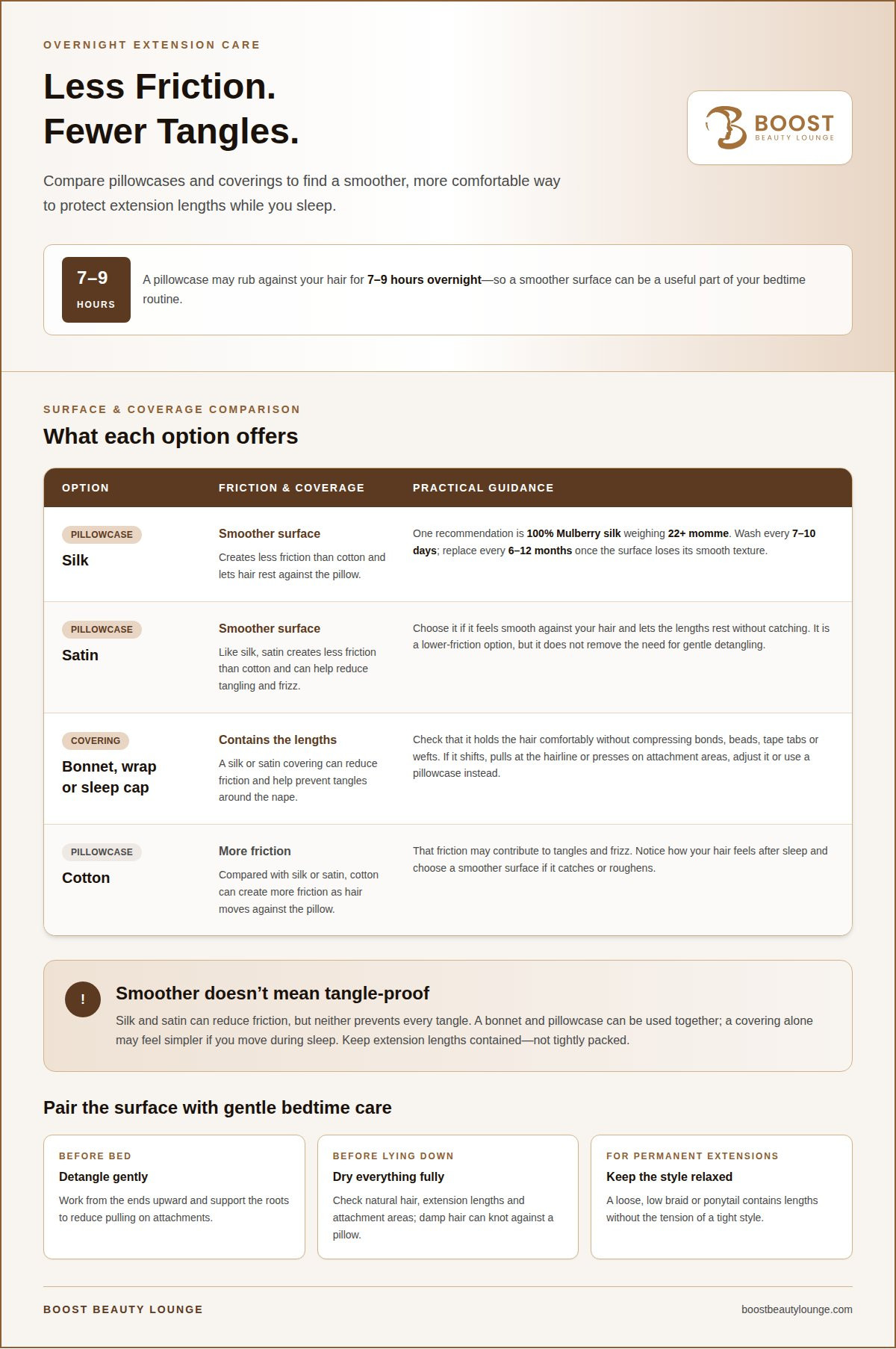
- Silk or satin pillowcases, bonnets, and wraps can reduce friction, but they won’t prevent every tangle.
- Brush from the ends upward while supporting the roots to reduce pulling on attachments.
- Match your nighttime routine to your attachment type; clip-in extensions should be removed before sleep.
Can I sleep with hair extensions in?
Yes, permanent extensions can stay in overnight, but contain their lengths in a relaxed style. A loose braid or low ponytail helps limit tangling without the tension of a tight hairstyle.
-
Secure Extensions in a Loose Braid
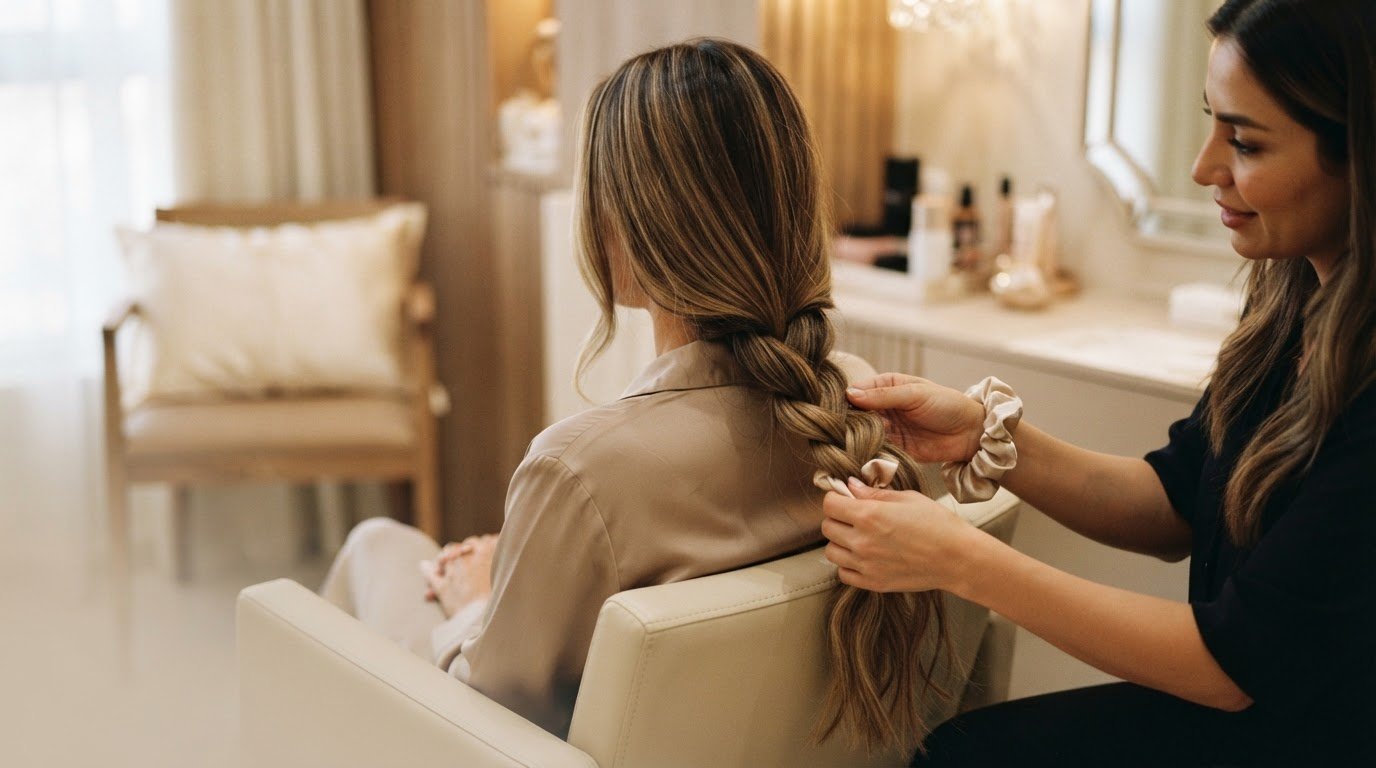
Gather the lengths gently and braid them loosely before bed. Keep the braid relaxed enough for a finger to slide through easily, so it doesn’t pull the extensions against your scalp. Secure the end without cinching it, and loosen any section that feels taut around the roots or attachments.
A braid keeps the lengths together while you move during sleep, rather than letting them spread across the pillow. For example, if your hair reaches your waist, braid the extension lengths together with your natural hair so they don’t rub separately. Your attachment method still matters; keep the braid clear of any area that feels tender or pulled.
-
Gather Hair in a Low Ponytail or Bun
Choose a low ponytail if a braid feels uncomfortable, and secure it gently near the nape. Keep the tie loose enough that your roots don’t feel drawn backward. A high ponytail can press or pull as you lie down, so gather the lengths low and let them rest naturally beside or behind you.
A loose bun is another way to contain the lengths, but don’t twist them tightly or make a compact knot. Gather the hair softly, shape a relaxed loop, and secure it without pulling at the base. If it feels firm when you turn your head, undo it and try a loose, low braid instead. Check for tension before settling in.
-
Use Protective Hair Ties or Silk Scrunchies
Use a soft, snag-free tie or silk scrunchie to secure a braid or hold a low ponytail. Wrap it only enough to keep the style together. If the tie catches strands when you slide it off, switch to a smoother option. Avoid tight elastics that grip a small section and make removal rough.
Keep the scrunchie away from extension attachment points; it should hold the gathered lengths, not tug at the roots. If you switch between a braid and ponytail, check that the fastening stays comfortable when you lie on your back or side. Your attachment method shapes the care routine, so keep your hair extension care plan aligned with the type you wear.
Is a silk pillowcase really worth it with extensions?
A silk or satin pillowcase can reduce friction against extensions, though neither prevents every tangle. A smooth pillowcase or roomy bonnet is practical; choose the option that contains your lengths without compressing the attachments.
-
Choose a Silk or Satin Pillowcase
Try a silk or satin pillowcase to give extension lengths a smoother surface while you sleep. Cotton can create more friction, which may contribute to tangles and frizz as hair moves against the pillow. Choose silk or satin, whichever feels smooth and lets your hair rest without catching.
A pillowcase may rub against your hair for 7-9 hours overnight. For silk, one recommendation is 100% Mulberry silk weighing 22+ momme. Treat these details as selection guidance, not a promise of tangle-free mornings. Detangle your hair and use a loose protective style too.
-
Consider a Bonnet, Wrap, or Sleeping Cap
Choose a satin or silk bonnet, wrap, or sleeping cap if you’d rather contain your lengths than leave them spread across a pillow. A bonnet can reduce friction and help prevent tangles around the nape. Make sure it holds the extension lengths comfortably without compressing bonds, beads, tape tabs, or wefts.
Check the fit before settling in. If the covering shifts, pulls at your hairline, or presses on attachment areas, adjust it or use a pillowcase instead. A silk bonnet and pillowcase can work together, but a cap alone may feel simpler if you move during sleep. Keep the lengths contained, not tightly packed.
-
Compare Silk, Satin, and Cotton Pillowcases
Notice how each surface feels against your hair after a night’s sleep. Silk and satin create less friction than cotton, which can help reduce tangling and frizz. A silk pillowcase may suit you if you prefer a smooth surface, while satin is another lower-friction option. Neither removes the need for gentle care.
Wash a silk pillowcase every 7-10 days, and replace it every 6-12 months once its surface loses its smooth texture. Check the fabric by touch; a roughened surface no longer offers the same smooth feel. For a wider hair-care refresh, explore hair care options alongside a consistent bedtime routine.
Drying hair and extension attachment areas before bed
Before bed, gently detangle and completely dry your natural hair, extension lengths, and attachment areas. Damp roots can leave attachments vulnerable to slipping, while wet lengths can knot against a pillow overnight.
-
Dry the Attachment Areas
Part your hair gently to expose the attachment areas, then dry each section fully. Check beneath the top layers, where damp roots can be easy to miss. Keep the dryer moving and hold it 6 inches from extension bonds. Don’t direct concentrated heat at one attachment or tug while separating sections.
- Detangle before you finish drying, then brush again once the hair feels dry. Work from the ends upward, supporting the roots with your free hand to reduce pulling on attachments. For long extensions, divide the lengths into manageable sections and detangle each one gently.
Take a few minutes for this careful bedtime check. Look for knots where your natural hair meets the extensions, especially near the nape. Loosen small knots with your fingers instead of dragging a brush through them. Smooth, separated lengths are less likely to twist together while you sleep.
-
Dry Extensions Fully Before Sleep
Make sure the full extension lengths are dry before lying down. Wet hair is more likely to snag and knot, and pressure against a pillow can worsen matting. Check beneath thick sections as well as the surface. If any area still feels damp, continue drying before bed.
- Finish with a gentle touch test at the roots, attachment points, and ends. Separate the hair into sections and feel each area, rather than checking only the outer layer. A satin pillowcase can reduce friction, but it won’t make damp extensions safe to sleep on. Dryness comes first.
Wet hair can stretch up to 45%, making strands more prone to snagging and knots. Sleeping with wet extensions pressed against a pillow for 6 to 8 hours can cause difficult-to-reverse matting. If your hair feels cool or damp at the bonds, keep drying instead of securing it for the night.
Hair extensions should be fully dry near their attachment points before bed. Five minutes of careful detangling can save time and hair in the morning. Sleep Foundation is a resource about sleeping with wet hair.
Nighttime care for K-tip, tape-in, and sew-in extensions
Permanent extensions, including nano bonds, wefts, and tape-ins, are designed for 24-hour wear. Protect them overnight with a method that limits friction and avoids pulling at attachments.
-
Build a Simple Nighttime Care Routine
Follow the same sequence each night: detangle gently, check attachment areas, then contain the lengths. Brush from the ends upward while supporting the roots to reduce pulling where extensions join your natural hair. A roomy bonnet can keep lengths together without compressing bonds, beads, tape tabs, or wefts.
Keep heavy oils away from bonds and tape tabs because they can loosen attachments. If your lengths feel dry, don’t coat the attachment areas with rich products. Use lightweight products sparingly on the lengths and keep buildup away from the roots. A consistent routine makes it easier to notice changes, such as a new snag near a bead.
-
Adjust Care for Each Attachment Method
Adapt your routine to the attachment method rather than treating every set alike. With K-tip extensions, avoid pulling or pressing firmly on individual bonds while brushing. For tape-ins, keep heavy oils away from the tabs. With sew-in or other weft extensions, arrange the lengths so a bonnet holds them without compressing the weft.
Micro bead and nano bead extensions need gentle handling around each attachment. Support the roots as you brush, and don’t force a comb through a caught strand. If you wear a sewn weft, arrange the lengths to avoid folding or bunching the weft under your head. The attachment method determines where nighttime care needs extra attention.
-
Avoid Habits That Damage or Tangle Extensions
Avoid tight styles, rough brushing, and sleeping with loose lengths spread across the bed. These can increase friction or tension around attachments. Don’t twist a braid tightly at the root or pull hard on a knot near a bond or tape tab. A roomy bonnet helps only if it doesn’t squeeze the attachment areas.
Adjust your routine as your hair’s needs change with the seasons. In dry conditions, avoid using heavy oils near bonds or tapes. On humid nights, keep the lengths contained and free from bunching. Persistent overnight matting may point to dry hair, product overload, excessive installation tension, or overdue maintenance. Treat recurring knots as a reason to reassess your routine.
Extension-specific advice from a stylist
Start with the attachment type, because the right bedtime routine depends on how extensions are secured. Permanent extensions can stay in overnight, but remove clip-ins before bed; halo extensions are commonly removed too.
- Identify your attachment method before choosing a sleep style. For K-tip, tape-in, bead, or sewn-weft extensions, contain the lengths without putting pressure on attachment points. A loose braid or low ponytail can help manage longer lengths. Check that the style doesn’t pull when you turn your head or rest against the pillow.
For clip-ins, remove every weft before bed and store the pieces separately. Sleeping in clips can press them against your scalp and tangle the hair around them. Halo extensions are commonly removed at night too. These temporary styles need a different routine from permanent attachments.
- Use your fingers first when a knot forms near an attachment point. Hold the hair above the knot to limit tension at the root, then tease the tangle apart from the bottom. Don’t yank a brush through a snag. Loosen one small section at a time before brushing the lengths.
This approach is especially useful near bonds, tape tabs, beads, and wefts. A knot can tighten if you pull from the attachment side. Hold the hair steady above the snag and work gently until the strands separate. Then brush from the ends upward while supporting the roots.
- Choose a soft elastic or silk scrunchie to secure a braid or low ponytail. Avoid wrapping it tightly around the lengths or placing it directly over attachment points. A silk bonnet can contain the hair, but it should fit loosely enough to avoid compressing bonds, beads, tape tabs, or wefts.
Notice where pressure builds when you lie down. If the elastic presses against a weft or the bonnet shifts and pulls, adjust it before sleep. A common mistake is choosing a style that feels secure while standing but creates tension once your head rests on the pillow.
- Track recurring tangles instead of treating each morning as an isolated problem. Note whether knots appear at the nape, near tape tabs, or around beads. Persistent matting may relate to dryness, product overload, excessive installation tension, or overdue maintenance. These clues can help you identify whether your routine or an attachment area needs attention.
Natural hair sheds daily, so some loose strands are normal. If shed hairs collect around an attachment, gently free them rather than pulling. For extension-specific care suited to your method, explore hair extension care.
Boost Beauty Lounge: Hair Extension Package
Boost Beauty Lounge’s Hair Extension Package may suit you if you’re considering extensions and want a new look tailored to your hair goals. A nighttime routine works best when it matches your attachment type, so think about how you’ll protect and manage the lengths before choosing a style.
If you already wear extensions and keep waking up to tangles, note where they form and which bedtime habits affect them. These details can help guide a conversation about extension care and next steps. For a broader hair transformation, Boost Beauty Lounge also offers a Hair Package, Keratin Package, and Curl Package.
For help exploring your options, contact Boost Beauty Lounge.
Make Your Extension Routine Feel Effortless
Your nighttime routine should suit the way you wear your extensions without disrupting your comfort. Treat it as a habit you can refine: notice which sleep style feels comfortable, whether your hair stays manageable, and what changes when your routine shifts. That gives you a clearer starting point as you learn how to sleep with hair extensions without matting.
If your attachment method or hair needs change, revisit your routine instead of relying on one fixed approach. A stylist can help you consider extension care that suits your look and everyday habits. Choose a routine that feels practical enough to maintain and gentle enough for your extensions.
Explore extension advice with Boost Beauty Lounge, and take your next hair-care step with confidence.
Frequently Asked Questions
Can I wear a silk bonnet with extensions?
Yes, you can wear a silk bonnet with permanent extensions if it fits comfortably. Choose one roomy enough to hold the lengths without pressing on bonds, beads, tape tabs, or wefts. If the bonnet compresses a sewn weft when you lie on your side, adjust its position or use a smooth pillowcase instead. Arrange the hair inside rather than folding it tightly at the nape.
How do I stop my extensions from matting at night?
Reduce the conditions that let strands twist together: start with dry, detangled hair, then contain the lengths in a relaxed style. A silk or satin surface can reduce friction, while a loose braid keeps the lengths together as you move. If tangles keep forming in the same spot, such as beneath the nape, note the location and review your routine and attachment comfort.
How long do extensions last with proper nighttime care?
Professional extensions typically last 3-6 months between installations with consistent nighttime protection. The exact lifespan also depends on the attachment method, maintenance, and how gently you handle the hair. For example, repeated pulling at a bond or allowing knots to tighten can add strain. Treat the timeframe as a general guide, not a guarantee for every set or wear routine.
What if I wake up with a knot at the root?
Don’t pull a knot downward from the attachment. Hold the hair above the tangle to steady the root, then use your fingers to loosen the knot from its bottom edge. Work a few strands free at a time. If the knot feels tight around a bond, bead, or tape tab, pause rather than tugging; force can strain the attachment.
What products should I use before bed on extensions?
Keep bedtime products light and away from bonds or tape tabs. Heavy oils near these attachments can loosen them, so avoid rich products at the roots. If you heat-style before bed, use a thermal protectant before blow-drying, curling, or flat-ironing. Apply lightweight product only where needed along the lengths, then let the hair dry fully before sleeping.
Why does my hair mat at the nape of the neck overnight?
The nape can mat because hair rubs against your pillow and moves beneath your head during sleep. Loose strands, dampness, or product buildup can make knots harder to separate. If the same section tangles repeatedly, check whether your braid or bonnet leaves hair gathered tightly at the nape. A smoother pillow surface and relaxed arrangement can help limit friction there.
What is the best way to braid or tie hair extensions for sleeping?
Use a loose, low braid or ponytail to keep extension lengths together without pulling at your roots. Secure the end with a soft, snag-free tie or silk scrunchie, and avoid tight elastics that catch when removed. Before bed, check that the style feels comfortable when you turn your head. If it pulls or presses against an attachment, loosen it.
Should hair extensions be completely dry before sleeping?
Yes, dry the extension lengths and attachment areas fully before bed. Damp hair can tangle more easily, and pressure against a pillow can leave knots difficult to undo. Check underneath thicker sections, not just the surface. If bonds or roots still feel damp, keep drying before lying down. Sleeping with wet extensions pressed against a pillow for 6 to 8 hours can cause difficult-to-reverse matting.
Ready to book this look?
See this package