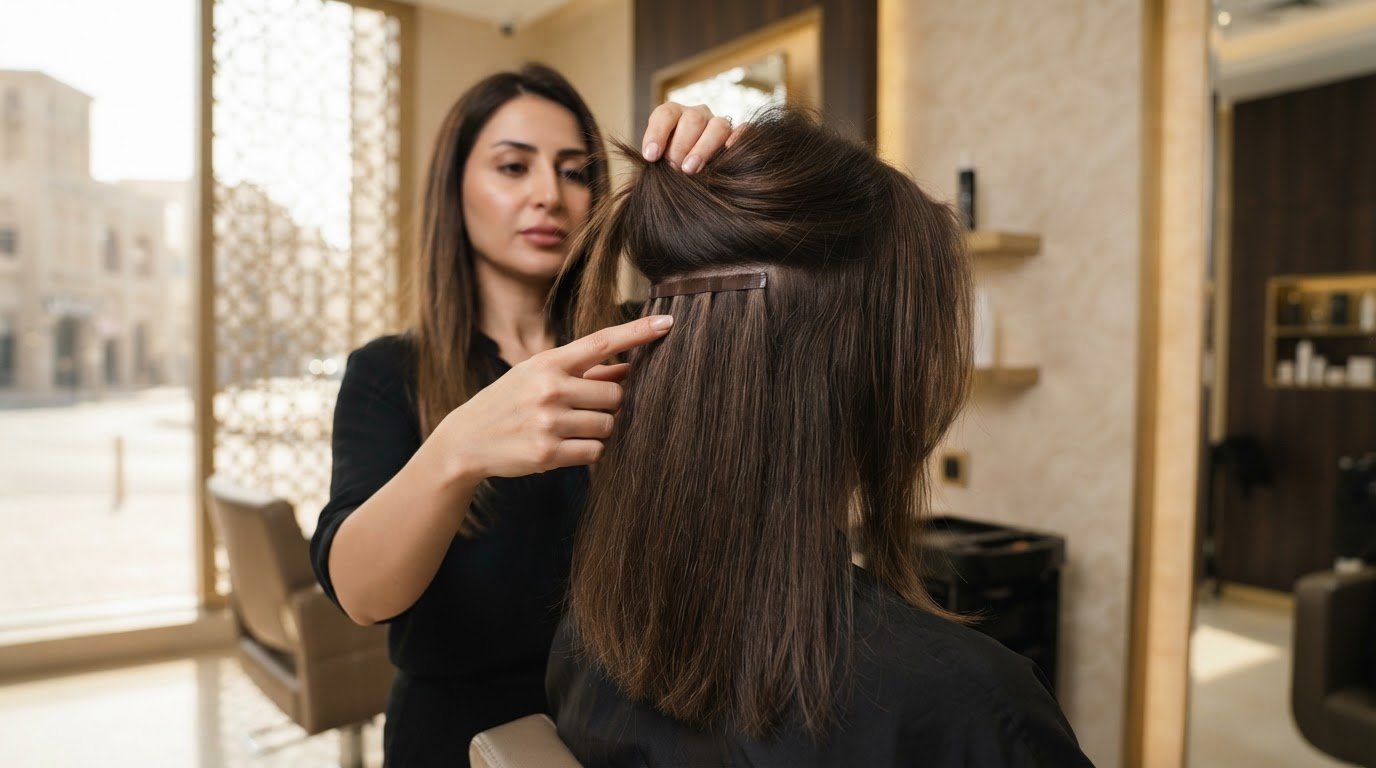
How Long Do Hair Extensions Last? Lifespan by Type

Hair extensions last from a few weeks between adjustments to several months before replacement, and clip-ins can last up to two years. The figure depends on the type, the quality of the hair, your own shedding and how you care for them. Fitted extensions need a salon visit every 6 to 12 weeks, depending on the method. At Boost Beauty Lounge in Deira, our Hair Extension Package costs 1499 AED and includes colour matching and blending, a consultation and home-care guidance.
TL;DR
- Clip-ins can last up to two years. Keratin bonds can be worn for three to four months. Tape extensions need adjusting every six to eight weeks.
- Micro and nano bonds can be worn for about two months before maintenance. The hair itself lasts about six months before replacement.
- Good quality human hair can last 6 to 12 months or more with gentle treatment.
- Your natural shedding, heat, chlorine, rough brushing and missed maintenance visits shorten the life of extensions.
- Moving extensions up on time protects your own hair as well as the extensions.
Table of Contents
- How long each type of hair extension lasts
- What makes extensions last shorter or longer
- How often to move up your extensions
- Signs your extensions need adjusting or replacing
- Protecting your own hair while wearing extensions
- A realistic yearly plan
- Our view: lifespan is decided by the plan, not only the hair
- Hair extensions at Boost Beauty Lounge
- FAQ
- Sources
How long each type of hair extension lasts
There is no single answer, because “hair extensions” covers methods that work very differently. Some sit on your hair for a day. Others stay in for months. The figures below come from a UAE hair extensions guide in The National.
| Type | How long it lasts | Maintenance |
|---|---|---|
| Clip-in | Up to two years of shelf life | Removed by you each night |
| Tape | Adjusted every six to eight weeks | Salon move-up |
| Micro and nano bonds | About two months before maintenance, hair about six months before replacement | Salon move-up |
| Keratin bonds | Three to four months if well maintained | Salon removal and reapplication |
Two numbers are easy to confuse. The first is how long the extensions stay in before they need a visit. The second is how long the hair itself stays good enough to wear. Tape and bonds are usually taken out, the hair is cleaned, and then it is fitted again. So one set of hair can go through several fittings.
Clip-in extensions
Clip-ins are temporary. You put them in and take them out yourself, so they do not pull on your hair all day and all night. Their lifespan is counted in wears and care, not weeks. Heat styling, product build-up and rough brushing wear them out faster. Careful storage helps them last toward that two-year figure.
Tape extensions
Tape extensions are flat wefts attached with adhesive strips. They sit close to the scalp and look discreet. They need adjusting about every six to eight weeks, because as your hair grows the tape moves away from the roots. If you leave them, the strip sits lower and lower and tugs at the hair. Our guide to nano rings versus tape extensions explains which one suits which hair type.
Micro bead and nano ring extensions
These attach small strands to your hair with tiny beads or rings. You can wear them for about two months before maintenance. The hair itself lasts about six months before it should be replaced. Because each strand is separate, they move naturally and can be adjusted in sections. Our micro bead extensions care guide covers the routine for Dubai conditions.
Keratin bond extensions
Keratin bonds are the most durable. They can be worn for three to four months if well maintained. That longer gap suits people who want fewer salon visits. It also means the bonds sit on growing hair for longer, so brushing and washing habits matter more.
Human hair quality
Human hair extensions are the ones most people mean when they ask about lifespan. Remy hair can last 6 to 12 months or more with gentle treatment, according to one care guide. Our article on human hair extension types and how to choose goes through the options in more detail.
What makes extensions last shorter or longer
Two people with the same extensions can get very different results. Five things explain most of the gap.
Your natural shedding
Everyone sheds hair every day. With extensions in, the shed hairs stay trapped in the attachment instead of falling out. British Vogue reports expert advice that lifespan depends heavily on how much you shed. Over time the trapped hair means the extension loses support. This is why an appointment at the recommended interval matters. If you shed more than average, you may need shorter gaps between visits.
How you wash and dry
Wash gently and rinse well, so no product stays near the attachments. Be careful around the roots, where the bonds or tape sit. Dry the hair fully, and do not go to bed with damp roots. Follow your stylist’s instructions for the first washes after fitting, because adhesives and bonds need time to settle. We give home-care instructions with our packages for this reason.
Heat, brushing and chemicals
Rough brushing, frequent heat styling and chemical services make extensions shed and tangle more. Brush from the ends upward, and hold the hair above the attachment while you do. Use heat protection if you style. Colour services on extensions should be planned with your stylist, not done at home.
Chlorine and swimming
Dubai has many pools and beaches. Chlorinated water dries hair and can leave it tangled. Our swimming with extensions checklist gives a ten-minute routine to follow after a swim.
Sleep
Friction at night causes tangling at the roots. A loose plait and a silk or satin pillowcase reduce it. We cover this in how to sleep with hair extensions.
How often to move up your extensions
Moving up means the stylist loosens or removes the attachments, slides them back to the root area, and refits them. As your hair grows, the extensions sit further from the scalp. The weight then hangs from a longer lever of hair. That strains the roots.
As a guide, plan for these gaps:
- Tape: every six to eight weeks.
- Micro and nano bonds: about every two months.
- Keratin bonds: every three to four months, if well maintained.
The gap is not a fixed rule. Fine hair often needs earlier visits. Fast-growing hair does too. The best way to set your own schedule is a consultation. Our post on hair extensions maintenance and six to eight week checks explains what happens at each check.
A move-up is also when the salon can separate shed hair trapped near the attachments, which helps reduce tangling and tension. Do not try to remove or refit extensions yourself. Pulling on bonds or tape can tear your own hair.
Signs your extensions need adjusting or replacing
Do not wait for the calendar if you notice any of these:
- A row of extensions slips down or becomes visible.
- The roots feel tight, pull, or hurt for more than a short time.
- Tangles form at the attachment and will not brush out gently.
- The hair feels dry, matted, or no longer matches your natural colour.
- A bond, ring or tape strip has come loose.
A slipping row, pulling or ongoing discomfort calls for a stylist’s inspection, not a home fix. If your scalp is sore or you see thinning near the hairline, have the extensions checked straight away and see a doctor or dermatologist if it persists.
Protecting your own hair while wearing extensions
The lifespan of the extensions and the health of your hair are linked. Extensions add weight, and the weight pulls on the follicle. A 2026 review in the Journal of Craniofacial Surgery Open describes how sustained traction can affect the hair follicle, especially at the frontal and temporal hairline. It recommends keeping the added weight to roughly 10% to 15% of your natural hair, and wearing extensions for 6 to 8 weeks followed by 2 to 3 weeks off.
This is a good reason to choose a method that suits your hair density and to keep to your maintenance schedule. Thin or fine hair should carry fewer or lighter attachments.
The news on early problems is good. A UK pharmacy guide explains that early traction hair loss is often fully reversible once the tension is removed. Smooth, shiny patches on the scalp are a different matter and suggest scarring, so see a doctor or dermatologist if you notice them. Our guide to seven extension methods and traction alopecia helps you match the method to your hair.

A realistic yearly plan
Here is what one year might look like with each method, based on the timelines above.

Tape extensions. Fitted once, then adjusted about every six to eight weeks. That is roughly six to eight salon visits over a year, with the hair itself replaced when it wears out.
Micro or nano bonds. About six visits in a year at two-month intervals. The hair is replaced after about six months.
Keratin bonds. Three or four visits in a year at three to four month gaps.
Clip-ins. No fitting visits. You handle storage and washing, and the set can last up to two years.
The cost is not only the first fitting. Ask what each move-up includes before you book, and count the visits when you compare methods.
Our view: lifespan is decided by the plan, not only the hair
Most clients ask us how many months the hair will last. We think the better question is how the hair will be looked after.
The same extensions can look tired in weeks or fresh for months. The difference is the fit for your hair, the colour match, the move-up schedule and the home care.
This is why we start every extension booking with a consultation. We plan the method around your hair, then match and blend the colour so the extensions sit with your natural shade. We give home-care instructions so you know how to wash, dry, brush and sleep.
Our packages have a fixed price for any hair length. You pay after the service, and we have a 10-day satisfaction guarantee. A clear price and a clear plan make it easier to keep to your maintenance dates.
Boost
Hair extensions at Boost Beauty Lounge
Our Hair Extension Package costs 1499 AED, with colour matching and blending to your natural hair. It is a fixed price for any hair length, and you pay after the service is completed. The salon is in Deira, one minute from Salah Al Din Metro Exit 1, and you can book by WhatsApp or phone.
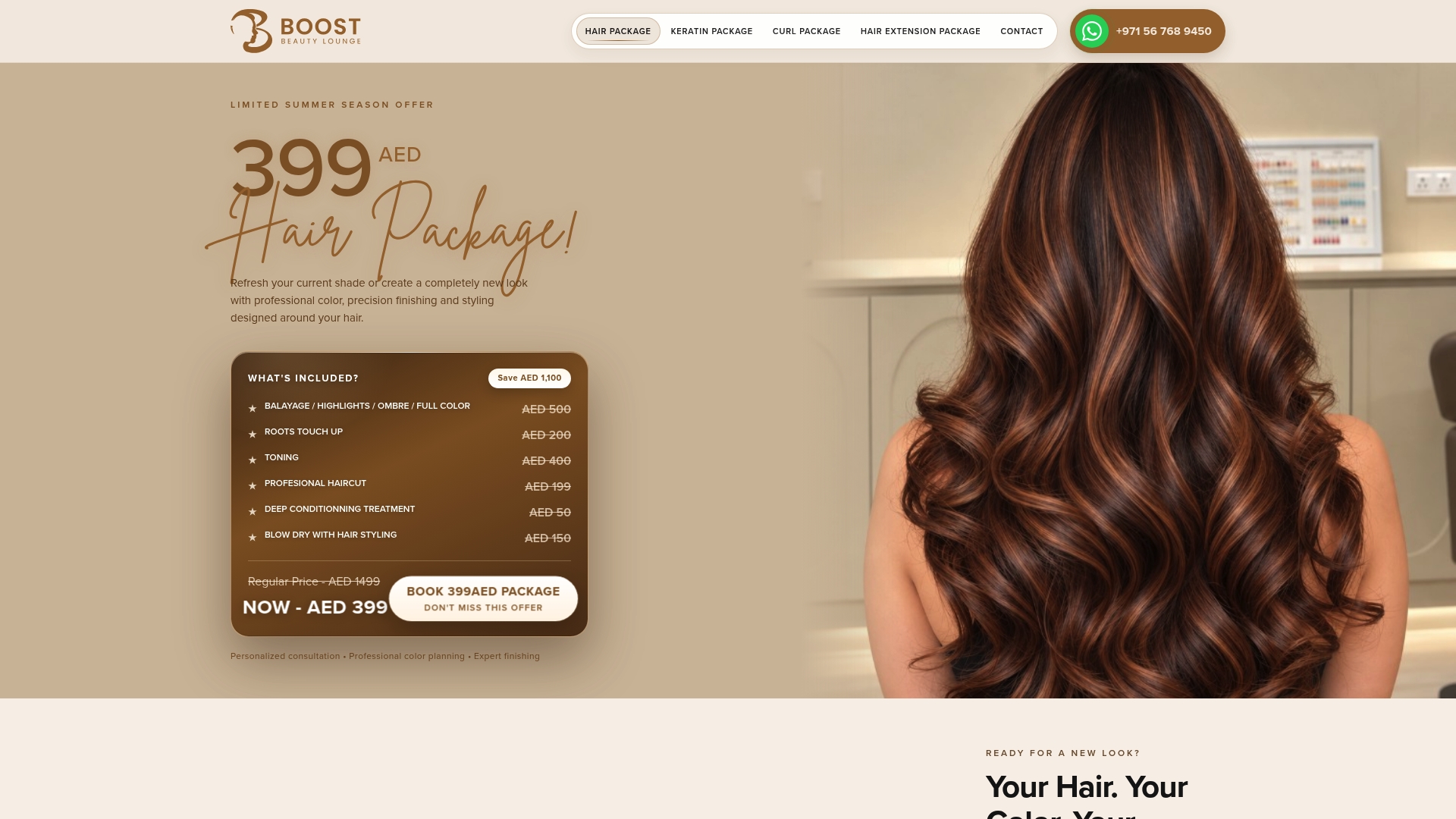
If you are also thinking about colour, our Hair Package covers balayage, highlights, ombre or full colour, and our Keratin/Protein/Botox Package is 1299 AED for smoothing treatments. Tell us at the consultation which services you want, so the plan fits together.
FAQ
How long do wefts last?
Wefts are usually adjusted every six to eight weeks, because your hair grows and the row moves away from the roots. The hair itself can last several months to a year or more, depending on quality and care. Your stylist can tell you when the row needs refitting.
Can you dye hair extensions?
Human hair extensions can be coloured, but it is best done in the salon with your stylist. Colour services can make extensions shed and tangle more if they are not planned well. A consultation helps to choose a shade that blends with your own hair.
How often should you wash hair with extensions?
Follow the schedule your stylist gives you for your method. Wash gently, take extra care at the roots, rinse well so no product builds up, and dry fully. After a new fitting, wait as long as your stylist advises before the first wash.
Do extensions damage hair growth?
Extensions pull on the hair, and sustained traction can affect follicles if the weight is too heavy or the maintenance is late. Early traction problems are often reversible when the tension is removed. Keep to your move-up dates, and see a doctor or dermatologist if you have persistent soreness, thinning or shiny patches.
How often should you move up extensions?
About every six to eight weeks for tape, about every two months for micro and nano bonds, and every three to four months for keratin bonds. Fine or fast-growing hair may need earlier visits. Your consultation sets the schedule that suits you.
Sources
- The mane menu: everything you need to know about hair extensions in the UAE, The National
- Hair extension care guide, Diverse Roots
- Hair Extensions, Decoded: 9 Types, British Vogue
- Hair Extensions: Anatomic, Biological, and Clinical Considerations, Journal of Craniofacial Surgery Open
- Do Hair Extensions Cause Hair Loss? Bolt Pharmacy
Recommended
Ready to book this look?
See this package