Chlorine strips away hair’s natural oils, leaving strands dry, brittle and more prone to split ends and discoloration. After swimming, rinse your hair and condition it daily, and use a clarifying shampoo one to three times per week to help remove pool buildup. A hair repair treatment for swimmers’ hair in Deira can also support a focused recovery routine when hair feels persistently rough or looks dull.
Post-swim dryness can tempt you to use stronger products or wash more often, but the wrong routine may add stress rather than help. Learn what chlorine can do to hair, which practical steps may restore softness, and which common care mistakes to avoid. Copper, iron and manganese in pool water can also contribute to a greenish tint, so understanding the change can help you choose a sensible next step.
Key Takeaways
- Rinse your hair after swimming and condition it daily; a clarifying shampoo can help remove pool buildup when used as part of a balanced routine.
- Pre-wet your hair before entering the pool and wear a swim cap to help limit contact with chlorinated water.
- Greenish discoloration can come from metals in pool water, not chlorine alone. Learn why porous hair is more likely to absorb them.
- Dryness, brittleness, split ends and color changes can signal swimmer’s hair. Spotting these changes early can help you adjust your care routine.
- Discover which common after-swim habits may leave hair feeling worse, and when a professional hair treatment may be a useful next step.
1. After-swim hair recovery routine
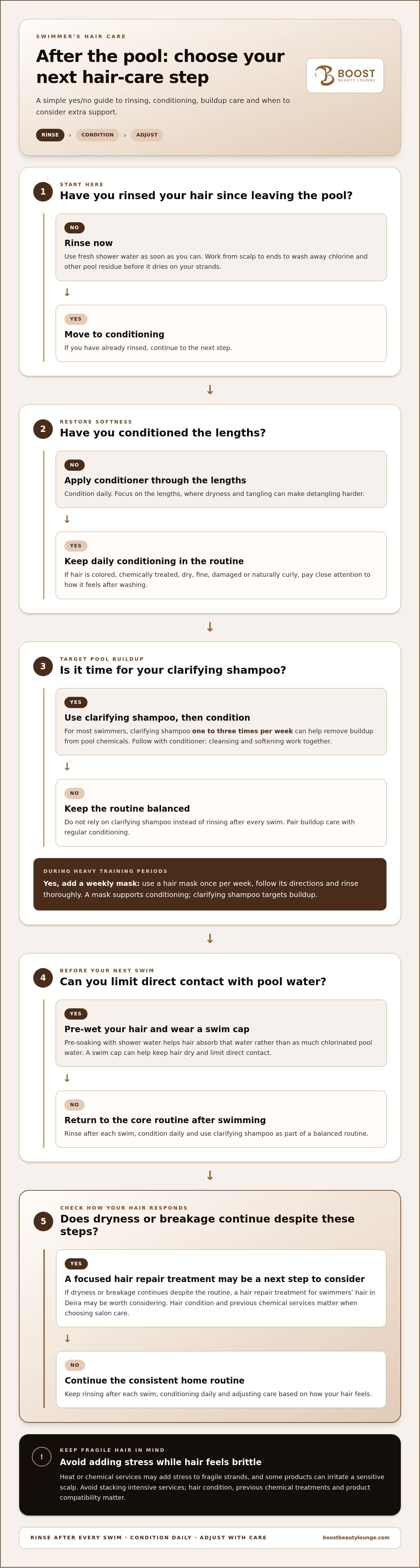
Rinse your hair as soon as you leave the pool. Fresh shower water helps wash away chlorine and other pool residue before it dries on your strands. Work the water from scalp to ends, especially if your hair is thick or curly. Then apply conditioner through the lengths, where dryness and tangling can make detangling harder.
Use conditioner daily in your swimmer hair recovery routine. For most swimmers, a clarifying shampoo one to three times per week can help remove buildup from pool chemicals. Follow it with conditioner, because cleansing and softening work together in a recovery routine. If your hair is colored, chemically treated, dry, fine, damaged, or naturally curly, pay close attention to how it feels after washing. Those hair types are more likely to experience swimmer’s hair effects.
A weekly mask can add a focused conditioning step during heavy training periods. Use a hair mask once per week, follow its directions and rinse it thoroughly. A mask supports conditioning, while clarifying shampoo targets buildup. Neither replaces rinsing after every swim. Consistent post-pool care matters when you swim regularly, including for recreation once or twice per week.
Before your next swim, wet your hair with shower water. Pre-soaking helps hair absorb that water rather than as much chlorinated pool water. A swim cap can also help keep hair dry and limit direct contact with pool water. These steps can be especially useful if you practice twice daily and have more frequent chlorine exposure.
What ingredients or treatment types help repair chlorine-damaged hair? Choose conditioning products and moisturizing hair masks to support softness, alongside a shampoo intended to remove buildup. These types of care address different needs, so pair cleansing with conditioning instead of relying on one product alone.
What are the risks or side effects of salon treatments for chlorine-damaged hair in Dubai? Heat or chemical services may add stress to already fragile strands, and some products can irritate a sensitive scalp. Hair condition, previous chemical treatments and product compatibility all matter, so avoid stacking intensive services on hair that feels brittle or breaks easily.
Keep the routine simple: rinse after each swim, condition daily, and use clarifying shampoo one to three times weekly. Add a weekly mask during heavy training, and pre-soak before entering the pool. If dryness or breakage continues despite these steps, a hair repair treatment for swimmers’ hair in Deira may be a next step to consider.
2. Common swimmer hair-care mistakes
A rushed routine can undo the care you give your hair between swims. One common mistake is rubbing wet strands hard with a towel. Wet hair tangles easily, and rough friction can pull at knots. Press a towel gently against the lengths instead, then detangle from the ends upward while holding each section to reduce tugging near the roots.
Another mistake is forcing a brush through a tight knot. Start with your fingers to separate the largest tangles, then use a wide-tooth comb. Work in small sections rather than dragging the comb from scalp to ends. This is especially helpful for long, curly or extension-wearing hair, where tangles can collect underneath.
Frequent heat styling can also stress hair after pool exposure. A hot blow-dryer or straightener may make already rough-feeling lengths feel drier. Let your hair air-dry when practical, or use a lower heat setting and keep the dryer moving. Avoid repeatedly passing a flat iron over one section to make it look smooth.
Don’t pile on several intensive treatments at once. Combining a salon service, a strong cleansing product and repeated heat styling can make it harder to tell what your hair tolerates. Change one part of your routine at a time. Note how your hair feels after washing, drying and swimming, then adjust the next step.
How long does a swimmer hair repair treatment take, and how long do results last? Timing depends on the service, hair length and density, and the condition of the strands. Results also depend on swim frequency, aftercare and your hair’s starting condition, so there is no single duration that fits every routine.
Are keratin or bond-repair treatments safe for swimmers and color-treated hair? The treatment name alone does not determine suitability. Hair condition, previous color or chemical services, and the formulation all matter. Boost Beauty Lounge’s Keratin Package is a distinct salon option, not a substitute for daily swimmer care. If your hair is colored or already fragile, consider its history before layering services without a clear purpose.
One final mistake is expecting a salon treatment to replace careful home habits. A treatment can complement your routine, but it doesn’t prevent fresh pool exposure from affecting your hair again. Keep heat use moderate, handle tangles gently and avoid stacking multiple chemical services close together. For swimmers in Deira considering Boost Beauty Lounge’s Keratin Package, match the service to your hair’s condition and swim routine.
3. Metals and green discoloration
A green tint after swimming can involve metals in pool water, not chlorine alone. Copper, iron and manganese can oxidize when chlorine is introduced. Porous hair may absorb these oxidized metals, leaving a greenish cast. This explains why a swimmer may notice a color change even when their hair looked normal before entering the pool.
Think of the process in two parts: metals in the water, then oxidation after chlorine is introduced. The resulting particles can cling to or enter porous strands. Hair that absorbs them may show a tint rather than simply feel dry. This distinction matters because dryness and discoloration are different signs, even though both can follow repeated pool exposure.
Notice where the color appears and how it looks in natural light. A greenish cast across the lengths may point to a different issue than a single patch or a change limited to the roots. Compare the hair near your scalp with the ends, and note whether the tint is strongest in previously colored or porous sections. These observations help you describe the change clearly.
Don’t assume stronger shampoo will solve every green tint. Shampoo intended to remove buildup can help reduce pool-chemical residue, but metal-related discoloration may need a more targeted approach. Avoid repeatedly shampooing in one wash or scrubbing the same section harshly. These steps can add friction without addressing metals absorbed by porous hair.
Start with a gentle, practical sequence after noticing discoloration:
- Rinse thoroughly so loose pool residue doesn’t remain on the hair.
- Use a shampoo designed to remove buildup, following its directions.
- Condition the lengths to help manage dryness and tangling.
- Compare the shade again once the hair is clean and dry.
If the green tone remains, avoid attempting dramatic color correction at home. Applying another chemical process over hair that already feels fragile can complicate its condition. Coloring history, texture and visible porosity all affect how strands respond. Before considering stronger treatment, distinguish surface buildup from a persistent color change.
Prevention starts before your next swim. Wetting your hair with shower water helps it absorb that water instead of chlorinated pool water, and a swim cap can help limit direct contact. These steps don’t identify which metal caused a tint, but they can reduce exposure to pool water. If green discoloration returns, record when it appears and which parts of your hair change.
4. Signs of swimmer’s hair
Swimmer’s hair often shows several changes together, rather than one isolated symptom. Repeated exposure to chlorine and other pool chemicals can leave strands dry, brittle, discolored or split at the ends. For example, hair may feel rough after drying and show more fraying near the tips. These changes can build with repeated swimming, so compare how your hair feels between pool days.
Dryness is a common clue. Hair may feel less soft, look dull or become harder to manage after a swim. Chlorine strips away natural oils, leaving strands less protected and more prone to dryness. Notice whether your lengths feel rough from roots to ends or whether the change is concentrated in older, more weathered ends.
Breakage and split ends offer another useful signal. Look for small forks at the tips, short broken strands around your shoulders or extra snapping during gentle detangling. Split ends can travel up the strand, so don’t pull them apart to inspect them. Check a few sections in bright light and compare the ends with hair closer to the roots.
Discoloration can appear alongside texture changes. A greenish cast may involve metals such as copper, iron or manganese in pool water. Chlorine can oxidize these metals, and porous hair may absorb them. Consider whether the color shift affects several lengths or appears in one area. That detail helps distinguish a broad change from a local patch.
- Dryness: Hair feels rough or looks dull after pool exposure.
- Brittleness: Strands snap easily during ordinary handling or detangling.
- Split ends: The tips show visible forks or frayed edges.
- Discoloration: Hair develops a greenish tint or another visible shade change.
Your swim pattern adds context. Recreational swimmers may swim once or twice per week, while those practicing twice daily face more frequent chlorine exposure. Compare your hair’s condition with your swimming routine, not just its appearance after one session. Chemically treated, colored, dry, fine, damaged or naturally curly hair is more likely to experience swimmer’s hair effects.
Track changes with a simple check after washing and drying. Note roughness, tangles, visible breaks, split tips and any color shift. If the same signs persist across multiple swims, adjust your care routine instead of adding several new products at once. A clear record helps identify whether texture, breakage or color is the main concern, giving your next hair-care decision a practical starting point.
5. What hair repair treatments help swimmers' chlorine-damaged hair?
Choose care based on the problem you can see and feel. Pool-chemical buildup calls for shampoo intended to remove buildup. Rough, dry lengths need conditioning care, such as a hair mask. These steps serve different purposes: one cleanses residue, while the other helps hair feel softer and easier to manage.
Start with your strands’ condition, not the most intensive treatment available. If your hair feels coated or dull after swimming, a buildup-removing shampoo may be a useful first step. If the lengths feel rough after cleansing, follow with conditioner. During heavy training periods, a hair mask once per week can add a focused conditioning step.
For a practical treatment plan, match each step to a clear need:
- Pool residue: Use a shampoo intended to remove buildup.
- Dry lengths: Apply conditioner after cleansing.
- Extra conditioning: Use a hair mask once per week during heavy training periods.
- Visible split ends: Arrange a trim, since products cannot join a split strand back together.
Keep your routine measured. Using clarifying shampoo too often can leave dry lengths feeling less comfortable, while adding several masks and treatments at once makes it harder to tell what helps. Follow product directions and introduce one new step at a time. For example, try a mask on wash day, then notice how your hair feels after drying.
Salon care may suit hair that stays rough or difficult to manage despite a consistent home routine. The right approach depends on whether your main concern is dryness, breakage, color change or buildup. A conditioning-focused service addresses a different concern from a treatment intended to smooth the hair’s appearance. A professional assessment can help match the service to your hair’s history and current condition.
Swimming frequency matters too. A recreational swimmer may need a different maintenance rhythm from someone training twice daily. Keep post-swim cleansing and conditioning consistent, and describe any coloring, chemical services or green discoloration when discussing salon care. Those details help guide a suitable treatment plan rather than relying on a one-size-fits-all option.
For a hair repair treatment for swimmers’ hair in Deira, focus on care that fits your strand condition and swimming routine. A treatment can support manageability, but ongoing pool exposure still calls for regular after-swim care. Explore hair treatment options if persistent dryness or rough texture is making your routine harder.
Boost Beauty Lounge: Hair Package
Boost Beauty Lounge offers hair-care options for swimmers considering salon services alongside their at-home recovery routine. If you’re weighing a smoothing service, the Keratin Package may be relevant; the Curl Package is an option for curl-focused needs. The Hair Package and Hair Extension Package offer additional choices for different hair goals.
Before choosing, consider your hair’s current condition, swimming frequency and history of coloring or chemical services. These details help guide a conversation about which offering fits your goals. Salon care complements regular post-swim care; it doesn’t replace rinsing and conditioning after pool exposure.
Contact Boost Beauty Lounge to discuss your hair-care goals.
Choose a care plan that fits your next swim
Your next step doesn’t need to be a dramatic change. Think about how you want your hair to feel after your next swim: easier to manage, softer to touch or more polished in shape. That goal can help you decide whether to keep adjusting your home routine or explore a salon treatment.
If you’re considering a hair repair treatment for swimmers’ hair in Deira, bring your swimming habits and hair history into the conversation. Coloring, previous chemical services and your preferred style can all shape which approach makes sense. Salon care can complement your routine, while everyday choices remain important between visits.
Boost Beauty Lounge can help you explore a suitable next step for your hair goals. Contact Boost Beauty Lounge to discuss your options and move forward with a plan that feels right for you.
Frequently Asked Questions
How Does Chlorine Damage Hair?
Chlorine can strip away the oils that help protect each strand, leaving hair more vulnerable to dryness and breakage. You may notice the effect during ordinary tasks, such as combing damp hair after a swim. Pool chemicals can also contribute to split ends or color changes over repeated exposure. If your hair starts behaving differently, note whether the change affects its texture, strength or shade.
Which salons in Deira, Dubai offer hair repair treatments for swimmers?
Boost Beauty Lounge in Deira, Dubai offers hair-care packages and treatments including Keratin, Protein and Botox. For swimmers seeking hair care in Deira, discuss your hair’s condition and swimming routine when choosing a salon option. Mention any coloring or previous chemical services too. This context helps shape a conversation around your hair goals instead of treating every swimmer’s hair alike.
What swimmer hair treatments are available in Deira, and how do they compare?
Boost Beauty Lounge offers Keratin, Protein, Botox, Curl, and Hair Extension packages. These are different service categories, so compare them by your goal, such as exploring a treatment package or choosing a curl-focused service. The available information doesn’t establish that each is designed specifically for chlorine damage. Share your swimming habits and hair history when discussing an option, especially if your hair is coloured or feels fragile.
How much do hair repair treatments for swimmers cost in Deira?
The cost depends on the service selected and your hair’s needs. Factors include treatment type, hair condition, length and previous chemical services. A swimmer with colored, brittle hair may need a different plan from someone seeking general manageability. Describe your swimming frequency and desired result when discussing your options so the service reflects your situation.
Which Deira salons specialize in damaged, dry, or chlorine-treated hair?
Boost Beauty Lounge is a hair salon in Deira offering treatments such as Keratin, Protein and Botox, alongside hair packages. If your hair feels damaged or dry after swimming, explain what has changed and which services you’ve previously had. For example, mention your color history or whether breakage is concentrated at the ends. This gives the salon useful context for discussing a suitable hair-care option.
How should swimmers prepare for and care for hair after a repair treatment?
Tell your stylist how often you swim, whether your hair is colored, and which products or chemical services you’ve used. After treatment, follow the specific aftercare instructions for that service instead of adding products without a clear reason. Keep the product directions available at home and use them when planning your next wash. Your regular swimming routine matters when maintaining a consistent care plan.
Do Deira salons offer consultations, patch tests, or swimmer-specific packages?
Boost Beauty Lounge offers personalized consultation and colour planning based on your current colour, hair condition, previous treatments, and desired result. Bring up swimming and chlorine exposure during that conversation, so those details can inform the discussion. A swimmer-specific package or patch-test arrangement isn’t something to assume from a treatment name alone. Focus first on sharing your hair history and the change you want to address.
Ready to book this look?
See this package