Book the AED 1,499 Salon Package for Face Framing Highlights in Dubai
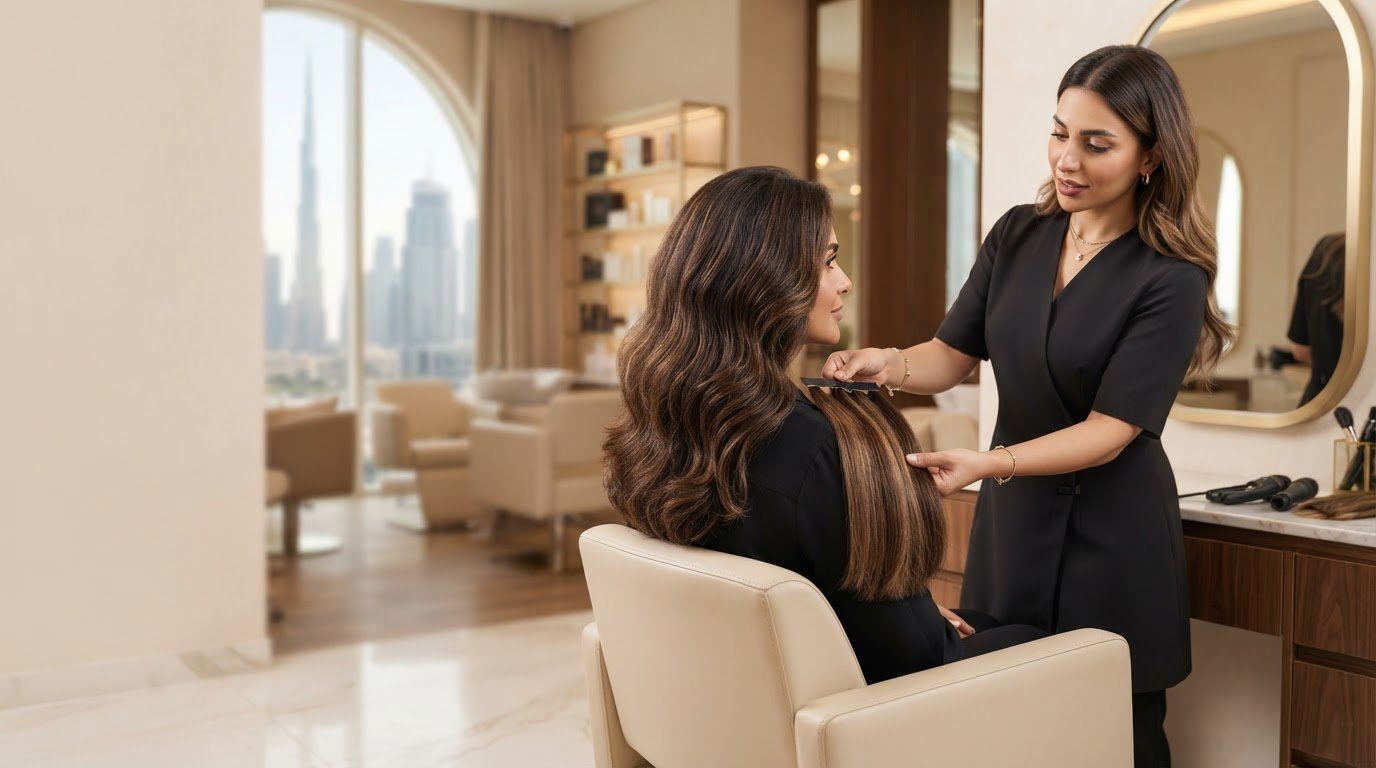
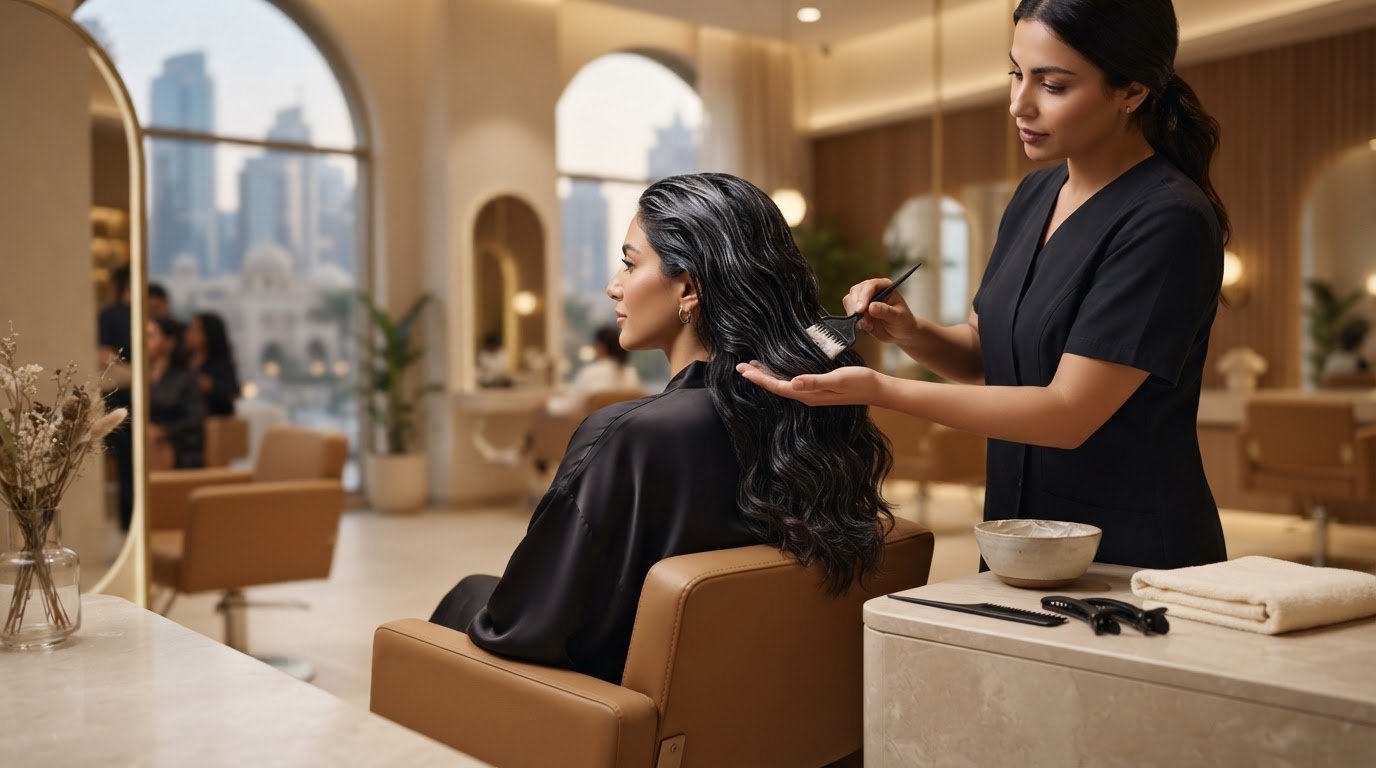
Face-framing highlights are lightened sections placed strictly around the hairline, from the parting down past the cheekbones, to lift and brighten the features without colouring the whole head. They suit anyone who wants a visible change with a lighter maintenance load: fewer foils, shorter appointments, and a softer grow-out than a full head of colour.
TL;DR:
- Face-framing highlights generally require fewer foils, shorter appointment times, and less maintenance than full or partial highlights, making them accessible for first-time colour clients.
- Placement strategies vary by face shape, with higher up and near the temples for round faces, tapered improvement for square jaws, and lower start points for heart-shaped faces.
- Contrast levels and technique choices depend on desired brightness, upkeep tolerance, and hair condition, with foils offering sharp definition and balayage providing a softer, sun-kissed look.
- Proper at-home maintenance for front pieces includes regular toning, purple shampoo, UV protection, and weekly bond repair masks to counteract faster fading and damage.
- Always specify whether you want a soft ribbon or a full money piece to avoid mismatched expectations, and ensure your stylist assesses your current hair condition to prevent damage.
Table of Contents
- What are face-framing highlights, and how do they differ from balayage?
- How should highlights be placed for your face shape?
- Foils, balayage, babylights or money piece: which technique fits you?
- Which colours and shade pairings work best?
- How do you maintain face-framing highlights at home?
- What should you bring to your consultation?
- What are the risks, and how do you prevent damage?
- How do you pick the right intensity and contrast for your skin tone?
- What mistakes should you avoid with face-framing highlights?
- How do face-framing highlights affect hair health long-term?
- Why Boost Beauty Lounge treats face framing as the ideal starting point
- Book your face-framing highlights at Boost Beauty Lounge
- Sources
- FAQ
What are face-framing highlights, and how do they differ from balayage?
Face-framing highlights describe where colour goes. Balayage, foils and babylights describe how it gets there. That distinction matters more than most people realise before their first consultation, because a stylist can create the exact same face-framing shape with three completely different application methods.
Wella’s professional guidance explains that stylists typically reach for balayage or foils to build a face-framing money piece, choosing between them based on how much lift the client wants. Foils trap heat and process faster, so they’re the go-to when someone wants a noticeably bright, high-contrast panel. Freehand painting gives a softer, more diffused edge that grows out gently.
The practical upside of framing over a full or partial highlight service:
- Fewer foils placed means less product and less processing overall.
- Shorter chair time, since the stylist isn’t sectioning the whole head.
- Often a lower price than full or partial highlights, because the job is smaller in scope.
- A softer regrowth line, since only the front sections are lifted.
How should highlights be placed for your face shape?
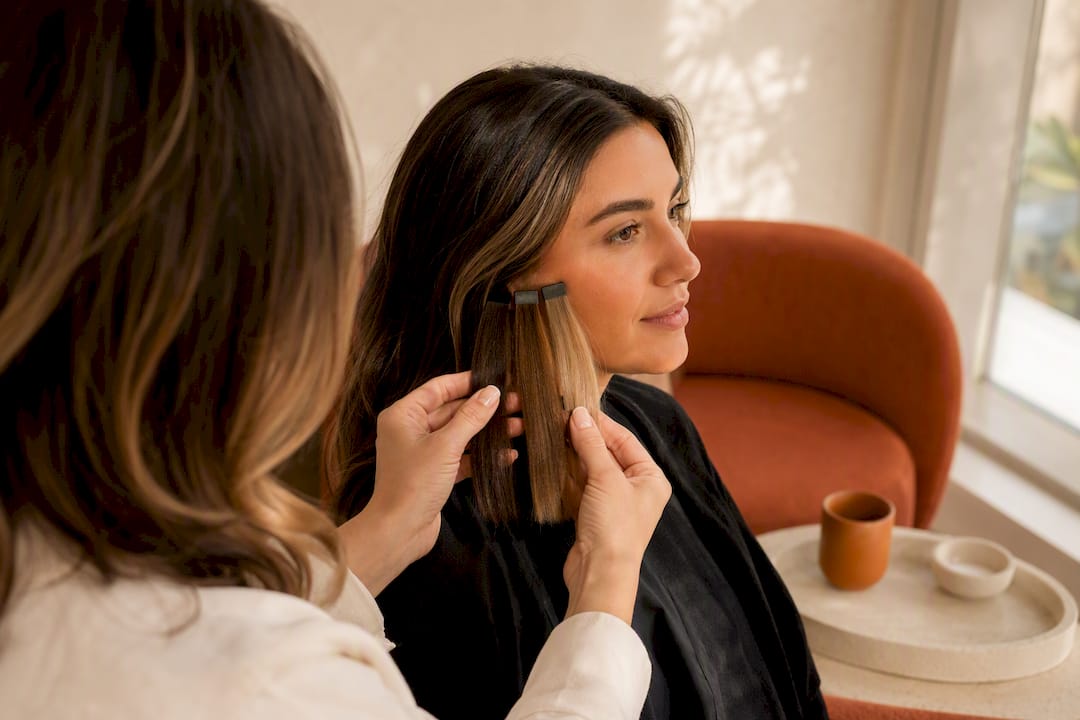
Placement is where a face-framing service either looks expensive or looks like an afterthought. Wella’s technique guidance frames this as hair contouring: using strategic brightness to lift the eyes, soften a strong jawline, or add dimension where the face needs it most. The rules shift depending on shape:
- Round faces benefit from highlights concentrated higher up, near the temples, to elongate the face rather than widen it.
- Square or angular jawlines soften best with highlights that taper wider at the cheekbone and narrow toward the chin, easing the hard edge.
- Oval faces have the most flexibility. Both a subtle ribbon and a bold money piece tend to work.
- Heart-shaped faces usually look best with highlights that start lower, balancing a narrower chin against a wider forehead.
- Long faces benefit from horizontal-feeling placement, wider panels rather than long thin strips, to add width visually.
Parting matters just as much as shape. A stylist should map highlights along your natural part, not a textbook diagram, since hair contouring depends on how the hair actually falls once you’re styled and out the door.
Foils, balayage, babylights or money piece: which technique fits you?
The technique you choose comes down to three things: how much contrast you want, how much upkeep you can tolerate, and how much lift your hair can handle without damage.
Foils suit anyone chasing a defined, high-contrast look. They allow higher-strength lightening and a cleaner edge, which is why colourists lean on them for a proper money piece. Wella’s professional formulas point to developer strength as the real lever here: colourists often process a bold money piece at a higher developer strength for definition, then follow immediately with a custom toner and a bond treatment to offset the extra lift.
Freehand balayage and babylights sit at the other end. Painted, low-volume lightening gives a diffused, sun-kissed result that blends rather than pops, and it typically asks less of your hair. This is the route for anyone who wants brightness without a hard line ever showing at the regrowth stage.
Quick trade-offs to weigh before you book:
- Foils: faster lift, sharper contrast, shorter appointment, more noticeable regrowth line.
- Balayage/babylights: softer blend, gentler on hair, longer to paint, regrowth is far less obvious.
- Money piece: the boldest version of framing, distinguished from a soft ribbon by its width and how high the panel is lifted.
Pro Tip: Ask your stylist which technique they’d use on their own hair for your goal. A colourist who reaches for foils on a client wanting a “barely-there glow” is optimising for speed, not for the result you actually asked for.
Which colours and shade pairings work best?
Shade choice should follow your base colour, not a photo pulled at random from a search engine. A few directions that consistently translate well in the chair:
- Blonde bases: cool, ash-toned lifts read expensive on naturally light hair; warmer honey tones suit anyone whose base already leans golden.
- Bronde and mid-brown bases: a soft, low-contrast lift keeps things wearable day to day, while a slightly warmer tone avoids the flat, one-dimensional look that over-toned brunettes sometimes get.
- Darker bases: honey, caramel and copper give warmth without demanding the aggressive lift a blonde money piece needs, which is gentler on the hair overall.
- High-contrast seekers: a concentrated money piece, lifted close to platinum against a dark base, delivers maximum drama but needs the most upkeep.
- Low-commitment seekers: a single-shade lift, one or two tones brighter than your natural colour, gives a natural glow that grows out with barely any visible line.
Not every framing look is a money piece, and it’s worth saying that plainly to your stylist. Some clients ask for “face-framing highlights” and mean two subtle ribbons; others mean a full panel of platinum. Being specific about which one you want saves a second appointment.
How do you maintain face-framing highlights at home?
Front pieces fade faster than any other section of your hair, full stop. They’re exposed to sunlight, get the most direct heat from styling tools, and are touched constantly throughout the day. Environmental exposure and styling both accelerate fading on these pieces specifically, which is why a maintenance plan matters more here than almost anywhere else on the head.
A realistic upkeep routine looks like this:
- Toning or gloss every 4 to 6 weeks for blondes, to keep brassy or yellow tones from creeping in.
- Purple shampoo once or twice a week, never daily, since overuse can leave hair looking flat or purple-tinted.
- UV protection spray or a leave-in with heat protectant before any sun exposure or hot tool use on the front sections.
- A bond-repair or moisture mask weekly, particularly if the lift was processed with a higher-strength developer.
Appointment cadence varies by how much lift you’re carrying and how much sun and heat your hair sees day to day. A soft, low-contrast lift might only need a refresh every 3 to 4 months. A bold money piece against dark hair often needs attention closer to every 6 to 8 weeks. A full face-framing service, including consultation, lightening, and a finishing toner, typically runs 90 to 150 minutes in the chair, which is meaningfully shorter than a full head of highlights.
What should you bring to your consultation?
A good consultation avoids the single most common disappointment in colour services: a result that technically matches the brief but doesn’t match what the client pictured. Prepare with a short, focused checklist.
- Bring two or three reference photos, ideally ones showing hair texture close to yours, and be specific about whether you mean a soft ribbon or a full money piece.
- Disclose your colour history honestly, including any box dye, keratin treatments or previous highlights, since this changes how the hair will lift.
- Ask which technique they’ll use and why, foils versus freehand, and what developer strength they’re planning.
- Ask what toner or gloss is included in the price, and whether a bond treatment is part of the plan or an add-on.
- Agree the aftercare routine and next appointment window before you leave the chair, not after.
A thorough consultation covers colour history, technique preference, lift level and aftercare as standard, and a toner or custom gloss should be part of that plan rather than a surprise upsell.
What are the risks, and how do you prevent damage?
Lightening hair, even in small sections, carries real risk if it’s rushed or mismatched to your hair’s condition. The most common problems with face-framing highlights are breakage at the lightened sections, uneven tone from inconsistent processing, and a brassy or muddy result when toning gets skipped or done poorly.
Breakage risk climbs sharply when a client with already-compromised hair, from bleaching, keratin treatments, or heat damage, pushes for a high-lift money piece in a single sitting. An experienced colourist will often recommend building lift over two sessions rather than forcing a dramatic jump in one visit, particularly on fine or previously coloured hair. Ask directly whether your hair’s current condition supports the lift you want, or whether a gradual approach protects it better.
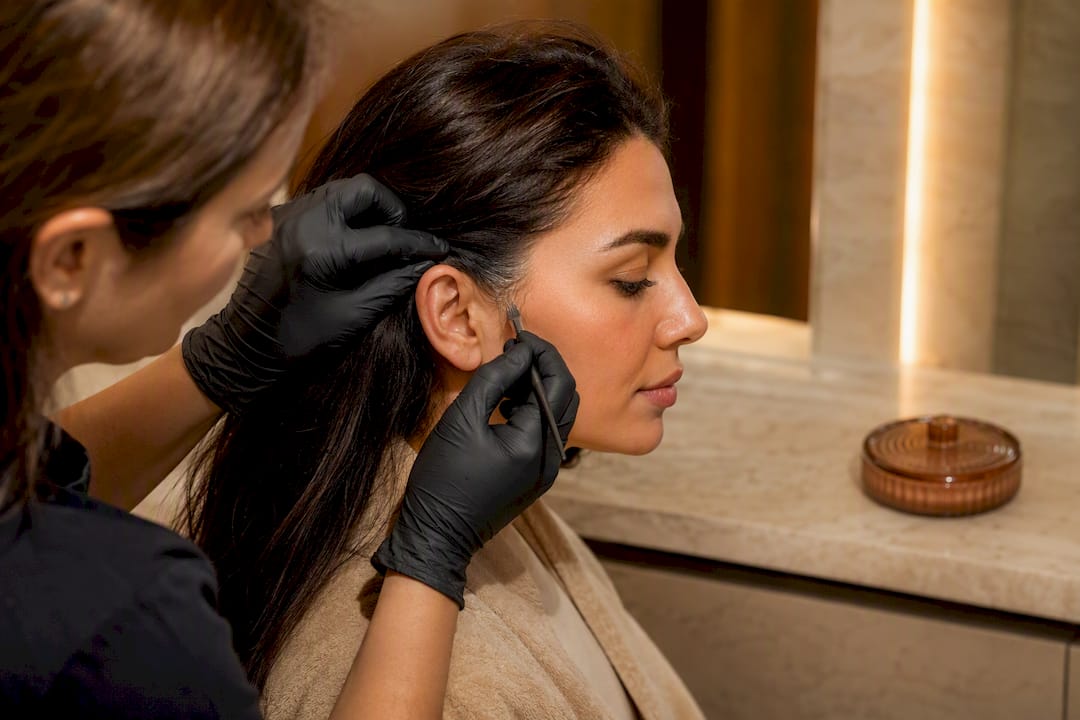
Patch tests matter too, especially if you’ve never had chemical colour before or have had a reaction in the past. A reputable salon will offer one before applying lightener near your hairline and skin.
Damage prevention comes down to three things that are entirely within your control: choosing a lower developer strength when the look allows it, insisting on a bond-repair step (not just a conditioner) when higher lift is used, and committing to the aftercare routine your stylist sets out. Skipping the last one is the most common reason a good result turns brittle within a few months. If you’re prone to dryness or your hair has been through multiple chemical processes already, say so before the foils go in, not after you notice the ends feel different.
How do you pick the right intensity and contrast for your skin tone?
Skin tone doesn’t dictate a single “correct” shade, but it does dictate which shades will look flattering versus washed out or harsh against your face.
Warmer, golden or olive undertones generally carry honey, caramel and warm blonde lifts beautifully, since the gold in the hair echoes the gold already in the skin. Cooler, pink or blue undertones tend to suit ash blonde, cool bronde or icy tones better, because a warm lift can occasionally clash and read slightly orange against fairer, pink-toned skin.
Contrast level is the second decision, and it’s arguably more important than the specific shade. High contrast, a pale money piece against dark roots, draws the eye straight to the face and reads as bold and intentional. That suits people who want a dramatic change and are comfortable with more frequent toning. Low contrast, a lift just one or two shades brighter than your natural colour, gives a softer, more natural-looking glow and is far more forgiving as it grows out.
A general rule that works for most skin tones: match warmth to warmth, and reserve the highest-contrast money piece for hair that’s already in good condition, since stark contrast shows every imperfection in tone far more obviously than a subtle blend does. If you’re unsure, ask your stylist to hold a couple of swatches against your face in natural light before committing. It’s a five-minute step that prevents most colour regret.
What mistakes should you avoid with face-framing highlights?
The single biggest mistake is skipping the mapping step. Highlights placed without reference to your natural parting look uneven the moment you style your hair differently. HairstylingAI’s practitioner guidance notes that stylists sometimes create a mapped part specifically so front pieces read consistently across different styling patterns, rather than only looking right when hair is parted one exact way.
Other recurring errors worth naming plainly:
Choosing a shade purely from a photo without accounting for your own base colour and undertone is a fast route to disappointment, since the same “honey blonde” reads completely differently on warm versus cool hair. Going too high-contrast for a first colour service is another: money-piece intensity is unforgiving of any unevenness, and it’s a big commitment to walk back if you decide you don’t like it. Skipping the toner step, whether to save money or time, is the quickest way to end up with brassy, dull-looking highlights within a few weeks rather than months.
And finally: treating “face framing” and “money piece” as interchangeable terms with your stylist. They aren’t. Being precise about which one you actually want, using photos rather than vague description, avoids the most common source of consultation mismatch.
How do face-framing highlights affect hair health long-term?
Lightening any section of hair breaks down its internal structure to some degree, and front pieces bear more wear than the rest of the head simply because they’re touched, styled and exposed to sun more often. The good news is that because face framing lightens a smaller area than a full head of highlights, the total damage load is usually lower.
That said, the damage that does happen concentrates in a small, highly visible zone, so it shows faster than damage buried in mid-lengths further back. Dryness, roughness at the ends, and a duller-looking tone are the earliest signs the lightened sections need more support.
Mitigating this comes down to a few consistent habits: a weekly bond-building or protein mask, heat protectant applied every single time you use hot tools on the front sections, and resisting the urge to bleach over already-lightened pieces before they’ve had time to recover. If your hairline shows visible breakage, frizz that won’t sit flat, or a change in texture compared to the rest of your hair, that’s a signal to pause further lightening and focus on repair for a few months before your next refresh.
Why Boost Beauty Lounge treats face framing as the ideal starting point
Face framing works as a gateway colour service precisely because it delivers a visible change without asking a client to commit to full-head maintenance. Many salons focus their consultations on contrast level and upkeep rather than colour theory, and getting that conversation right upfront is what an effective consultation process and satisfaction guarantee aims to support.
— Boost
Book your face-framing highlights at Boost Beauty Lounge
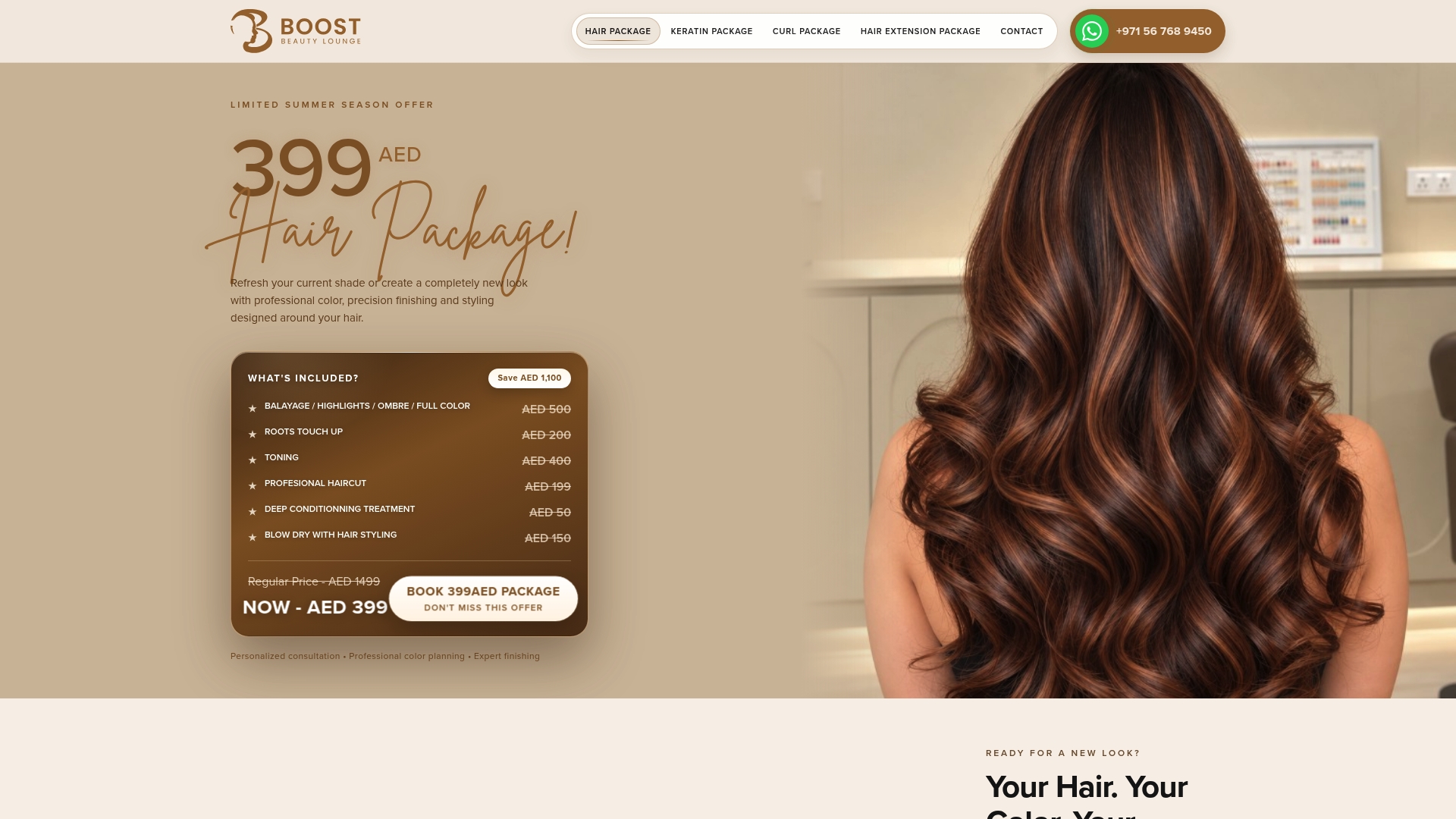
Boost Beauty Lounge is the practical alternative to piecing together a colour appointment blind: one fixed price, agreed upfront, instead of an open-ended quote that changes once you’re in the chair. The Hair Package covers balayage, highlights or full colour at AED 1,499, with roots touch-up, toning, a haircut, deep conditioning, blow-dry and styling included in that single price, for any hair length.
Every booking starts with a consultation, so your framing placement, technique and contrast level get agreed before any foil goes near your hair, and payment is only taken once the service is complete. If your hair has previous chemical treatments or breakage that needs addressing first, your stylist will flag it during consultation, since corrective work can shift the price and time beyond the standard package. Clients whose colour needs more than a face-framing refresh sometimes pair the appointment with the Keratin/Protein/Botox Package for added strength and shine.
Some salons are conveniently located near metro stations and offer packages that come with a satisfaction guarantee and home-care guidance to protect your new colour. Many allow booking consultations through WhatsApp or phone calls to secure appointment slots.
Sources
- Face framing highlights – Wella Professionals (US)
- The Ultimate Guide: Face Framing highlights & Contouring — Wella AU
- Face frame highlights — HairstylingAI
- Face framing highlights guide — The Look Hair Salon (Glendale)
FAQ
What do face-framing highlights do?
They brighten the hair directly around your face to lift the eyes, soften the jawline and add dimension without colouring the whole head. The effect is often described as hair contouring, using targeted brightness rather than an all-over colour change.
What’s the difference between face-framing highlights and partial highlights?
Face-framing highlights only target the hairline and pieces around the face, while partial highlights cover a wider area across the crown and top layers. Face framing generally uses fewer foils, which tends to mean shorter appointments and a lower cost than a partial or full highlight service.
What’s the difference between face-framing highlights and balayage?
Face framing describes where the colour is placed; balayage describes how it’s applied, using a freehand painting technique rather than foils. A stylist can create a face-framing look using either balayage or foils, depending on how much contrast and lift the client wants.
Who suits face-framing highlights and layers?
Almost anyone, since placement and ribbon width can be customised to different hair lengths and textures rather than following one fixed template. They’re a particularly good fit for first-time colour clients who want visible change without full-head upkeep, which is why Boost Beauty Lounge treats it as an accessible entry point within its Hair Package.
How much does a face-framing colour service cost at Boost Beauty Lounge?
Boost Beauty Lounge’s Hair Package is priced at AED 1,499 and includes highlights or balayage, toning, roots touch-up, a haircut, conditioning, blow-dry and styling. Corrective colour work outside the standard scope may affect the final price, which your stylist will confirm during consultation.
Recommended
Ready to book this look?
See this package