Seamless Balayage With Extensions in Dubai: AED 399 Same Stylist Match

Yes, a professional salon can deliver balayage with colour-matched extensions that look seamless, provided the stylist matches at the mid-lengths and blends with a bridging tone rather than eyeballing the roots. The standard workflow runs balayage first, then extension matching and installation second, sometimes in the same visit. An in-salon colour transformation package often follows this process, and a consultation can help decide which extension option suits your hair.
TL;DR:
- Matching extensions to balayage is most effective when evaluated on mid-lengths and ends using multiple shades for natural dimension rather than a single color.
- Proper colour blending involves holding swatches against dry, styled hair in natural light and applying a bridging tone to hide transition lines.
- Hand-tied wefts, tape-ins, and clip-ins are the safest extension types to work with balayage, while fusion bonds require extra caution to avoid weakening the adhesive.
- Natural balayage needs refreshing every 3 to 4 months, with gloss touch-ups every 6 to 8 weeks, while extensions typically require replacement or refresh every 4 to 6 months.
- Booking a combined service with the same stylist ensures more accurate colour matching, consistent results, and clearer pricing, often through fixed packages.
Table of Contents
- What happens during a balayage with extensions appointment?
- How do stylists match and blend extensions to balayage?
- Which extension methods work best with balayage?
- How often do you need to maintain balayage extensions?
- What should you ask before booking?
- Does balayage look the same on every extension type?
- How do you choose extensions that blend well with colour?
- Why an integrated colour and extension service works better
- Book your balayage and extension colour match at Boost Beauty Lounge
- Sources
- FAQ
What happens during a balayage with extensions appointment?
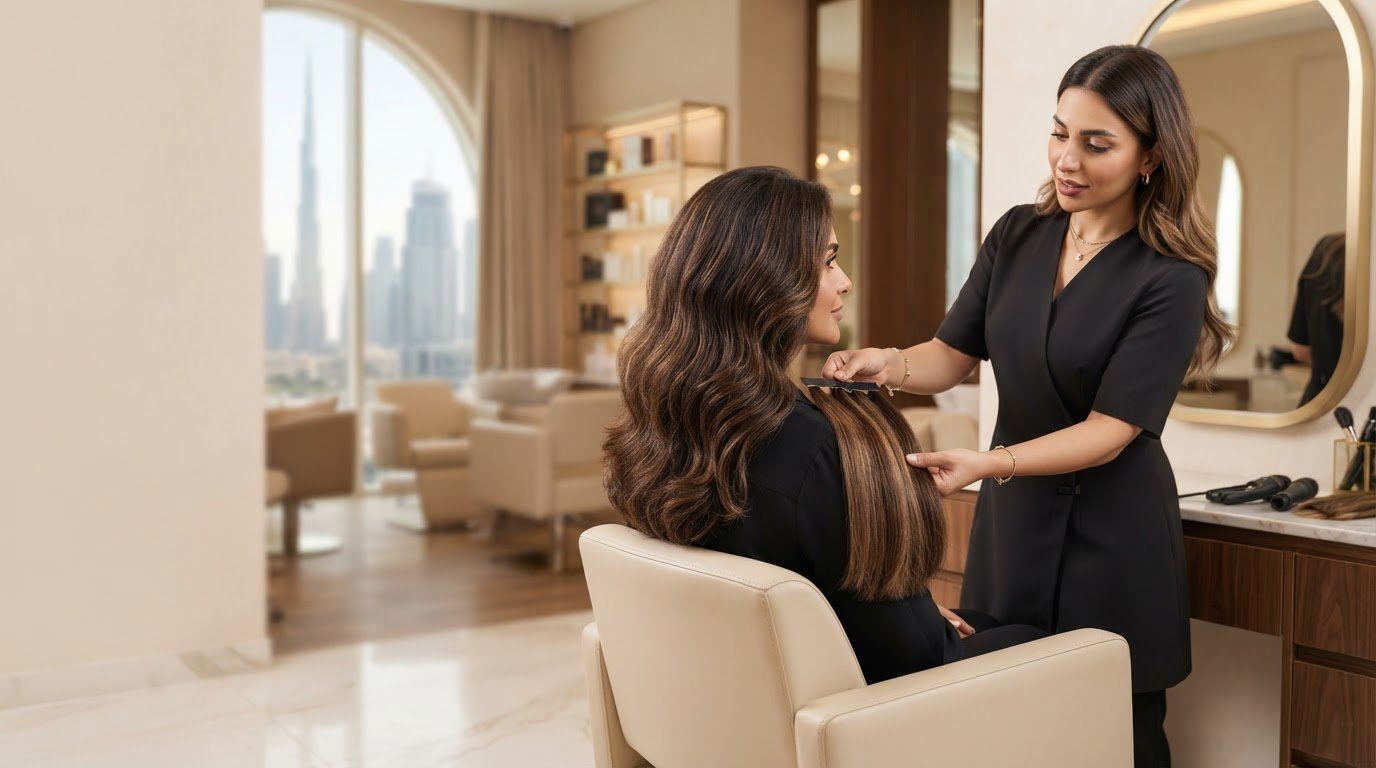
A proper appointment starts with a consultation, not with a colour bowl. The stylist checks your hair in natural light, because artificial salon lighting can make a shade look two tones warmer or cooler than it really is. From there, the appointment tends to follow a set order:
- Diagnostic check — texture, current colour history, and porosity are assessed, along with where extensions will sit against your natural hairline.
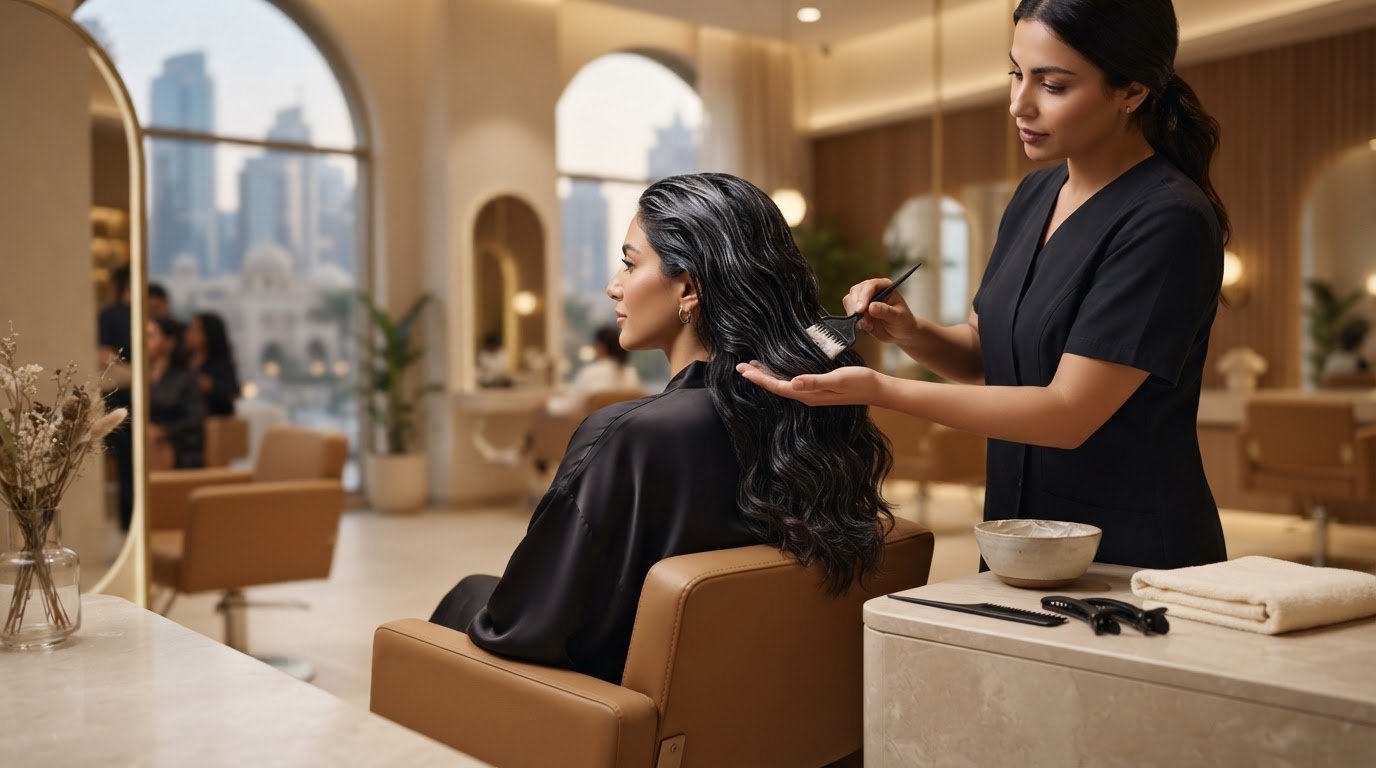
- Balayage application — lightener is hand-painted onto sections of the natural hair, avoiding the areas where wefts or tapes will later attach.
- Processing and toning — the colour develops, then a toner or gloss corrects any brassiness and settles the final shade.
- Deep conditioning and blow-dry — this restores moisture before any extension work begins, since dry cuticle makes accurate colour-matching harder.
- Extension matching and install — swatches are held against the mid-lengths to find the closest shades, then the extensions go in.
Combined appointments typically run several hours or longer, depending on how much lightening the balayage needs and which extension method you’re having fitted. Some salons offer same-day installs when the schedule allows; others prefer a second appointment so the toner has time to settle before matching begins. Bring photos of your current extensions if you have them, plus any inspiration images, and be upfront about your last colour service. That detail changes how much lightener a stylist will use.
How do stylists match and blend extensions to balayage?
Matching colour to extensions is not a one-swatch job. Professional colour-matching for extension installs works best when the stylist evaluates the mid-lengths and ends, not the root, because that’s the zone the eye actually reads as your “colour” when hair moves. Conde Professional’s colour-matching guide recommends fanning several swatches against this zone to simulate how light diffuses through real hair, then choosing two or three shades rather than one flat match.

That multi-shade approach matters more than most people expect. A single-shade match often looks flat and obviously “added,” while blending two or three adjacent tones recreates the dimension that balayage naturally builds through lightening.
Here’s what a competent colour-matching session actually looks like in the chair:
- The stylist holds a colour ring or swatch fan against dry, styled mid-lengths, never wet hair, since wet hair reads darker.
- Two to three shades are selected to create diffusion rather than a single flat block of colour.
- Testing happens near a window or under daylight-balanced lighting, not standard salon downlights.
- A bridging tone — a half-shade shadow painted or smudged at the root of the extension — gets applied to stop a visible line where the weft or tape meets your natural colour.
That bridging tone is the detail most DIY colour-matching skips entirely, and it’s usually the difference between “you can tell” and “you genuinely can’t.” A stylist will also decide whether to reach for pre-coloured balayage extensions that already carry the right dimension, or whether to gloss extension hair rather than lighten it. Glossing shifts tone without stripping the hair’s cuticle, which matters because extension hair, once processed, cannot rebuild itself the way your scalp’s natural hair does over time.
Pro Tip: Ask your stylist to test the swatch match against a section of your hair that’s been dried and styled the way you normally wear it. A match that looks perfect on damp hair under salon lights can shift noticeably once you’re home under different bulbs.
Which extension methods work best with balayage?
Sequencing matters as much as shade selection. Stylists generally do the balayage first, then match and install extensions afterwards. Colouring extensions that are already installed is possible but riskier, and most professionals avoid it unless the correction is minor, according to Hottie Hair’s guide to combining balayage and extensions.
Some installation methods take colour, movement, and heat far better than others once balayage is in the mix:
- Hand-tied wefts and thin or volume wefts blend well because their flat, layered construction mimics the way natural balayage falls across sections of hair.
- Staggered tape-ins work nicely too, since the placement pattern can be adjusted to hide the transition point under the balayage’s natural highlight pattern.
- Clip-ins are the safest of all to colour around, simply because they’re removed before the service and matched separately afterwards.
- K-tip or fusion bonds carry more risk. Lightener that touches the bonding material can weaken the adhesive, according to Conde Professional’s guide to balayage extensions, so a stylist working over fusion extensions typically uses a lower developer strength and keeps lightener well clear of the bond itself.
If you already wear extensions and just want a colour refresh, ask about glossing or low-shift toning instead of full lightening. That’s usually the safer route, and timed replacement is sometimes the better call than trying to chemically process bonds that are already a few months old.
How often do you need to maintain balayage extensions?
Two separate clocks start running once you leave the salon: one for your natural balayage, one for the extensions themselves. Your balayage typically wants a refresh every 3 to 4 months, with a lighter gloss touch-up every 6 to 8 weeks to keep tone from drifting warm. Extensions run on their own cycle entirely, usually needing a refresh or full replacement every 4 to 6 months depending on wear, according to Hottie Hair’s maintenance guidance.
At home, a few habits protect both:
- Keep heat styling low and use a heat-protectant every time, since extension hair can’t repair thermal damage the way natural hair partially can.
- Switch to a sulphate-free, colour-safe shampoo to slow fade on both your natural balayage and any coloured wefts.
- Book occasional bond-builder treatments if your natural hair took heavy lightening.
- Watch for a visible seam at the root, “shelfing” where extension hair separates in a layer, or any looseness at the bonds. Any of those three is a sign to book sooner, not wait for your scheduled refresh.
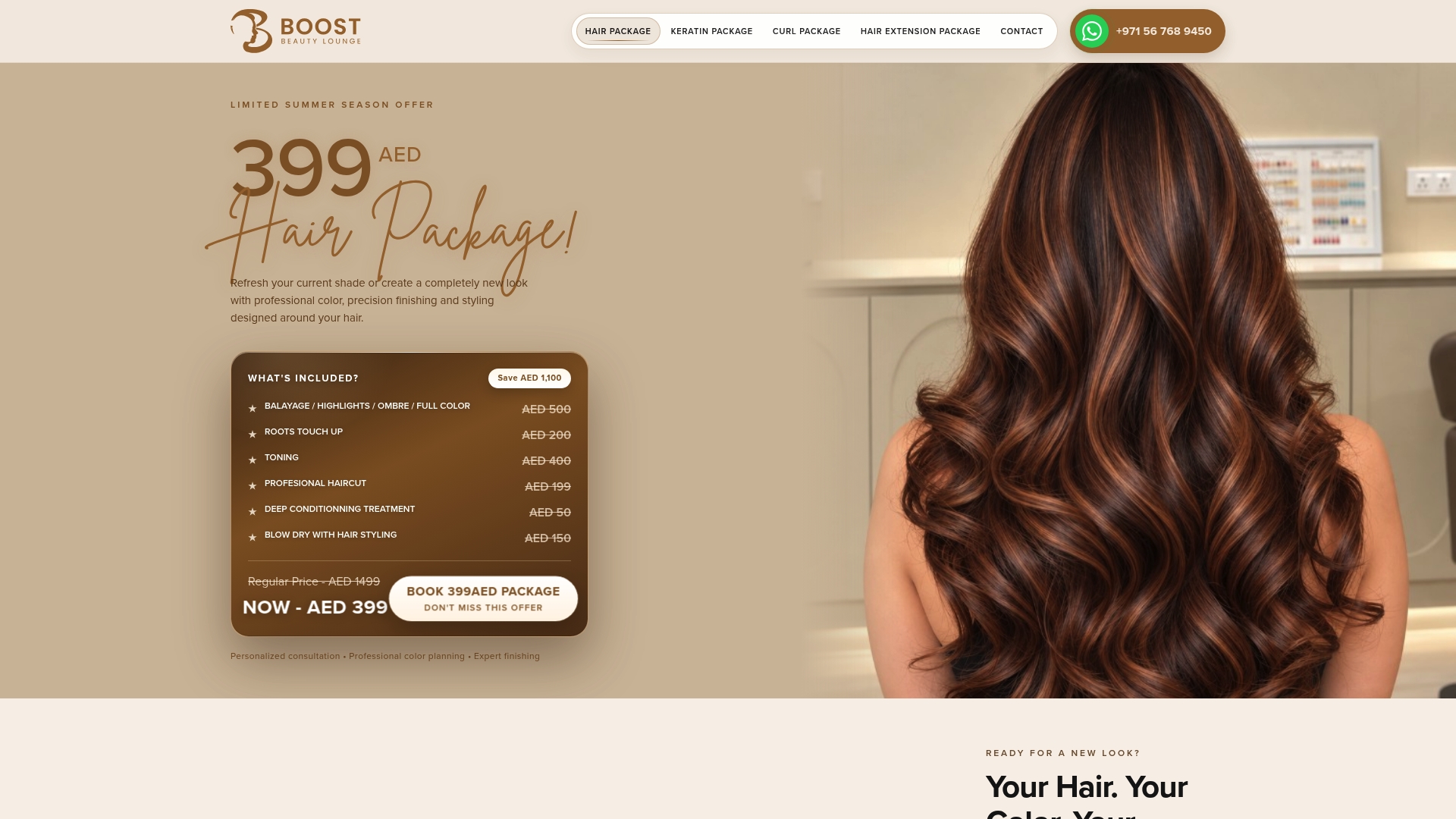
Colour transformation packages that bundle toning, conditioning, blow-dry, and styling into one fixed price make budgeting simpler. Boost’s Hair Package, for example, runs at a fixed AED 399 and covers the colour service itself plus the finishing steps, with extension work priced separately through its own package.
Glossing has real limits worth knowing before you book: shifting extension hair tone by more than roughly two to three levels usually calls for replacement rather than repeated lightening, since extension hair fatigues and won’t rebuild the way scalp hair does.
What should you ask before booking?
A short checklist before you commit saves you a wasted appointment and an awkward colour correction later:
- Bring reference photos — both your inspiration image and current photos of your existing extensions, if you have any.
- Request a mid-length swatch match in the chair, and ask to see the stylist’s portfolio of previous balayage-plus-extension work.
- Ask whether the salon stocks pre-blended balayage wefts or does its own in-house toning, and whether same-day installs are realistic for your hair length.
- Confirm the appointment length, the refresh or move-up schedule, whether there’s a satisfaction guarantee, and how payment works.
- If you already wear extensions, ask directly whether the stylist can colour around them safely or whether replacement first is the smarter call.
Salons that answer these questions clearly, without hedging, are usually the ones with genuine experience blending colour across both hair types.
Does balayage look the same on every extension type?
Not quite, and this catches a lot of people off guard. Balayage relies on light hitting hair at different depths to create that sun-lightened effect, which means the base material of your extensions changes how convincing the result looks.
Synthetic extensions are the biggest limitation. They don’t take toner or gloss the way human hair does, so any balayage done on your natural hair simply won’t extend into synthetic strands. Pre-coloured synthetic pieces exist, but matching them precisely to a freshly balayaged natural colour is far harder than matching human hair.
Human hair extensions take colour and light far more predictably, which is why most salons doing serious balayage work insist on them. Even within human hair, texture changes the outcome. Fine, straight extensions show dimension crisply, almost like painted strokes, while curly or coily textures diffuse the highlight pattern across more surface area, softening the contrast between light and dark sections.
Previously coloured or chemically treated extensions carry their own ceiling. Hair that’s already been lightened once has less capacity to take further toning evenly, and porous strands can grab toner unevenly, leaving patchy results instead of the smooth melt balayage is meant to create. This is one more reason stylists lean towards pre-coloured balayage wefts rather than trying to process extension hair repeatedly to chase a moving target.
How do you choose extensions that blend well with colour?
Quality and origin matter more here than most people assume going in. 100% human hair extensions, ideally cuticle-intact (sometimes labelled Remy), take toner and gloss evenly because the cuticle layer still runs in one direction, the way natural hair grows. That uniform cuticle is what allows colour to sit consistently instead of blotching in patches.
Origin affects texture compatibility too. Hair sourced to match a similar texture and density to your own natural hair blends with far less visible transition than a mismatched texture forced to sit alongside it, no matter how close the colour match is.
Pre-coloured balayage wefts, where the manufacturer has already built dimension into the strand through graduated colouring, are worth asking about directly. Alma Pro’s colour-matching guide for stylists notes that stacking a slightly darker weft underneath a lighter one can recreate complex, lived-in colour without putting extension hair through repeated chemical processing.

Ask your salon directly what hair grade they stock and whether it’s been pre-toned to match common balayage results, rather than raw and unprocessed. A salon that can answer specifics about hair origin and grade, rather than a vague “it’s good quality,” is usually the one that has actually built its extension service around colour work, not just installation.
Why an integrated colour and extension service works better
Splitting balayage and extensions across two different providers means two different people guessing at the same shade, usually with no shared reference point. That’s where most visible seams come from.
At Boost Beauty Lounge, the same stylist who does your balayage also handles the extension match, working from swatches taken directly off your finished colour rather than a photo or a memory of a shade. The AED 399 Hair Package bundles the colour work with toning and conditioning, stylist profiles and before-and-after galleries let you check a stylist’s track record beforehand, and the 10-day satisfaction guarantee gives you a real safety net if a shade needs adjusting once you’ve lived with it under normal daylight. Payment happens after the service, and the salon sits a minute from Salah Al Din Metro Exit 1.
— Boost
Book your balayage and extension colour match at Boost Beauty Lounge
Boost Beauty Lounge is the fixed-price alternative to piecing colour and extensions together across two separate bookings and two separate stylists guessing at the same shade. The Hair Package covers balayage, highlights, ombre, or full colour at AED 399, with roots touch-up, toning, haircut, conditioning, blow-dry, and styling included in that one price.
If you’re wearing extensions already or want them fitted alongside your colour, the Hair Extension Package covers the matching and install separately, so you know exactly what each part of the service costs before you sit down. Boost also runs fixed-price Keratin, protein, and botox smoothing and curl definition packages, if smoothing or texture work is part of your plan too. Every booking starts with a consultation, you pay after the service is done, and you leave with home-care guidance and a 10-day satisfaction guarantee behind you. Message Boost Beauty Lounge on WhatsApp or call the salon directly to check stylist availability and book your appointment.
Sources
- How to Color Match Hair Extensions: A Stylist’s Guide – Conde Professional
- Hair extensions + balayage: The complete guide to combining both (2026) | Hottie Hair
FAQ
Can you get balayage and extensions done in one appointment?
Yes, many salons offer same-day balayage and extension installs, though the full combined service typically takes 3 to 5 hours or more. Some stylists prefer splitting it into two visits so toner fully settles before the final colour match happens.
Should extensions be coloured before or after they’re installed?
Extensions are almost always matched and installed after your natural hair has been balayaged and toned, not coloured first. This lets the stylist match the extension shade directly against your finished result rather than guessing, according to Hottie Hair’s guide.
What extension type blends best with balayage?
Hand-tied wefts, thin or volume wefts, and staggered tape-ins generally blend most naturally with balayage’s soft transition. Fusion or K-tip bonds work too, but need extra care since lightener too close to the bond can weaken the adhesive.
How much does balayage with extensions cost?
Pricing varies by salon and by how much extension work is involved. Boost Beauty Lounge’s colour transformation runs at a fixed AED 399 for the Hair Package, with extension matching and installation priced separately through its dedicated Extension Package.
How often do balayage extensions need maintenance?
Your natural balayage typically needs refreshing every 3 to 4 months, with lighter glosses every 6 to 8 weeks in between. Extensions run on a separate cycle, usually needing replacement or refresh every 4 to 6 months depending on wear.
Recommended
Ready to book this look?
See this package