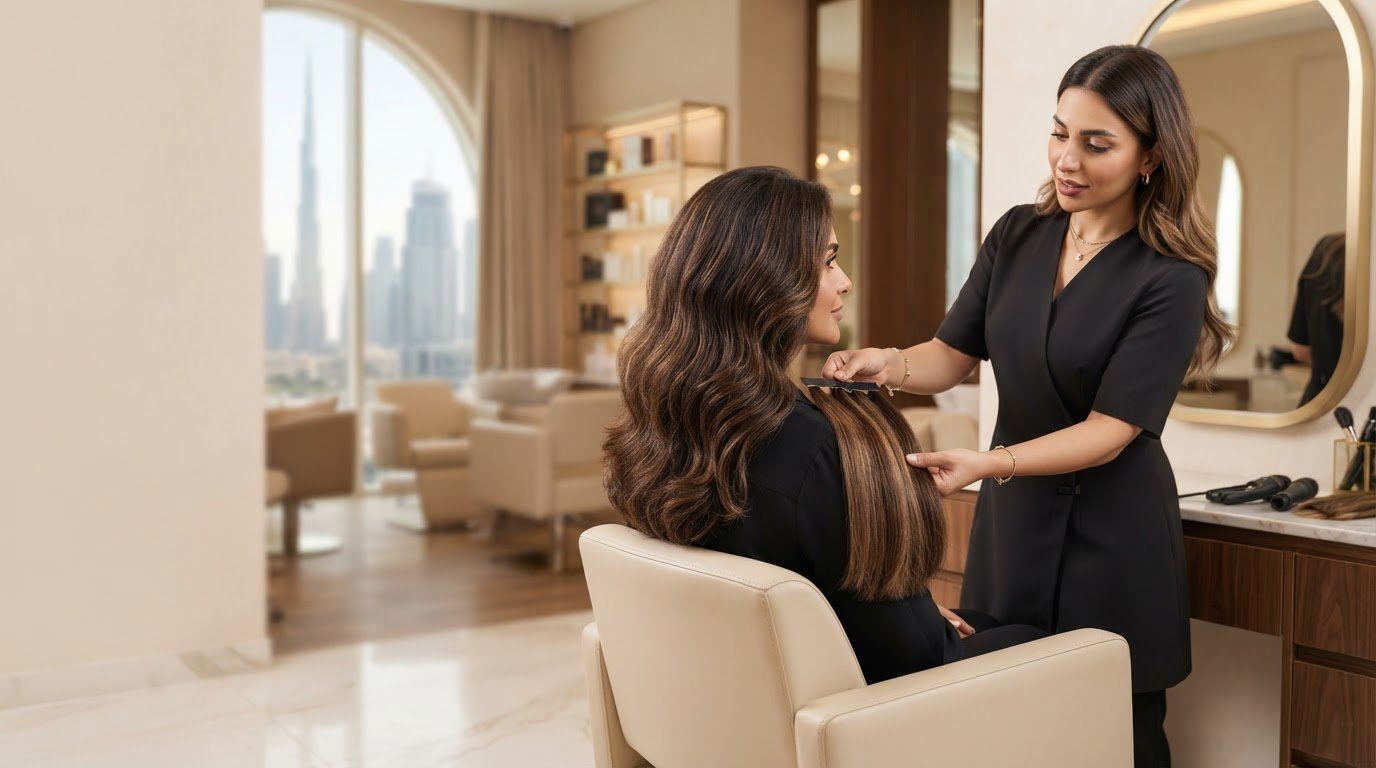
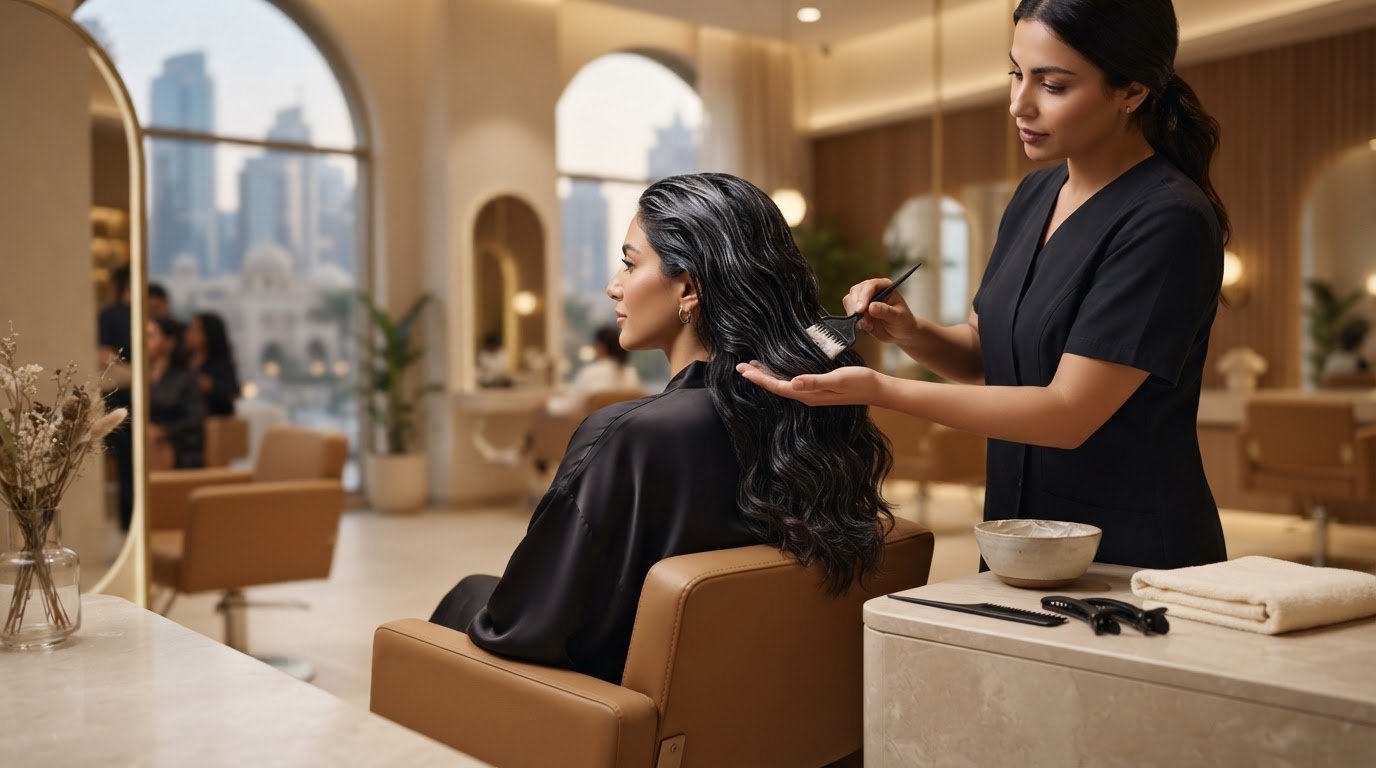
Dubai: AED 399 Balayage for Dark Hair, 1–2 Tone Lifts

Balayage works well on dark and brown hair when the lighter pieces sit one to two tones above your base and land mainly through the mid-lengths and ends, not the roots. Black or previously coloured hair often needs a staged approach across more than one appointment, plus a strand test before any lightener touches your hair. Ask about toning and upkeep at the same time you plan the colour, and treat a proper consultation, the kind offered by salons such as Boost Beauty Lounge, as the real starting point rather than a photo you bring in and hope for.
TL;DR:
- Dark or previously coloured hair typically requires multiple sessions and strand tests to safely achieve a one- to two-tone lift with balayage.
- Placement and shade selection are key to customizing the look, with options ranging from subtle ribbons to bold contrast, depending on the desired effect and hair texture.
- Balayage tends to preserve a natural root shadow, with less visible regrowth, whereas ombré creates a more defined gradient for faster, more noticeable growth.
- Proper aftercare includes using cool water, sulfate-free shampoos, and regular toning to prevent brassiness and maintain color vibrancy over time.
- Fixed-price packages and thorough consultations at salons like Boost Beauty Lounge help clients prevent surprises and plan multi-session treatments safely.
Table of Contents
- Looks to bring to your stylist for brunette balayage
- How balayage is painted and how it differs from ombré or highlights
- Choosing a realistic shade and placement for dark bases
- What to expect from strand tests, sessions and lift limits
- Toning and a simple routine to keep brunette balayage fresh
- What to bring to your balayage consultation
- Boost Beauty Lounge’s approach to balayage planning
- Cost expectations for balayage on dark hair
- Aftercare that keeps colour vibrant on dark hair
- Hair damage risk and repair options around balayage
- Pre-lightening and bleach considerations for very dark hair
- Stylist view: start subtle or go bold
- Booking a balayage session at Boost Beauty Lounge
- Sources
- FAQ
Looks to bring to your stylist for brunette balayage
The fastest way to get a result you actually like is to arrive with a specific reference, not a vague idea. A brunette base gives you more range than people expect, from barely-there warmth to full dimensional contrast.
Subtle espresso ribbons sit closest to your natural colour and read as sun-kissed rather than coloured, which suits anyone who wants low commitment. Caramel and honey ribbons bring warmth into the mid-lengths and work particularly well on hair with red or golden undertones already present. Face-framing money pieces brighten just the strands around your face, giving an instant lift to your complexion without touching the rest of the head. Mushroom brown and ash-brown tones cool the palette down, flattering skin with pink or neutral undertones, and this is the family of shades L’Oréal Paris associates with carefully placed neutral highlights and lowlights best left to a professional. Foilyage and chunkier ribbons push more contrast and more lift, useful if you want a look that photographs boldly rather than blends in.
A few starting points to bring as reference, adapted to your own colouring:
- Espresso ribbons through the ends for a barely-there lift that grows out gracefully.
- Caramel or honey balayage concentrated at the mid-lengths for warmth without heavy maintenance.
- A face-framing money piece if you want brightness near your features rather than throughout.
- Mushroom brown or ash-brown tones for a cooler, muted brunette finish.
- Foilyage or chunkier ribbons if you want visible contrast rather than a soft blend.
Whichever you choose, the shade name matters less than the photo itself, since brightness, placement and root depth vary enormously between two looks with the same name.
How balayage is painted and how it differs from ombré or highlights
Balayage is a freehand technique. A colourist paints lightener directly onto selected strands, usually with a brush or their hands, building lighter pieces that taper rather than start abruptly. Wella describes this as bespoke, strand-by-strand painting, distinct from foiled highlights that isolate uniform sections all the way to the root.
Ombré, by contrast, is a horizontal gradient: a defined transition from dark roots to lighter ends, applied with less regard for individual strand placement. The practical difference shows up at week eight. Balayage tends to preserve a soft root shadow because the lightener was never applied close to the scalp, so regrowth blends rather than announces itself. Ombré’s line is more deliberate and grows out with a visible edge, unless it is retouched more often.
Within balayage, a colourist has technique variations to reach for depending on how much lift or texture you want. Foilyage combines freehand painting with a foil to intensify lift, useful when a client wants brighter pieces than open-air painting typically achieves. Babylights are fine, closely spaced highlights that mimic the way hair lightens naturally in childhood, often layered underneath balayage for extra dimension. Chunkier ribbons go the other way, favouring fewer, bolder streaks for a graphic rather than blended finish. A stylist chooses between these based on your hair’s density, your current colour history and how much contrast you actually want, not on a fixed formula.

Choosing a realistic shade and placement for dark bases
Most brunettes get the best result starting one to two tones lighter than their base, a range Glamour points to for visible variation without the abrupt stripe a bigger jump can create. Warm shades like chestnut, caramel and honey tend to suit warmer skin tones and hair with existing red or gold undertones. Cooler options such as beige ash or mushroom brown flatter pink or neutral undertones and give a more muted, contemporary finish.
Placement decides how loud or quiet the result reads:
- Ends and mid-lengths only, for the most subtle, low-maintenance lift.
- A face-framing money piece, for brightness concentrated near your features.
- More, finer pieces throughout, for fine hair that benefits from the appearance of added volume.
- Heavier, chunkier placement, for maximum contrast on thicker or coarser hair.
Pro Tip: Bring more than one reference photo, since the same shade name can look completely different depending on how much lightener was used and where it was placed.
What to expect from strand tests, sessions and lift limits
Very dark or previously coloured hair rarely lifts to your target shade in one visit, and John Frieda is direct about this: black or very dark hair, especially hair that has been coloured before, often needs staged sessions because it will not lift predictably in a single sitting. A colourist will usually run a strand test first, applying lightener to a small section to see how your hair actually responds before committing to the whole head.
If the test shows resistance or uneven lift, expect the stylist to recommend foils for more controlled lightening or a bond-building treatment worked into the process to limit breakage. This is standard practice rather than an upsell, since dark hair holds more pigment and needs more processing time to shift, which is exactly where damage risk rises.
Between sessions, the most useful thing you can do is protect what you already have: deep condition weekly, avoid heat styling immediately after a lightening appointment, and space out sessions rather than pushing for a fast finish. A conservative first session followed by a second round of pieces a few weeks later usually leaves hair in better condition than one aggressive sitting, and often produces a better-blended result too.
Toning and a simple routine to keep brunette balayage fresh
Balayage on dark hair is comparatively low-maintenance because the roots are untouched, but the lighter pieces will shift in tone over time, usually toward brass or yellow. Glamour notes that toning is generally needed roughly every four to six weeks, while the balayage itself can still look intentional for several months depending on placement and how much lift was involved.
At home, colour-depositing masks and purple or ash-toning shampoos slow that shift between salon visits without replacing the professional service. A gloss, whether applied in-salon or as an at-home top-up, adds shine and refreshes tone without lifting or damaging hair further.
A few habits keep results looking newer for longer:
- Use a toning shampoo once or twice a week rather than every wash, since overuse can turn hair flat or ashy.
- Apply a hydrating mask weekly to replace moisture lost during lightening.
- Use a heat protectant before styling and keep tools below the highest settings.
- Space out washes where possible, since colour fades faster with frequent shampooing.
What to bring to your balayage consultation
A consultation works best when you arrive prepared rather than deciding on the spot.
- Bring two or three photos showing the brightness level, placement and lighting you want, since names alone rarely communicate the same result twice.
- Ask how many sessions your hair is likely to need and what level of lift is realistic given your current colour.
- Ask what the aftercare routine and rough cost will look like once the colour is finished.
- Confirm the stylist plans a strand test before lightening and ask what they would do if your hair does not lift as expected.
A stylist who avoids these questions, or promises a dramatic result in one sitting on very dark or previously coloured hair, is a reasonable reason to ask more questions before booking.
Boost Beauty Lounge’s approach to balayage planning
Boost Beauty Lounge, a salon in Deira, builds its balayage service around a consultation first: discussing your current hair condition, the shade you want and how many sessions it will realistically take before any lightener is applied. The salon’s hair colour package covers balayage, highlights, ombré or full colour alongside roots touch-up, toning, haircut, conditioning, blow-dry and styling, priced as a fixed package rather than itemised add-ons. Clients can review stylist portfolios and before-and-after results as part of deciding on a look, and the salon backs its work with a 10-day satisfaction guarantee and home-care guidance once you leave.
Booking runs through WhatsApp or phone, and the salon sits a minute from Salah Al Din Metro Exit 1, useful if you are planning an appointment around a commute. Bring your reference photos and any colour history, including previous box dye or salon treatments, so the consultation covers the same ground this guide does.
Cost expectations for balayage on dark hair
Balayage pricing varies by salon, region and how much lightening your hair needs, so exact costs differ widely. What tends to move the price is session count: a single-visit subtle lift costs less than a multi-session plan for very dark or previously coloured hair, since each extra sitting adds stylist time and product.
Fixed-price packages remove some of that uncertainty. Boost Beauty Lounge’s hair colour transformation package is priced at 399 AED and covers balayage, highlights, ombré or full colour together with roots touch-up, toning, haircut, deep conditioning, blow-dry and styling, with payment due after the service rather than upfront. That kind of bundled pricing is worth asking about directly, since a quote built from separate line items (lightening, toner, cut, blow-dry) can add up to considerably more than a package covering the same result.
Whatever salon you choose, ask for a specific estimate at your consultation rather than assuming a number in advance, since your hair’s current condition and target shade both affect the final cost.
Aftercare that keeps colour vibrant on dark hair
The biggest threat to fresh balayage on dark hair is not fading exactly, it is the lighter pieces drifting toward brass while the rest of the hair holds its depth, creating an uneven look faster than the colour itself disappearing.
Washing less often and always in cool or lukewarm water slows that drift, since hot water opens the hair cuticle and lets colour molecules escape faster. A sulphate-free shampoo protects the same way, avoiding the stripping effect of harsher surfactants on freshly lightened strands. Heat protectant before every styling session matters more on balayage than on all-over colour, because the lightened pieces are already more porous and prone to damage than the untouched roots around them.
Weekly deep conditioning or a colour-safe mask replaces moisture that lightening removes, and a toning gloss every few weeks, either at the salon or with an at-home product, keeps warmth from creeping in unchecked. Direct sun exposure fades toner faster than most people expect, so a UV-protecting spray or a hat on long days outside is a small habit that extends the gap between salon visits.
Hair damage risk and repair options around balayage
Lightening dark hair, even with the more conservative approach balayage allows, still breaks down some of the hair’s internal bonds, and the deeper your starting colour, the more processing it usually takes to lift visibly. Wella notes that stylists working with formulas and developers built for higher lift will often pair that process with foils or bond-supporting treatments specifically to offset the damage that extra processing time causes.
Before your appointment, a few weeks of consistent deep conditioning gives your hair more structural reserve to work with. Hair that is already brittle, over-processed or recently box-dyed is a reasonable reason for a stylist to recommend delaying lightening or starting with a smaller test section rather than a full head.
After the appointment, bond-building treatments, whether applied in-salon during the colour service or used at home afterwards, help rebuild some of what the lightening process disrupts. A protein or keratin-based smoothing treatment can also restore manageability if hair feels rough or overly porous post-colour, and salons offering both colour and smoothing packages, Boost Beauty Lounge’s keratin treatment among them, typically build a gap of several weeks between the two services rather than running them back to back.

Pre-lightening and bleach considerations for very dark hair
Very dark or black hair holds more melanin than lighter brunette shades, which means it generally needs more lightening time and product to reach the same visible lift. John Frieda is specific on this point: DIY lightening on black or very dark hair is not advisable, since results are unpredictable and previously coloured hair especially can lift unevenly or not at all in a single attempt.
This is where a strand test earns its place in the process rather than being an optional extra. Testing a small section first shows a colourist exactly how your hair responds before lightener goes anywhere near the rest of your head, and it is the clearest way to catch resistant or unpredictable strands before they become a full-head problem.
If your hair has been coloured at home or professionally within the past several months, mention this at your consultation regardless of how faded it looks, since underlying pigment can affect how evenly new lightener takes. A professional consultation, rather than an at-home kit, remains the safer route for dark hair specifically because a stylist can adjust developer strength, timing and technique in response to what the strand test shows, something a box dye cannot do.
Stylist view: start subtle or go bold
Most brunettes are better served starting subtle and adding contrast later than lightening hard on day one. A staged approach costs more time overall but protects hair condition, especially on very dark or previously coloured strands. If you are impatient and your hair is healthy and virgin, a bolder first session is reasonable; if your hair is dark, dyed or damaged, staging it out is the safer bet.
— Boost
Booking a balayage session at Boost Beauty Lounge
If you would rather skip guesswork on pricing and session count, Boost Beauty Lounge builds its balayage service into one fixed package rather than a stack of separate charges.
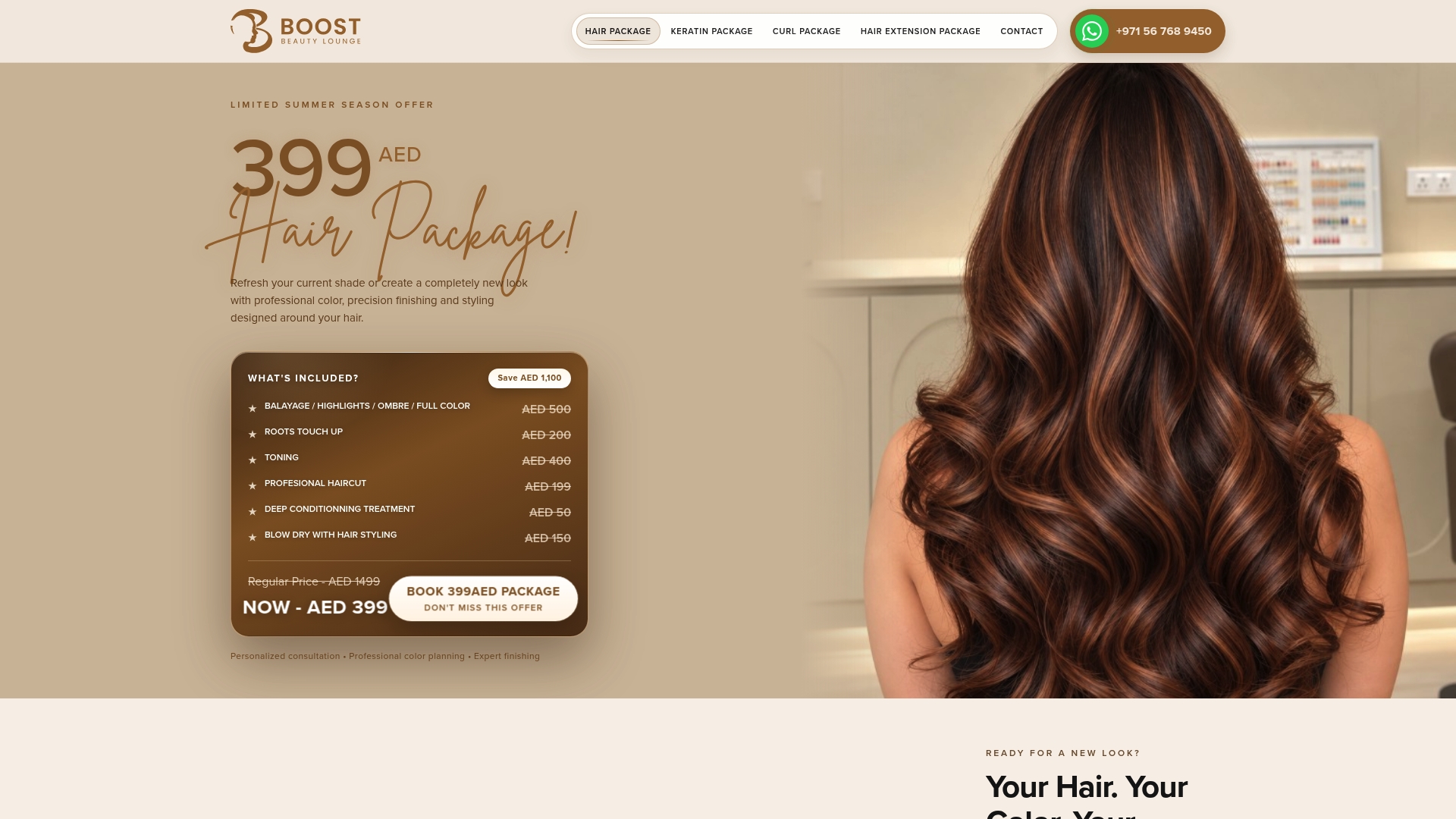
The package covers balayage, highlights, ombré or full colour with roots touch-up, toning, haircut, conditioning, blow-dry and styling, and you pay after the service rather than committing money upfront.
| What you get | Detail |
|---|---|
| Package price | 399 AED |
| Included services | Colour (balayage, highlights, ombré or full colour), roots touch-up, toning, haircut, conditioning, blow-dry, styling |
| Payment | After service is completed |
| Guarantee | 10-day satisfaction guarantee |
| Location | Deira, one minute from Salah Al Din Metro Exit 1 |
Book a consultation through the salon’s hair colour package page, or reach the team directly by WhatsApp or phone to talk through placement and shade before your appointment. If you are also considering a smoothing treatment alongside colour, the keratin package is worth asking about at the same visit, and anyone weighing extensions for extra brightness without chemical lightening can look at tape-in options like Bella-Lu’s ash blonde piano extensions for face-framing pieces that match a balayage finish.
Sources
- Balayage on brown hair: These are the best brunette balayage ideas to try in 2026 | Glamour
- Highlighting and balayage for black hair | John Frieda
- 7 brunette balayage ideas and formulas | Wella
FAQ
Is balayage good for dark hair?
Yes, balayage suits dark and brown hair well when the lighter pieces are placed through the mid-lengths and ends and kept one to two tones above the base, a range Glamour recommends for visible variation without an abrupt stripe. Very dark or previously coloured hair may need more than one session to reach that result safely.
Which is better, ombré or balayage?
Neither is universally better, they solve different goals. Balayage is freehand painting that preserves a soft root shadow and grows out gently, while Wella describes ombré as a horizontal gradient with a more defined transition line that needs more frequent retouching to stay tidy.
Is balayage still in style in 2026?
Balayage remains a widely requested technique because it is adaptable, from subtle espresso ribbons to bold foilyage, rather than tied to one trend cycle. Its low-maintenance growth pattern, since roots are untouched, keeps it a practical choice regardless of seasonal colour trends.
Which is better, balayage or highlights?
It depends on the finish you want. Balayage gives a softer, more blended result with natural-looking regrowth, while foiled highlights, including techniques like babylights, create more uniform, defined lightening that a colourist might choose for extra brightness or contrast, as Wella notes when comparing the two approaches.
Recommended
Ready to book this look?
See this package