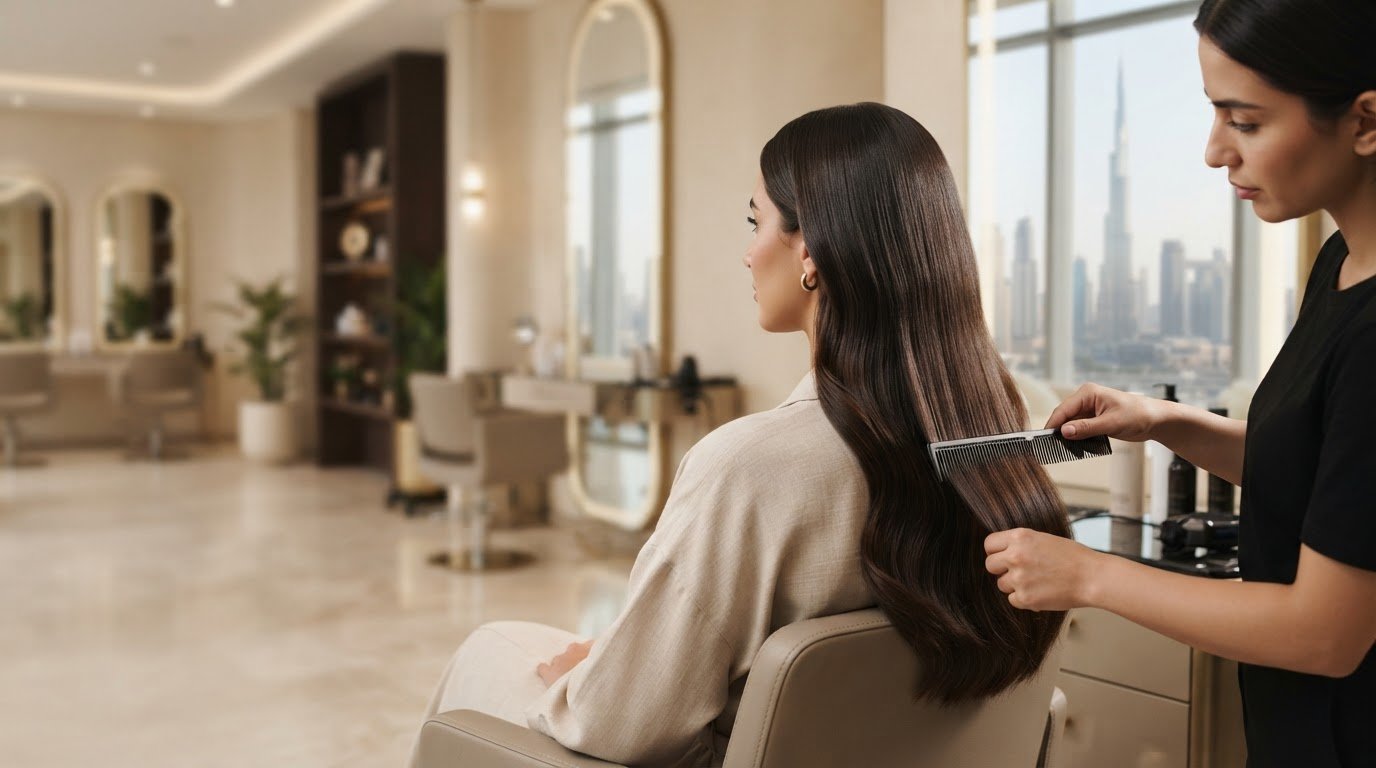
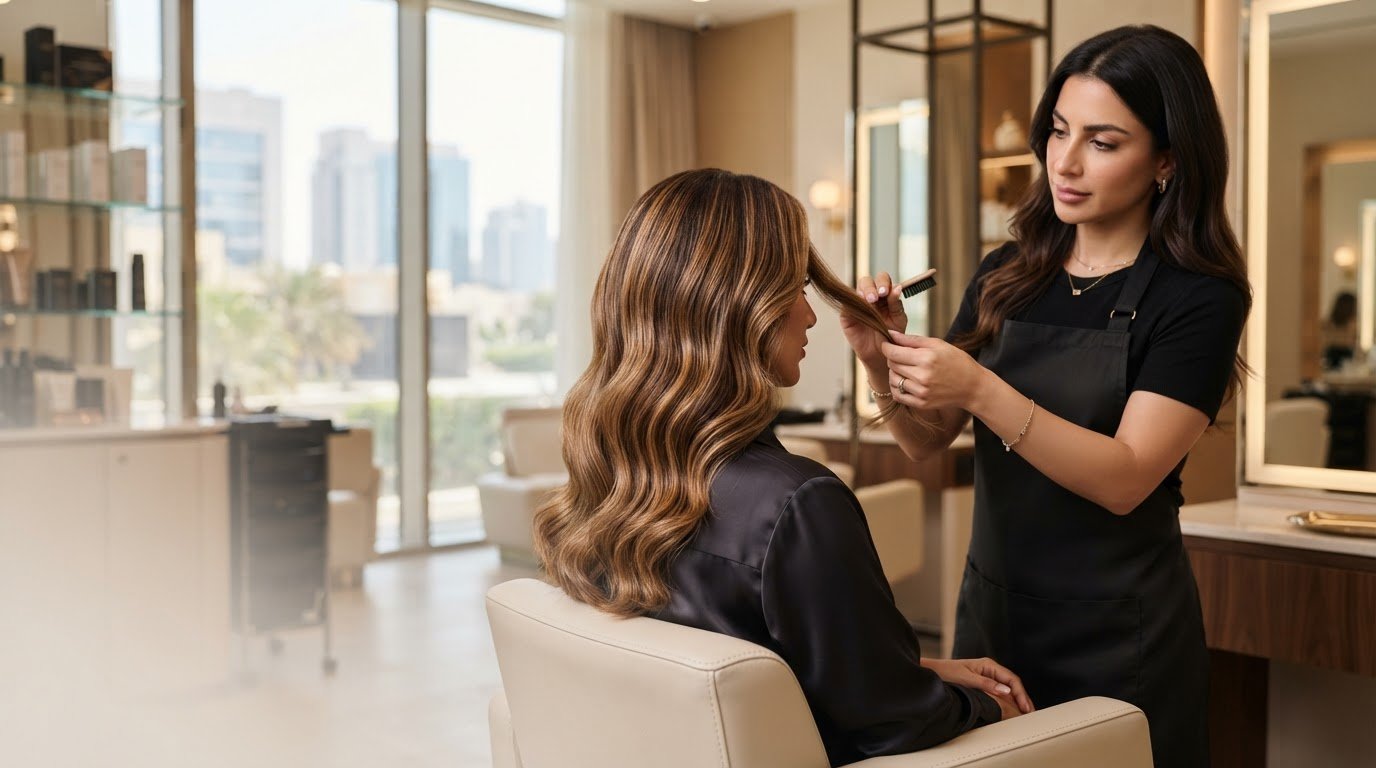
Wait 10–14 Days: Salon Safety for Keratin on Colored Hair

Keratin and colour can absolutely be combined, and the safest sequence is to colour first, then keratin, once your colour has settled. A common industry rule of thumb is to wait around two weeks between the two services in either direction, longer if your hair has been bleached. Because some smoothing products release formaldehyde when heated, ask your salon about ventilation and ingredient lists before booking.
TL;DR:
- Same day appointments may suit healthy, low porosity hair, but salons may lower heat, use gentler formulas, or plan a later color touch up.
- After bleaching, allow several weeks for recovery, then use a strand test to set the formula, processing time, and flat iron temperature.
- Ask to see the ingredient list and Safety Data Sheet, and confirm salon ventilation, since some smoothing products release formaldehyde when heated despite product labels.
- Clarifying shampoo and high heat can fade color, cause brassiness, or darken it, especially on blonde or bleached hair; request gentler preparation and lower heat.
- Use shampoo without sulfates and wash two to three times weekly; alternate protein treatments with moisturizing care to avoid hair becoming brittle and stiff.
Table of Contents
- Which service to book first and how long to wait between them
- Health and colour risks: formaldehyde, heat and product ingredients that affect dye
- Salon prep and strand testing before keratin on colour-treated hair
- Post-treatment homecare and salon follow-up to protect colour and keratin results
- How keratin ingredients can help, and where limits remain for bleached hair
- Salon example: what a professional consultation and service flow should include
- A practitioner’s perspective on trade-offs
- Book a consultation for colour and keratin done right
- FAQ
- Sources
Which service to book first and how long to wait between them
Colouring before keratin tends to work better for colour longevity. Keratin coats and seals the hair cuticle, which helps trap the dye molecules underneath rather than letting them fade or oxidise out as quickly. Doing it the other way round, dyeing straight after a keratin service, means working through a smoother, less porous cuticle, which can make colour grip less evenly and fade sooner.
Timing windows vary by what you have done and how damaged your hair already is:
- Wait roughly 10 to 14 days after a keratin treatment before colouring, so the smoothing treatment fully cures and bonds.
- Wait at least two weeks or longer after permanent dye before booking keratin, giving the colour time to settle into the cuticle.
- Allow longer, often several weeks, after bleaching specifically, since lightened hair needs more recovery time before it can handle another chemical process.
- Some salons combine services in one visit for clients with healthy, low-porosity hair, but this is a professional judgement call, not a default.
Same-day combinations happen in some salons, but they usually come with compromises: lower heat settings, gentler formulas, or a plan to touch up colour at the next visit. If your hair has any bleach history, staging the two services a couple of weeks apart is the lower-risk route.
Health and colour risks: formaldehyde, heat and product ingredients that affect dye
Some keratin and smoothing products release formaldehyde when heated, even ones labelled formaldehyde-free. This gas can irritate the eyes, nose and lungs, so ventilation and correct application matter as much as the product itself. OSHA testing has found measurable formaldehyde in several smoothing products during simulated treatments, which is why hazard controls in the salon are not optional extras.
On the colour side, clarifying shampoo used to prep hair for keratin can strip colour molecules, and high flat-iron heat can alter them further, sometimes causing fading, brassiness, or unexpected darkening. This shows up most often on blonde or bleached hair, where the cuticle is already more porous.
Before booking, it helps to ask:
- Can I see the product’s ingredient list and Safety Data Sheet?
- How is the treatment room ventilated during the smoothing process?
- What flat-iron temperature will you use on my hair type?
- Has your team been trained on formaldehyde exposure limits?
Pro Tip: Keep a photo of the product label from your last keratin appointment, it makes it much easier for a new stylist to judge compatibility with your colour.
Salon prep and strand testing before keratin on colour-treated hair
A proper consultation starts with a strand test and an honest look at your colour and bleach history. This single step tells a technician how your hair will likely react to heat and chemical exposure, and it shapes everything that follows: formula choice, processing time, and flat-iron temperature.
For fragile, bleached, or red and blonde hair, adjustments typically include:
- Lower heat settings to avoid further weakening already porous strands.
- Gentler, lower-pH clarifying steps to reduce the risk of stripping tone.
- Keratin formulations chosen for lighter or more processed hair rather than a one-size-fits-all product.
If a strand test or colour history flags heavy bleaching or multiple chemical processes, many professionals recommend staging services, colour at one appointment, keratin a couple of weeks later, rather than combining them. It is a slower route, but it protects both the colour result and the hair’s structural integrity.
Post-treatment homecare and salon follow-up to protect colour and keratin results
What you do at home after keratin determines how long both the smoothness and the colour last. Sulphate-free, colour-safe shampoos are the baseline, since regular sulphates strip colour and shorten the life of the smoothing treatment. Washing less frequently, two to three times a week rather than daily, also helps.
A few habits make a measurable difference:
- Use a sulphate-free shampoo and matching conditioner formulated for coloured, keratin-treated hair.
- Apply a heat protectant before any hot tool use, even on smoothed hair.
- Book a toner or gloss top-up if brassiness creeps in between colour appointments.
- Space colour touch-ups appropriately after keratin rather than rushing back in within days.
Toners and glosses are worth understanding on their own: they are not a correction for a ruined colour, but a maintenance step that refreshes tone between full colour services, and our toner guide for brunette hair covers how long that refresh typically lasts. For home products, something like the KRACIE Ichikami smoothing conditioner can support smoothness between salon visits.
Pro Tip: Switch to a silk or satin pillowcase after keratin, it reduces friction that can dull both colour and the smoothing effect overnight.
How keratin ingredients can help, and where limits remain for bleached hair
Bleaching breaks down the internal structure of hair, and peer-reviewed research explains why that damage requires gentler chemical and heat handling afterwards. A 2025 laboratory study found that specific hydrolysed keratin ingredients improved tensile strength and structural measures in bleached hair samples, though the effect depended on how damaged the hair already was and on the keratin’s molecular weight.

That is encouraging, but it is not a full repair. Overusing protein-based treatments can cause protein overload, leaving hair stiff, brittle, or prone to snapping rather than smoother. Experienced stylists alternate protein treatments with moisturising ones to keep that balance, and our protein treatment guide walks through how that rotation works in practice. After heavy bleaching, it is often worth delaying keratin by a few weeks to let the hair recover some structural integrity first.
Salon example: what a professional consultation and service flow should include
A reliable consultation covers a damage assessment, a strand test, transparency about product ingredients, and written aftercare instructions you can take home. We run our own consultations this way: every booking starts with a conversation about your colour history before we recommend a path, whether that is a colour transformation package or a keratin service staged a few weeks later.
Our packages include home-care guidance and a 10-day satisfaction guarantee, which gives you a safety net if something about the result needs adjusting. If a salon cannot show you a Safety Data Sheet, skips ventilation discussion, or does not offer a strand test, those are reasons to ask more questions before booking.

A practitioner’s perspective on trade-offs
Staging colour and keratin a couple of weeks apart is rarely the exciting answer, but it is usually the right one when hair has any bleach history. Prioritise structural health over speed, and ask for documented product information rather than taking “formaldehyde-free” at face value. A trained stylist who asks about your colour history before touching your hair is doing the job properly.
— Boost
Book a consultation for colour and keratin done right
We offer a Keratin/Protein/Botox Package, alongside a colour transformation package covering balayage, highlights, ombre, or full colour with roots touch-up, toning, haircut, conditioning, blow-dry, and styling. Both start with a consultation, so bring photos of your current colour and any past keratin treatments.

Payment is due only after the service is finished, and every package comes with a satisfaction guarantee. To book, message us on WhatsApp or call the salon, or check our keratin and botox package details before you visit.
FAQ
Can I colour my hair after a keratin treatment?
Yes, colouring after keratin is common, but waiting around 10 to 14 days lets the keratin fully cure first. Colouring too soon can disrupt the smoothing bond and lead to uneven results.
What should I check before using a Brazilian or Tropic keratin treatment at home?
Always read the product’s ingredient list and follow the processing and heat instructions exactly as written, since home application without proper ventilation raises the risk of formaldehyde exposure described in FDA guidance. Professional salon application is generally safer because technicians control ventilation and heat settings.
What are the disadvantages of keratin hair treatment?
Keratin treatments can expose you to formaldehyde-related chemicals when heated, and repeated use can lead to protein overload, leaving hair stiff rather than soft. On coloured hair, the clarifying step beforehand can also cause fading or brassiness, especially on blonde or bleached strands.
Can you do a Brazilian blowout and colour at the same time?
Some salons combine them in one visit for clients with healthy, low-porosity hair, but it usually involves compromises like lower heat or gentler formulas. If your hair has bleach history, staging colour and smoothing a couple of weeks apart gives more predictable results.
Is keratin safe for bleached or heavily processed hair?
Keratin can be safe for bleached hair, and some hydrolysed keratin ingredients have shown measurable improvements in hair strength in laboratory testing. Even so, heavily bleached hair often benefits from a recovery period and a strand test before committing to a full keratin service.
Sources
- Hair smoothing products that release formaldehyde when heated | FDA
- Hair salons: facts about formaldehyde in hair products | OSHA
- Appl. Cosmet. Sci. Technol. 1(2): 196-203 (2025)
- NCBI PMC review on hair damage and repair
Recommended
Ready to book this look?
See this package