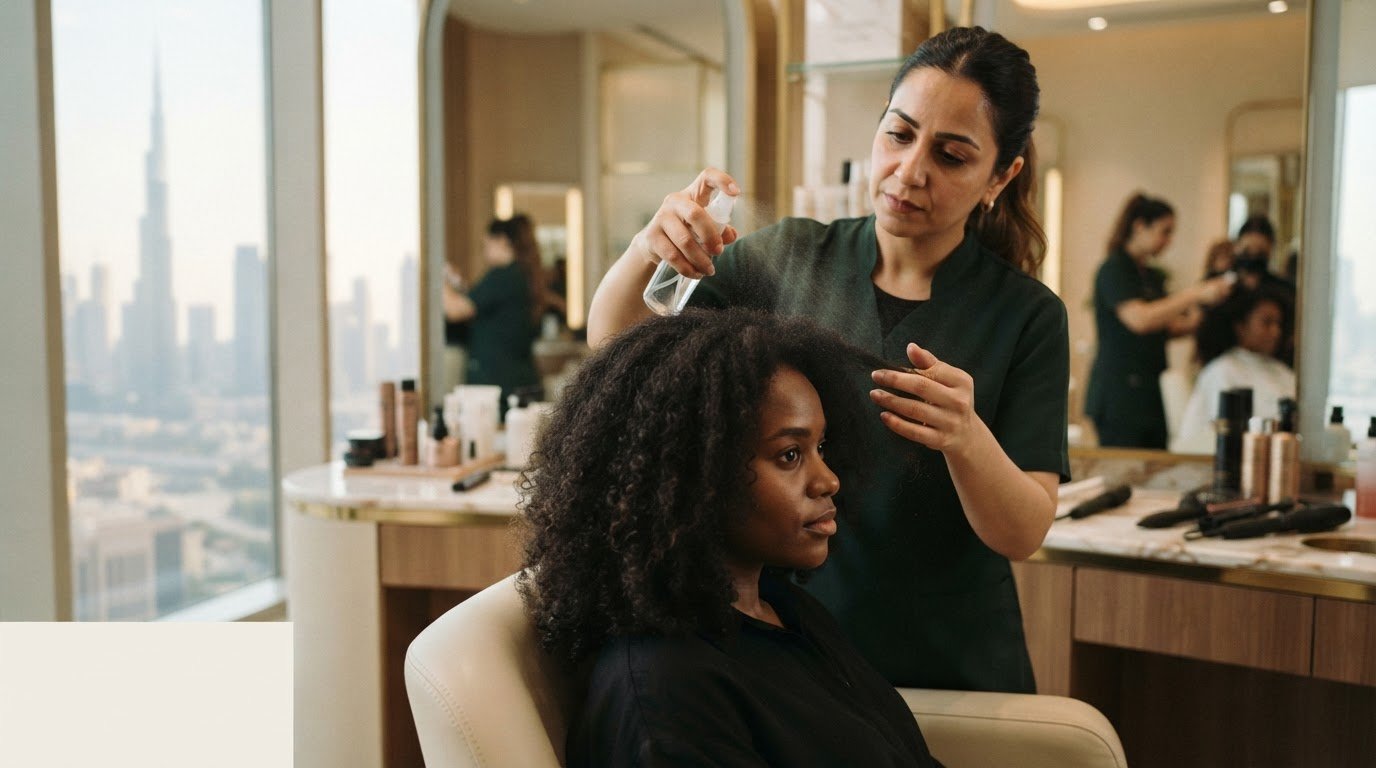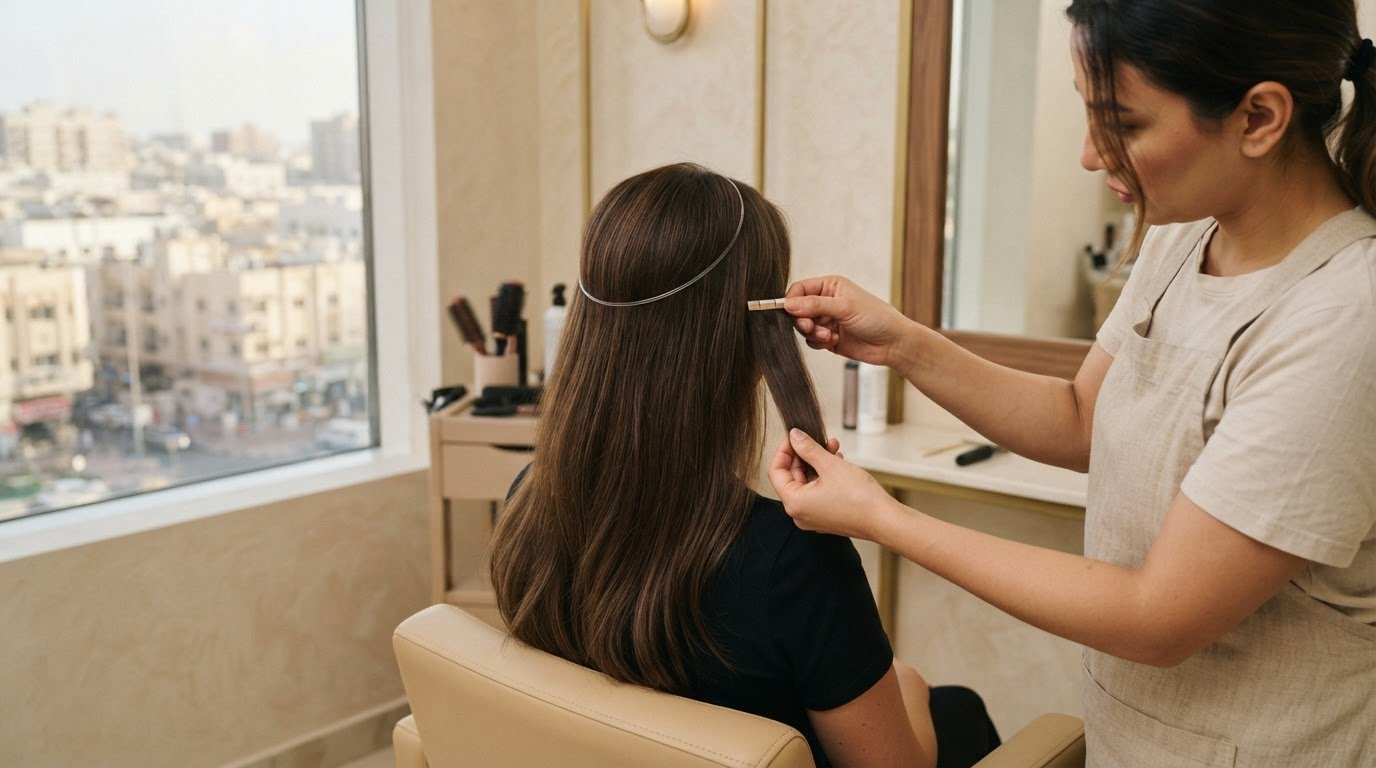
The gentlest-looking option isn’t automatically the gentlest choice for your natural hair. When comparing halo hair extensions vs tape-in extensions in Dubai, the main difference is how they’re worn: a halo rests on a clear wire, while tape-ins attach to natural hair with adhesive strips. Comfort, fit and professional removal all matter when considering how either method may affect your hair.
It’s natural to want fuller, longer hair without adding a stressful maintenance routine. This guide compares halo and tape-in extensions by application, natural-hair considerations, everyday care, maintenance and pricing in Dubai. Boost Beauty Lounge offers a Hair Extension Package; the price depends on the individual case and is provided after a quote request. Use the decision guide to weigh which method may suit your routine and the finish you want.
Key Takeaways
- Plan for tape-in maintenance appointments every 4-6 weeks to keep the placement comfortable and well maintained.
- A halo offers a different routine: remove it before water activities and before bed.
- Natural hair condition matters. Fine or damaged hair calls for careful method selection and professional tape-in removal.
- Gentle detangling and thoughtful heat styling can help make extension care easier between appointments.
- Use your preferred look, daily routine, and maintenance needs to guide the choice between halo and tape-in extensions.
Tape-in extension application time and maintenance
Tape-in extensions are applied in thin adhesive strips between sections of natural hair. Appointment time depends on the amount of hair, the desired length and fullness, and the blending work involved. A stylist positions each piece to distribute the added hair and create a balanced finish. The application is tailored to your hair and goals, rather than based on a one-size-fits-all timing estimate.
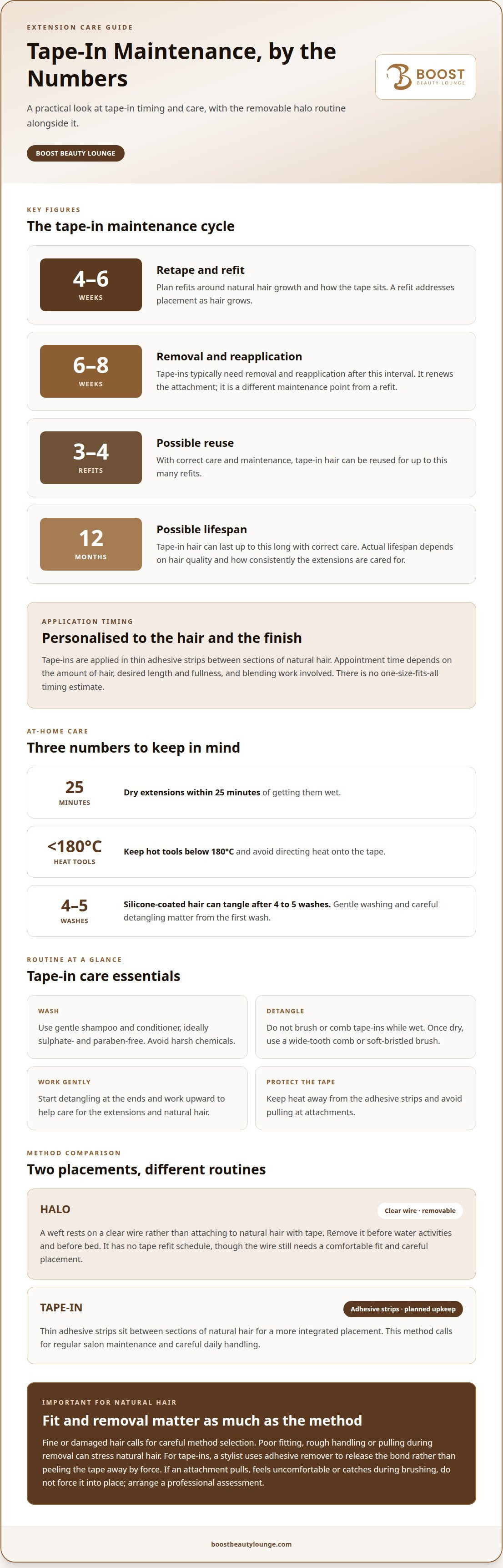
Plan maintenance around natural hair growth and how the tape sits. Tape-ins should be retaped and refitted every 4-6 weeks. They typically need removal and reapplication after 6-8 weeks. These are different points in the maintenance cycle: a refit addresses placement as hair grows, while removal and reapplication renew the attachment. A stylist can assess the attachment and choose the appropriate appointment.
Care between appointments helps protect both the extensions and your natural hair. Use gentle shampoo and conditioner, ideally sulphate- and paraben-free, and avoid harsh chemicals. Don’t brush or comb tape-ins while wet. Once dry, detangle gently with a wide-tooth comb or soft-bristled brush, starting at the ends and working upward. Dry the extensions within 25 minutes of getting wet. Keep hot tools below 180°C, and avoid directing heat onto the tape.
With correct care and maintenance, tape-in hair can be reused for up to 3-4 refits and last up to 12 months. The actual lifespan depends on hair quality and how consistently the extensions are cared for. Silicone-coated hair can tangle after 4 to 5 washes, so gentle washing and careful detangling matter from the first wash. For a professional application tailored to length and fullness, the hair extension service details explain the extension option.
| Option | Application | Routine | Maintenance |
|---|---|---|---|
| Tape-in | Adhesive strips placed between natural hair | Gentle washing and careful detangling | Refit every 4-6 weeks; remove and reapply typically after 6-8 weeks |
| Halo | Weft secured by a clear wire | Remove before water and before bed | No tape refit schedule |
Choose tape-ins if you’re comfortable with regular salon maintenance and careful daily handling. A halo may suit you better if you prefer to remove your extensions before water activities and sleep.
Will extensions damage my natural hair?
Extensions can affect different heads of hair in different ways. With fine or damaged hair, give particular attention to the attachment, fit, daily handling and removal process.
Fine or Damaged Hair Suitability
Fine or damaged hair calls for careful method selection, not an automatic yes or no. A professional stylist can consider your hair type and needs before comparing tape-ins, which attach with adhesive strips, and a halo, which rests on a clear wire. The methods place extensions differently, so your natural hair’s condition and the finish you want should guide the choice.
For fine or damaged hair, professional tape-in removal is especially important. Adhesive removal solution releases the tape, and a stylist can remove the extensions without pulling at the attached hair. Removal is part of deciding whether the method suits you, not an afterthought. A halo has no tape attachment, but its wire still needs a comfortable fit and careful placement.
Natural Hair Damage Risks
Risk can increase when extensions are poorly fitted, handled roughly or removed by pulling. With tape-ins, tugging at an adhesive strip can stress the natural hair attached to it. A halo avoids tape, but rough handling or an uncomfortable fit can still make it unpleasant to wear. Neither method is risk-free for every hair type.
Pay attention to how your hair feels while wearing extensions. If an attachment pulls, feels uncomfortable or catches during brushing, don’t force it into place. Avoid pulling at the extension and arrange a professional assessment. For tape-ins, a stylist uses adhesive remover to release the bond rather than peeling the tape away by force. This professional removal approach is particularly important for fine or damaged hair.
Careful fitting helps create a balanced result. A stylist considers your natural hair and the look you want, then matches the method to your needs. Choosing by length alone is less useful: added length should blend with your own hair without making the attachment the focus. A halo may suit someone who prefers a removable option, while tape-ins call for ongoing care around the bonded areas.
For a more tailored decision, discuss your hair condition and preferred routine during a professional hair extension consultation. The right method is the one that suits your natural hair, can be maintained comfortably, and can be removed with care.
Consultation and method selection
A professional stylist can help match an extension method to your hair type and needs. In Dubai, discuss your preferred color, length, texture and volume before choosing halo or tape-in extensions.
Halo Extension Selection
A halo is a weft supported by a clear nylon wire, rather than tape attached to natural hair. During consultation, a stylist compares its color and texture with your own, then considers your preferred length and volume. Its removable design may suit someone seeking a less attached option, though the wire must sit comfortably and blend with your hairstyle.
Tape-In Extension Selection
Tape-ins use thin adhesive strips placed against natural hair. A stylist assesses where the strips can sit, then considers color, length and texture to create a blend. This method offers a more integrated placement than a removable halo, but involves adhesive and planned maintenance. Your consultation should take into account both the desired look and the upkeep involved.
Bring a clear picture of the finish you want, such as more fullness through the ends or noticeably greater length. A photo helps explain your goal, but the stylist should still compare the extension shade and texture with your natural hair. Color needs to work with the lengths and ends, not just the roots, so the blend looks intentional as your hair moves.
Choosing a length means balancing the transformation you want with the blend your existing hair can support. For example, a large increase in length can make the difference between your natural ends and the extensions more noticeable. A stylist can discuss a more gradual change or added volume instead. Texture matters too: straight extensions may blend differently with naturally wavy hair.
Use the consultation to describe your everyday styling and care routine. If you prefer to remove extensions regularly, mention that before choosing a method. If you want a more integrated look, discuss the tape-in attachment and its maintenance schedule. These details help a stylist compare the practical differences instead of judging suitability by a photograph alone.
A useful consultation follows a clear sequence: assess your natural hair, clarify the desired result, compare method and upkeep, then agree on color, length, and texture. In Dubai, this conversation also helps align the finished look with your usual styling. A professional hair consultation can make those choices more focused before the application begins.
What are the pros and cons of halo hair extensions versus tape-ins?
The key difference is attachment: a halo rests on a clear nylon wire, while tape-ins use adhesive strips on natural hair. That affects how each method is fitted, worn and managed during everyday styling. Choosing halo hair extensions vs tape-in extensions in Dubai often comes down to whether you prefer removable wear or attached placement.
A halo typically uses a 100 to 200 g weft attached to its wire. Its removable design means you can take it off, rather than wearing adhesive strips against your natural hair. That flexibility has a trade-off: you must account for the wire and remove the halo before water and before bed. It may suit someone who values removable wear, but less so someone who wants extensions to remain in place throughout the day and night.
Tape-ins are applied using thin strips of medical-grade adhesive tape. Because they attach directly to natural hair, their placement can feel more integrated than a removable halo. The trade-off is a commitment to professional fitting, maintenance and removal. Adhesive attachment makes careful removal especially important for fine or damaged hair.
| Option | Attachment | Main advantage | Main trade-off |
|---|---|---|---|
| Halo | Weft held by clear nylon wire | Removable, without adhesive strips | Must be removed before water and sleep |
| Tape-in | Thin adhesive strips attached to natural hair | More integrated placement | Requires careful professional maintenance and removal |
Think about your routine, not just the finished look. If you want to take extensions off at the end of the day, a halo’s removable design may be convenient. If you prefer extensions attached to your natural hair, tape-ins offer that placement, with salon maintenance as part of the choice. Either way, color, length and texture need to work together for a natural-looking blend.
Water and bedtime are useful decision points. A halo needs to come off before water activities and sleep, so consider whether that fits your habits. Tape-ins stay attached between appointments, but their adhesive bonds need careful handling. The better fit depends on which routine you can manage consistently.
For a quick decision, choose a halo if removability matters most and a wire-based fit suits your routine. Choose tape-ins if you prefer attached placement and are comfortable with salon maintenance. When comparing halo hair extensions vs tape-in extensions in Dubai, weigh attachment, daily routine and professional upkeep against the finish you want.
How much maintenance do halo and tape-in extensions need?
The routines differ: a halo needs to be removed at specific times, while tape-ins stay attached between salon appointments. Your choice affects daily care, washing, styling and how often professional maintenance fits into your schedule.
For a halo, remove the weft before water activities and before bed. This separates extension care from your overnight and water-related routines. Handle the wire and weft gently to avoid pulling. A halo doesn’t follow a tape-in refit schedule, but it still needs careful handling and a good color and texture blend to look polished when worn.
Tape-ins need attention both at home and in the salon. They should be retaped and refitted every 4-6 weeks, with removal and reapplication typically needed after 6-8 weeks. With correct care, the extensions can be reused for 3-4 refits and last up to 12 months. Those timelines make regular appointments part of the tape-in commitment.
Washing and detangling matter for tape-ins. Choose gentle, sulphate- and paraben-free shampoo and conditioner. Don’t brush or comb the hair while it’s wet. Once dry, start detangling at the ends with a wide-tooth comb or soft-bristled brush, then work upward. Dry extensions within 25 minutes of getting wet, and keep hot tools below 180°C. These steps help limit rough handling around attached strips.
| Routine | Halo | Tape-in |
|---|---|---|
| Before water or bed | Remove it | Stays attached |
| Salon schedule | No tape refit schedule | Refit every 4-6 weeks |
| Care focus | Handle the wire and weft gently | Protect strips during washing and detangling |
| Reuse | Careful handling between wears | Up to 3-4 refits with correct care |
Choose a halo if removing it before sleep and water activities fits your habits. Choose tape-ins if you can plan regular salon maintenance and follow their washing and drying routine. With either method, gentle detangling and careful heat styling can make care more manageable.
Ready to match your extension choice to your maintenance routine? Explore professional hair extension options and plan the finish that suits your day-to-day care.
Making removal part of your routine means taking the halo off before water activities and before bed, rather than treating it as an extension that stays in place.
Boost Beauty Lounge: Hair Extension Package
Boost Beauty Lounge’s Hair Extension Package is a next step if you’re ready to discuss your preferred look and a professional extension plan. Bring your comparison of halo and tape-in methods, along with your preferred length, color and texture, to help shape the direction of your transformation.
If you’re still weighing everyday upkeep against the finish you want, explain what matters most in your routine. The Hair Extension Package is the relevant offering for exploring an extension look. Boost Beauty Lounge also offers Hair, Keratin and Curl Packages for other hair goals.
Contact Boost Beauty Lounge to discuss your hair extension plans.
Make your next hair change feel like you
Choosing between halo hair extensions and tape-in extensions in Dubai is a personal style decision that can also shape how your new look fits everyday life. Think beyond the reveal: picture the finish you want, how you like to style your hair and what kind of upkeep feels realistic.
Bring those priorities into a conversation with a stylist. A clear idea of your desired color, texture and overall transformation gives the appointment direction, while a professional assessment can connect your vision with a suitable extension plan. You don’t need every detail decided before you begin. Start with the change you want to see.
Ready to take that next step? Contact Boost Beauty Lounge to discuss your hair extension plans. Your new look can start with one thoughtful conversation and a vision that feels completely your own.
Frequently Asked Questions
How long do they last?
Tape-in extensions are typically removed and reapplied after 6-8 weeks, while the extension hair can last up to 12 months with correct care and maintenance. For example, if you plan a longer-term look, allow for refit appointments and careful home care. The hair may be reused for up to 3-4 refits. The exact lifespan depends on extension quality and how consistently it’s cared for.
How do the bonds look and move up close?
Tape-ins use thin adhesive strips to attach extension hair to sections of natural hair. Up close, the attachment is a flat strip rather than a visible wire. A halo uses a clear nylon wire to hold its weft, so there’s no adhesive bond at the attachment point. A stylist positions either method to blend with your natural hair and suit your preferred parting and style.
How do halo hair extensions compare with tape-in extensions?
A halo is held by a clear wire and can be removed, while tape-ins attach to natural hair with adhesive strips. That difference shapes daily use: a halo needs to come off before water activities and bed, while tape-ins stay attached between salon appointments. A halo may suit someone who prefers removable wear; tape-ins may suit someone seeking attached placement and comfortable with planned maintenance.
How much do halo and tape-in hair extensions cost in Dubai?
Extension pricing in Dubai depends on the method, hair quality, length, fullness and application needs. A halo purchase and a tape-in application may involve different costs, so compare what a quoted service covers, including fitting and future maintenance. Boost Beauty Lounge’s Hair Extension Package price depends on the individual case and is provided after a quote request.
Which Dubai salons offer halo and tape-in hair extensions, and what are their prices?
Boost Beauty Lounge offers a Hair Extension Package in Dubai. The price depends on the individual case and is provided after a quote request. Factors such as the chosen extension method, hair length, desired fullness and application needs can affect the cost. When reviewing a salon package, compare its scope and the work it covers.
How long do halo and tape-in extensions last?
Tape-in extensions are typically removed and reapplied after 6-8 weeks, and the extension hair can last up to 12 months with correct care, including up to 3-4 refits. A halo’s lifespan depends on its hair quality and how carefully it’s handled and stored between wears. For either option, tangling, matting, or damage to the extension hair can affect how long it remains usable.
Which extension type is better for fine or thin hair?
Neither method is automatically best for everyone with fine or thin hair. A professional stylist should weigh your hair’s condition, desired fullness and the attachment method. A halo avoids adhesive strips, while tape-ins attach directly to natural hair and require careful professional removal. If your hair is fine or damaged, give particular attention to that removal process when considering tape-ins.
Do tape-in extensions damage natural hair or cause hair loss?
Tape-ins can stress natural hair if they’re poorly fitted, pulled or removed roughly. Tugging at adhesive strips can pull on the hair attached to them, so a stylist should remove tape-ins professionally using adhesive removal solution. This is especially important for fine or damaged hair. If an attachment feels uncomfortable or catches, avoid pulling it and have a stylist assess it.
Ready to book this look?
See this package