Hair Color for Brown Skin: Patch Test 48 Hours Before Lifting

Warm caramels, golden browns, copper and auburn flatter most brown skin, while rich chocolate and burgundy suit nearly every undertone, and ash brown or deep mahogany work for cooler ones. Your exact shade depends on your undertone and your hair’s natural starting level. Check your undertone first, then book a consultation with a patch and strand test before any major lightening.
TL;DR:
- Use the fabric test in daylight: cream flattering your skin points to warm undertones, crisp white points to cool, and both working suggests neutral; vein color is unreliable on deeper skin.
- Choose a dye within three shades of your natural color to avoid stronger peroxide volumes linked to dry, brittle hair.
- Do a patch test 48 hours before every dye application, even with familiar products, and ask your colorist to strand test before lightening.
- Balayage grows out softly and needs fewer visits; reds fade faster, while high contrast highlights show regrowth, so start with subtle babylights if unsure.
Table of Contents
- How can you tell your undertone on brown skin?
- Which shades suit warm, cool and neutral undertones?
- Why do balayage, highlights and gloss matter on brown skin?
- How much can you safely lift dark hair, and how do you limit damage?
- How should you look after coloured hair day to day?
- What should you expect at a colour consultation?
- Which shades suit different brown skin tones and backgrounds?
- Which brown shades are trending, and how do seasons change your colour?
- What are the common myths about colouring hair on brown skin?
- How do lighting and environment change the way your colour looks?
- What should you ask in a consultation as a brown-skinned client?
- Our view: why staged, consultation-led colour wins for brown skin
- How our hair colour package gets you a flattering result
- FAQ
- Sources
How can you tell your undertone on brown skin?
Undertone is the subtle warm, cool or neutral note beneath your surface skin colour, and it matters more than depth when you choose a hair shade. Many mainstream colour theories label brown skin as “warm” by default, which ignores olive and cool-neutral undertones. That shortcut is why a shade that looks right on paper can turn muddy or grey on you.
The fabric test is the most dependable check for deeper skin. Stand by a window in daylight, with no make-up, and hold a bright white sheet, then a cream or ivory one, against your bare face and neck. Look at your skin rather than the fabric.
- Cream makes you glow and white looks harsh: you likely lean warm.
- White looks crisp and cream looks yellow or dull: you likely lean cool.
- Both look fine: you are probably neutral, and you can wear a wide range.
The vein test you may have seen online is much less reliable here. High melanin makes it hard to judge whether veins look blue or green, so we do not recommend relying on it. These cues are better:
- Jewellery: gold that makes your skin look alive points warm, silver that does the same points cool, and if both work you are probably neutral.
- Natural flush: a red or rosy flush on your cheeks hints at cool, while a peachy or golden flush hints at warm.
- Eye hints: golden flecks in brown eyes lean warm, and a blue-grey ring or cool-toned whites lean cool.
- How you tan: skin that turns golden in the sun leans warm, and skin that turns deeper without much warmth leans cool or neutral.
Treat the result as one input, not a formula. Professional colourists stress that a successful result balances your facial undertone with your hair’s starting level, porosity and the way it behaves during lifting. If you want to check porosity yourself before your appointment, this home porosity test walks through the steps. Bring all your findings to your consultation, and let your colourist confirm them against the hair on your head.
Which shades suit warm, cool and neutral undertones?
Once you know your lean, you can walk into the salon with clear preferences. Our advice for brown skin is to aim to glow rather than ghost: ashy, platinum or drab cool tones can pull warmth from your face and make your complexion look tired unless they are balanced carefully.
Warm undertones
Caramel, honey, golden brown, copper and warm auburn bring out the natural radiance of warm brown skin. The effect is a soft glow around the face, as if you have just come in from good light. Good starting points are a subtle balayage with caramel ribbons that start mid-length, or a few golden pieces framing the face over a chocolate base. Copper works beautifully on deeper warm skin because it echoes the red and gold already in your complexion.

Cool undertones
Ash brown, mushroom brown, deep mahogany and burgundy create a sophisticated contrast against cool brown skin. These shades work because they match the coolness already in your skin instead of fighting it. The caution is that overly ashy tones can flatten you out. A good colourist keeps a hint of depth or a slightly richer root so the colour frames your face rather than draining it. If a cool-toned look appeals, our ash brown balayage package shows what a balanced version looks like in the salon.
Neutral undertones
If both warm and cool tones flatter you, soft chocolate with low-contrast highlights is the safest first step. It is flexible, forgiving as it grows out, and easy to push warmer or cooler at your next visit. Neutral skin gives you the freedom to choose by mood and maintenance rather than by rule.
Bolder looks
Burgundy, deep red and warm violet make strong statements on brown skin, especially at darker levels where they read as rich rather than loud. They also demand more care. Reds fade faster than other shades, and anything noticeably lighter than your natural colour will probably need a staged lift over several visits.
- Warm: caramel, honey, golden brown, copper, warm auburn.
- Cool: ash brown, mushroom brown, deep mahogany, burgundy, plum.
- Neutral: soft chocolate, with subtle mocha or caramel dimension.
- Statement: burgundy, deep red, warm violet, with a higher upkeep bill.
Whichever family you choose, the risk to your hair depends on how far you go from your natural colour. Dermatologists at the American Academy of Dermatology advise staying on shade.
Choosing a dye within three shades of your natural colour avoids the higher peroxide volumes that raise the risk of dry, brittle hair.
Keep that three-shade guide in mind when you pick a reference photo, because it shapes how many sessions your dream shade will take.
Why do balayage, highlights and gloss matter on brown skin?
The same shade can look completely different depending on how it is placed. Dimension, meaning a mix of lighter and deeper tones through the hair, is what creates glow on brown skin. A single flat colour can look heavy, while a few ribbons of lighter tone catch the light and lift the face.
Here is how the main approaches compare:
- Single-process colour: one shade all over. It is the easiest to maintain and gives a smooth, rich finish, but offers little dimension and shows regrowth at the roots quickly if the shade is much lighter than your base.
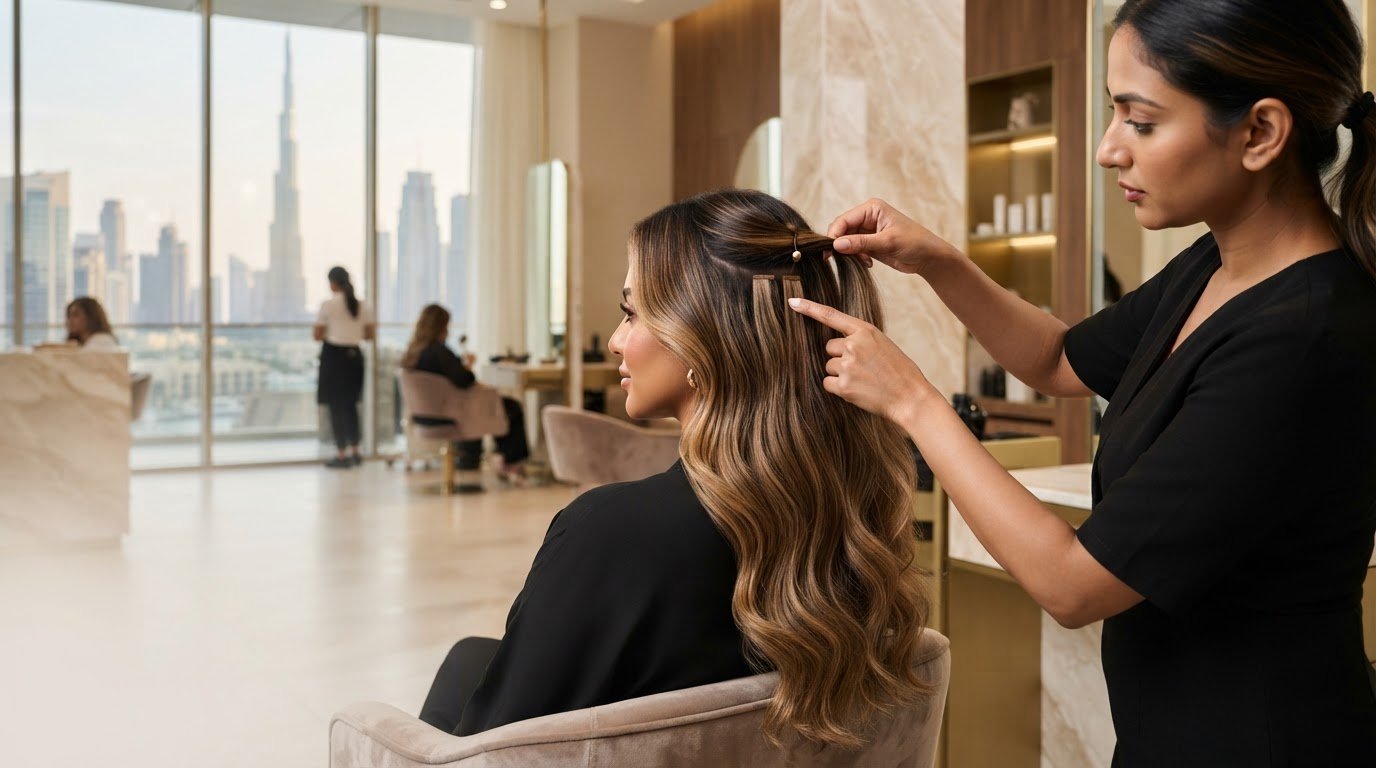
- Balayage: hand-painted lighter strands that blend into your base. It adds soft glow, grows out gracefully and needs fewer visits, which suits most brown skin tones well.
- Babylights: very fine, subtle highlights that add shimmer without obvious stripes, ideal for a first lightening.
- Chunky highlights: bold, high-contrast pieces. They make a statement, but against deep brown skin the contrast can look stark and regrowth lines show clearly.
Gloss and toner are the finishing step that many people overlook. A gloss adds shine and refreshes tone, while a toner shifts warmth: it can neutralise brassiness or push a shade towards gold, copper or ash. If your brunette has turned orangish between visits, our guide to toner for brunette hair explains what lasts and why.
Pro Tip: If you are unsure about contrast, start with a face-framing section or a few subtle babylights, then decide whether you want more at your next visit.
How much can you safely lift dark hair, and how do you limit damage?
Brown skin usually comes with deep natural hair, and lightening it is where most damage happens. Research backs this up. A 2025 study in Applied Cosmetic Science and Technology found that as bleaching cycles increased, hair became flatter and weaker, with more and larger voids.
The same study found that aqueous solutions of the keratin ingredients WK-F and KR-30 had a repairing effect against that damage.
That was a laboratory result, not a promise about every salon treatment, but it supports the case for conditioning and bond-repair care built into a lightening plan. Dermatologists also note that professional bond-building treatments restore cross-links within the keratin structure and can help prevent structural failure from chemical lightening.
What a careful colourist does to lower the risk:
- Strand test first: a small section is coloured to show exactly how your hair lifts and what tone it lands on. Our six-step strand test guide covers how it works.
- Staged lifts: going lighter over multiple visits rather than one aggressive session. We explain the lower-damage options in our bleach bath versus bleach comparison.
- Bond-building and keratin care: added during or after lightening to protect structure.
- Realistic gaps between sessions: your hair needs recovery time, so a rushed schedule defeats the purpose.
- A 48-hour patch test every time: allergic reactions to dye chemicals can develop over time, so the American Academy of Dermatology says to test 48 hours before each use, even with a product you have used before. Our 48-hour hair dye allergy test guide covers the practical steps.
How should you look after coloured hair day to day?
A good colour can look tired within weeks if the aftercare is wrong. This routine keeps tones flattering between visits:
- Wait 48 to 72 hours before your first wash. The colour needs time to settle, and washing too soon lets pigment escape.
- Rinse with cool water. Hot water opens the hair’s outer layer and speeds fading, especially with reds and coppers.
- Wash less often. Every wash costs some colour, so stretch the days between shampoos where your scalp allows.
- Choose gentle products. Look for sulphate-free shampoo, colour-safe conditioner and a UV-protectant spray. Antioxidant-rich formulas can help colour last, and this comparison of sulphate-free and sulphate shampoos explains why harsher cleansers strip colour faster.
- Tone on a schedule. Have your colourist refresh tone in the salon as it shifts, and use a colour-safe purple or blue shampoo at home only if your lighter pieces turn brassy. Vivid reds need fade-specific care rather than a purple shampoo.
- Protect from heat. Use a heat protectant before blow-drying or styling, and book a gloss top-up when shine starts to dull.
What should you expect at a colour consultation?
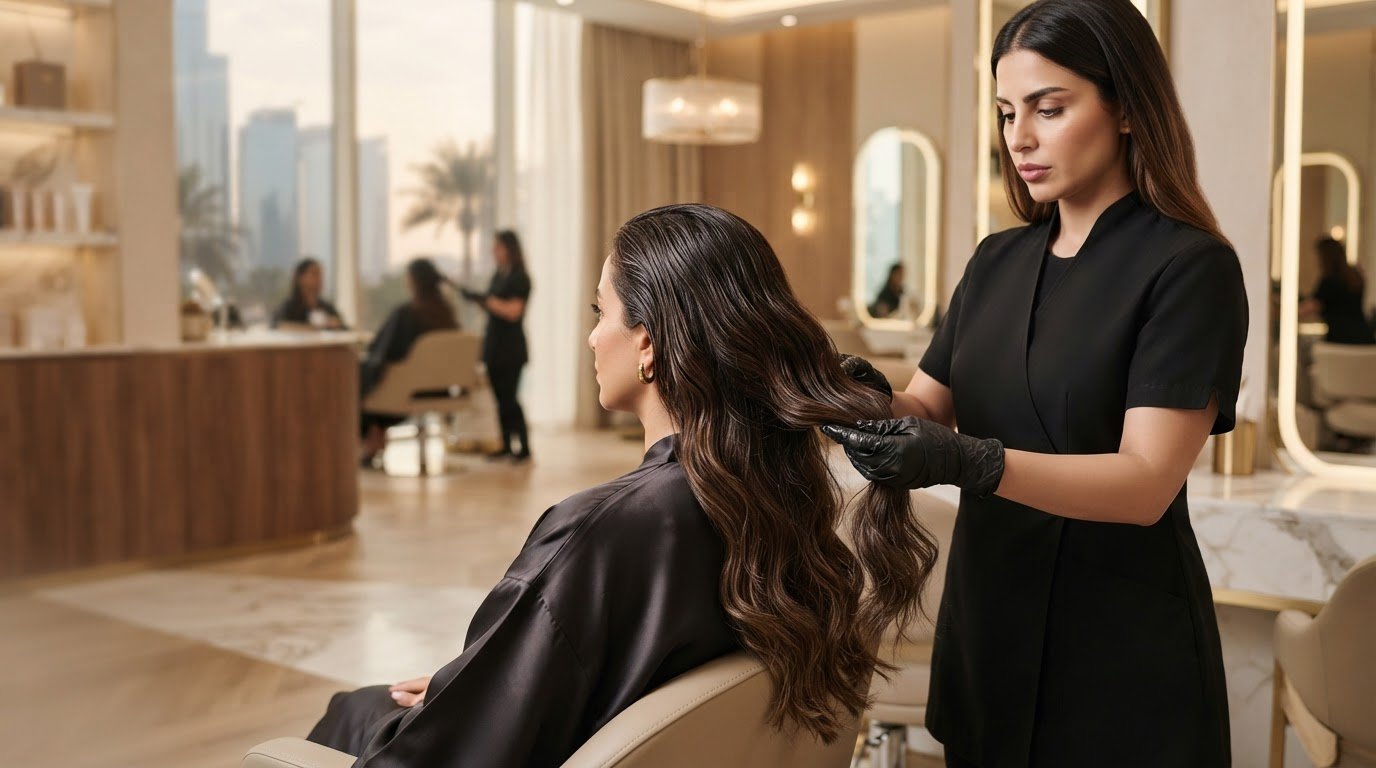
A proper consultation is where your undertone findings turn into a plan. Your stylist will check your starting level, porosity and underlying pigment, and may run a strand test and a 48-hour patch test before anything is applied.
- Bring photos: two or three references, including one you do not like, help your colourist understand your taste.
- Share your chemical history: relaxers, previous colour, henna and keratin treatments all affect how hair lifts.
- Be honest about upkeep: say how often you will realistically return and how much styling you will do.
- Ask about timelines: a modest lift may be straightforward, while going much lighter takes staged sessions.
Many salons bundle consultation, conditioning and styling into a package, which keeps the process safer and the price clearer.
Which shades suit different brown skin tones and backgrounds?
Brown skin covers a huge range, from light golden-brown to deep espresso, and people from South Asian, Middle Eastern, African, Latin American and mixed backgrounds can share the same depth with very different undertones. That is why we treat “brown skin” as consultation context, not a fixed formula.
As a rough guide, lighter golden-brown skin carries warm caramel and soft copper beautifully, and can handle cooler chestnut tones if the undertone is neutral. Medium brown skin, which often has olive or golden undertones, glows in honey, rich chocolate and auburn. Deep brown skin tends to suit depth and richness, such as dark chocolate, burgundy, mahogany and copper accents, with lighter pieces placed carefully so they read as glow rather than contrast.

Natural hair colour and texture matter as much as skin. Very dark, coarse or textured hair holds strong pigment, so lighter shades take planning, and textured hair is often drier, so it needs extra conditioning through any lift. Choose the shade that suits your skin, then let your colourist adapt it to your hair’s real condition.
Which brown shades are trending, and how do seasons change your colour?
Trends come and go, but a few directions suit brown skin season after season. Rich, glossy chocolate and “expensive brunette” looks stay popular because they photograph beautifully and need little lightening. Soft caramel or honey balayage is a flexible all-year choice, while copper and auburn are often favoured as the weather cools because they feel warm and cosy.
Many people shift their colour slightly with the seasons rather than changing it completely. In summer, sun-lightened pieces and a touch of gold can look natural, and a gloss helps counter sun and chlorine dullness. In autumn and winter, deeper chocolate, mahogany or burgundy can feel richer, and the colour can be kept darker at the roots for an easy grow-out.
If you like a trend but are unsure it suits you, ask your colourist to adapt it to your undertone. Keep the shape and finish of the look, and let the exact shade follow your skin.
What are the common myths about colouring hair on brown skin?
A few ideas keep circulating that lead people to the wrong shade, or put them off colour altogether.
- “Brown skin always suits warm tones.” Many people with brown skin have cool or neutral undertones, and forcing warmth can look muddy or grey.
- “Light shades are off limits.” Lighter tones can look stunning when they are warm, dimensional and placed with care. The difficulty is a flat, ashy or very high-contrast blonde, not light colour itself.
- “Skin tone alone decides the shade.” Your hair’s starting level, porosity and condition shape what is achievable and healthy.
- “The vein test works for everyone.” On deeper skin it is unreliable, which is why we prefer the fabric test and the other cues above.
- “A box dye is the same as a salon colour.” Box dye cannot adapt to your undertone or lift, and previous colour can make results unpredictable.
- “Skipping the patch test is fine if you have used the dye before.” Sensitivity can develop over time, so test before every application.
How do lighting and environment change the way your colour looks?
The colour you see in the salon mirror is rarely the colour you see all day. Warm indoor bulbs bring out gold and red, while cool white fluorescent light can flatten warmth and make shades look duller or greyer. Daylight is the truest guide, so check your colour by a window before judging it.
Environment matters too. Strong sun lifts pigment and can turn deeper browns reddish, which suits some people and not others. Chlorine and salt water strip tone and can leave brassiness, and hard water leaves mineral deposits that dull shine. Screens and camera filters shift colour again, so a photo is a good reference but never an exact match.
Practical habits help: ask your colourist to show you the result in natural light before you leave, wear a hat or use a UV protectant in strong sun, and rinse after swimming. If your colour looks different in every room, the fix is often a gloss to unify tone and add shine.
What should you ask in a consultation as a brown-skinned client?
A good consultation is a conversation, and these questions get you the most useful answers.
- “What undertone and starting level do you see?” Compare the answer with your fabric test.
- “How many sessions will this shade take?” An honest answer about staged lifts protects your hair.
- “How will this grow out?” Ask how the colour will look over time.
- “How does my hair’s porosity and texture change the plan?” This matters most for coily, curly or previously treated hair.
- “What will upkeep cost in time and money?” Include toning, gloss and home products.
- “Will you do a strand and patch test?” The answer should be yes.
Also tell your stylist about past experiences where a shade looked off on you. That detail helps them avoid the same mistake.
Our view: why staged, consultation-led colour wins for brown skin
A copied celebrity photo is a starting point, not a plan. The shades that look best on brown skin are the ones built around your undertone, your starting level and the real condition of your hair, and that takes a conversation, not a swatch. Staging a big change across several visits, with bond-repairing care in between, costs patience but protects the thing that makes colour look expensive: healthy, shiny hair.
— Boost
How our hair colour package gets you a flattering result
We built our hair colour package around the steps in this guide, so you do not have to assemble them yourself. It includes:
- A consultation-based colour plan that takes your undertone and starting level into account.
- We check how your hair reacts before committing.
- Balayage, highlights, ombre or full colour, with a roots touch-up, toning, a haircut, conditioning, blow-dry and styling.
- Clear, fixed pricing, with payment after the service.
Our AED 399 hair colour package is an example of that transparent bundled approach, and you can see our full range on our main page. Bring your undertone findings and a few reference photos, then book by WhatsApp or phone and we will plan your shade with you.

FAQ
What hair colours go best with brown skin?
Warm caramels, golden browns, copper and auburn flatter warm undertones, while ash brown, deep mahogany and burgundy suit cool ones. Rich chocolate works across most undertones. The exact choice depends on your undertone and your hair’s starting level.
How often should I re-dye my hair?
It depends on the shade and how far it sits from your natural colour. Subtle balayage can go many weeks between visits, while vivid reds and lighter shades need touch-ups and toning more often. Always do a 48-hour patch test before each application, even with a dye you have used before.
What are the trends for brunette hair colour?
Glossy chocolate, soft caramel or honey balayage, and warm copper or auburn tones are all popular for brunettes. Many people also add subtle face-framing pieces for glow. A colourist can adapt any trend to suit your undertone.
Which shade is best for brown skin?
There is no single best shade, because brown skin has warm, cool and neutral undertones. Soft chocolate with gentle dimension is the safest starting point if you are unsure. Confirm your undertone with the fabric test and your colourist before committing.
Sources
- Coloring and perming tips for healthier-looking hair
- Appl. Cosmet. Sci. Technol. 1(2): 196-203 (2025)
Recommended
Ready to book this look?
See this package