Hard water can contribute to dry, rough, breakage-prone hair and fading colour, but it is rarely the only cause of significant hair fall. A hair treatment for hard water damage in Dubai can focus on removing mineral and product buildup, then restoring moisture through conditioning. This can improve how hair feels and looks without assuming hard water explains every change in shedding.
If your hair feels less soft, looks dull, tangles easily or is harder to manage after washing, it is understandable to suspect the water. This guide explains how hard water may affect hair fall, softness, breakage, colour and product performance, and what clarifying shampoo and deep conditioning can do.
You will also learn how buildup can interfere with cleansing and conditioning, why clarifying shampoo should be used thoughtfully, and how regular moisture care can support a smoother feel. The aim is to help you understand what may be happening and choose a hair-care approach that protects your colour and keeps your routine balanced.
Key Takeaways
- Use clarifying shampoo thoughtfully to help lift mineral and product buildup without over-drying your hair.
- Deep conditioning can support moisture and softness; the article explains how often to use a nourishing mask and how long to leave it on.
- Hard-water residue may affect how shampoo and conditioner perform, leaving hair harder to cleanse, condition and manage.
- Dryness, tangling and fading colour can have several contributing factors, so look at your full hair-care routine rather than blaming water alone.
- Hair fall is rarely caused by hard water alone. Learn which signs suggest buildup may be involved and when persistent shedding needs a different response.
Clarifying shampoo and deep conditioning
Hard-water care works best as a balance: remove residue, then replenish moisture. In Dubai, a focused wash routine can help hair feel softer without making clarifying shampoo an everyday habit.
Clarifying and Chelating Shampoo Use
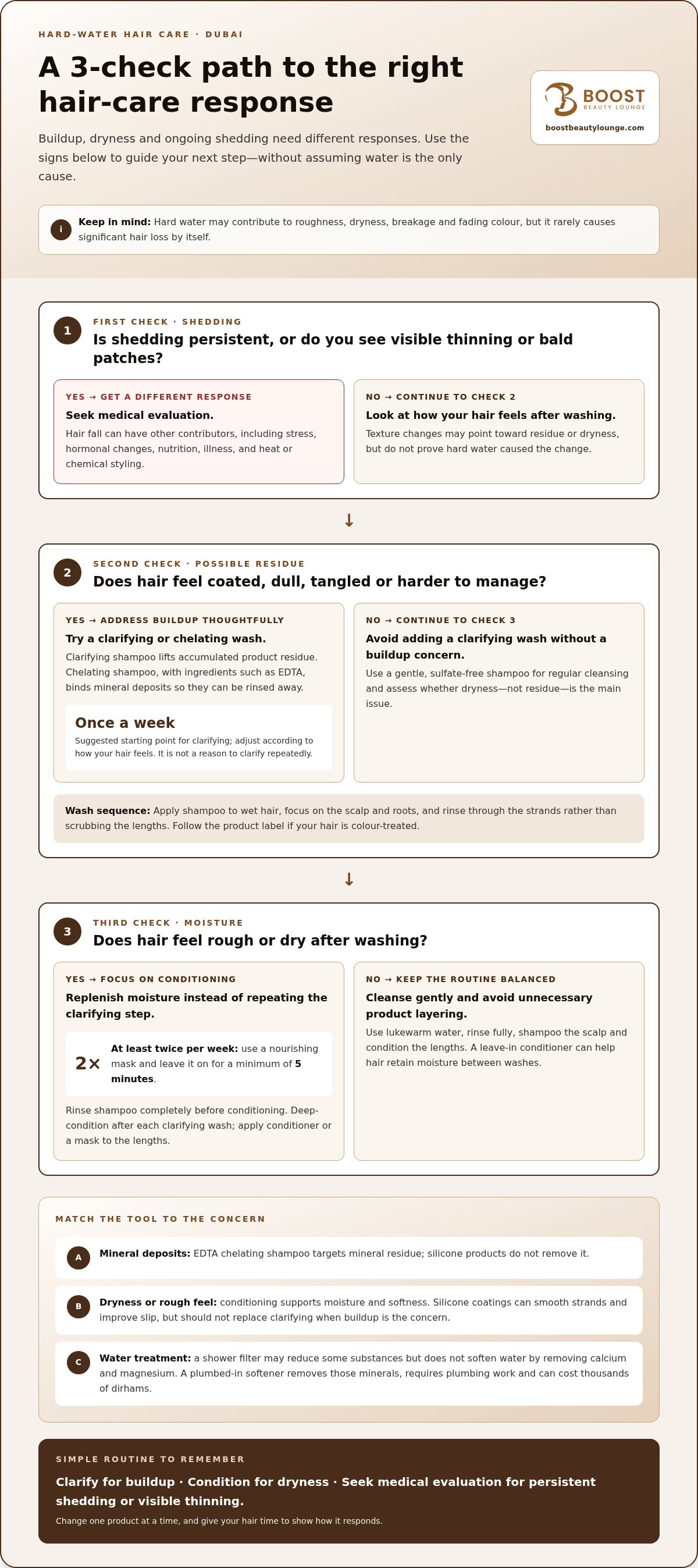
Clarifying shampoo removes accumulated product residue, while chelating shampoo uses ingredients such as EDTA to bind mineral deposits so they can be rinsed away. For hard-water buildup, use a clarifying shampoo once a week, then adjust according to how your hair feels. A weekly wash is a suggested starting point, not a reason to clarify repeatedly.
Apply shampoo to wet hair, focusing on the scalp and roots. Work the lather through the strands as you rinse instead of scrubbing the lengths. If your hair is colour-treated, follow the product label and notice whether frequent cleansing leaves your colour looking or feeling less fresh. Clarifying helps address buildup, but it does not replace moisture care.
Deep Conditioning and Silicone Coatings
Deep conditioning adds moisture after cleansing, while silicone coatings sit on the hair surface to smooth strands and improve slip. EDTA shampoos target mineral deposits; silicone products don’t remove them. A nourishing hair mask at least two times per week, left on for a minimum of 5 minutes, supports moisture and texture. Rinse shampoo completely before applying conditioner.
Choose your approach based on the issue: a chelating wash targets mineral residue, while conditioning helps hair feel less dry. A silicone coating can make detangling easier, but it should not replace clarifying when buildup is the concern. For example, use shampoo as directed, rinse thoroughly, then apply a mask to the lengths. Avoid layering several coating products at once.
Preventing Hard Water Damage
Preventive care means reducing residue without causing unnecessary dryness. To help prevent hard-water damage in Dubai, use a gentle, sulfate-free shampoo for regular cleansing, reserve clarifying shampoo for weekly use, and deep-condition after each clarifying wash. Take lukewarm showers, as very hot water can leave hair feeling drier.
Keep your routine simple: shampoo the scalp, rinse fully, then condition the lengths. If hair feels coated, clarify; if it feels rough after washing, focus on conditioning instead of repeating the clarifying step. A leave-in conditioner can help hair retain moisture between washes. Give the routine time to show how your strands respond, and change one product at a time.
- Use clarifying shampoo once a week to help remove buildup.
- Apply a nourishing mask at least two times weekly and leave it on for a minimum of 5 minutes.
- Rinse shampoo completely before conditioning, and use lukewarm water.
Hair Fall in Dubai: Is Hard Water Secretly Damaging Your Hair?
Hard water can leave mineral residue on hair, but it rarely causes significant hair loss by itself. In Dubai, distinguishing buildup from other causes can help you choose a more useful response.
Hard Water Minerals in Dubai
Hard water contains minerals, mainly calcium and magnesium, which can settle on hair during washing. It also says nearly 99% of Dubai tap water starts as seawater processed through desalination plants. These figures offer context, but the water reaching a household can vary.
Dubai tap water is treated to WHO-aligned drinking-water standards and is safe to drink. That does not mean everyone’s hair responds the same way to repeated washing. Mineral exposure may leave a film that makes strands feel rough, dull or less able to hold moisture. Buildup can affect hair’s condition, but it does not prove that hard water caused shedding.
Mineral Buildup on Hair
Mineral buildup is residue that accumulates on the scalp and hair shaft after repeated exposure to hard water. It may weigh hair down, reduce shine and leave strands feeling dry or tangled. A film can also make moisture harder to penetrate, so conditioning may feel less effective even when you use a familiar product.
Hard water may worsen existing hair concerns, but hair fall usually has several possible causes. Stress, hormonal changes, nutrition, illness, and heat or chemical styling can all contribute. If shedding persists, visible thinning appears, or bald patches develop, seek medical evaluation rather than treating water as the sole cause.
At-home options include a clarifying shampoo used in moderation, regular conditioning and an apple cider vinegar rinse. One suggested rinse combines 2 tablespoons of apple cider vinegar with 1 cup of filtered water, used once a week. It may help lower hair pH, but don’t treat it as a proven replacement for chelating shampoo or as a guaranteed mineral remover.
Do shower filters or water softeners help with hard-water hair problems in Dubai? A shower filter may reduce some substances, but it does not soften water by removing calcium and magnesium. A plumbed-in water softener removes those minerals, but installation requires plumbing work and can cost thousands of dirhams.
To reduce breakage, handle wet hair gently and avoid rough towel-drying after washing. Choose a gentle, sulfate-free shampoo for routine cleansing, then condition the lengths. If you use a filter, remember that it does not remove the minerals responsible for water hardness. Match your approach to the issue: surface residue, dryness and ongoing shedding each call for a different response.
If mineral buildup leaves your hair difficult to manage, professional hair care in Dubai can be a useful next step alongside a considered home routine.
Hard water and hair-product effectiveness
Hard-water minerals can change how washing products behave on hair and skin. The signs matter because residue, irritation and product buildup can have different causes.
Effects on Hair and Scalp
Calcium and magnesium can combine with cleansing ingredients and leave residue during washing. This film may make hair feel rough or coated, while the scalp can feel itchy, flaky or uncomfortable. These effects can make a familiar shampoo seem less effective, even if its formula has not changed.
Skin can react too. A study involving the University of Sheffield and King’s College London found that hard-water minerals bind to soap and shower-gel surfactants, leaving them on skin where they can irritate it. A 2021 systematic review found a consistent association between domestic water hardness and atopic eczema. Association doesn’t establish that water causes every skin symptom.
Hair-strength findings are not uniform. A 2013 study using milder hard water found no significant change in hair strength. So, scalp discomfort or a rough feel can be useful clues, but neither confirms mineral damage nor explains every concern.
Signs of Hard Water Effects
Look for patterns after washing rather than relying on one bad hair day. Persistent roughness despite conditioning, reduced shine, tangling and stubborn product buildup are signs that hard water may be affecting hair. For example, strands that feel coated shortly after rinsing may point to residue.
Scalp dryness or irritation, flaking and discomfort can also occur after repeated exposure. Notice whether symptoms follow washing and persist between washes. These observations can help distinguish a recurring routine-related issue from a temporary change, but they do not prove hard water is the only factor.
Make the comparison practical: notice how your hair feels after a regular wash, then after removing buildup with a suitable clarifying product. If softness returns but your scalp remains uncomfortable, your hair and skin may be responding differently. Persistent irritation needs attention beyond changing shampoo alone.
Effects on Hair-Product Effectiveness
Hard water can interfere with shampoo cleansing and conditioner performance. Minerals may bind with cleansing agents, making shampoo harder to lather and rinse away. Conditioner may also penetrate less effectively when residue coats the strands. As a result, products can seem to sit on the hair instead of providing the expected conditioning.
Try changing one step at a time. Rinse shampoo completely before applying conditioner, and notice whether a product leaves a film or improves softness. A clarifying wash can help remove buildup, while regular conditioning targets dryness. Clarifying too often may leave hair drier, so match your routine to the signs you notice.
Hard water is generally safe for bathing and cleaning, but repeated exposure can affect hair and skin. To prevent unnecessary buildup, use a gentle routine and track changes after washing. If a product suddenly seems ineffective, consider residue and scalp comfort as well as the formula itself.
Hard water-related dryness, breakage, and colour fading
Calcium and magnesium can leave residue on hair during repeated washing. This residue may contribute to dryness, frizz and breakage, especially when cleansing and conditioning products become harder to rinse away.
Dryness and Frizz
Hard-water-related dryness occurs when mineral residue forms a film that makes moisture harder to penetrate. Hair may feel rough after a shower, look less shiny or become frizzy despite regular conditioning. For example, strands that feel coated near the roots but dry through the lengths may need a different cleansing balance.
Shampoo and conditioner can be harder to lather and rinse in hard water. Leftover product and mineral residue can add to a dry, weighed-down feel. Handle hair gently after washing, rinse thoroughly, and condition the lengths to support softness. A shower filter may reduce some substances, but it does not soften water by removing calcium and magnesium.
Hair Breakage
Breakage is hair snapping along the strand, rather than shedding from the root. Hard-water exposure may contribute by leaving hair dry and more prone to tangling, split ends and snapping during brushing. One market estimate attributes a 78% increase in hair breakage to hard water. A 2018 study found repeated hard-water washing reduced hair tensile strength compared with deionised water.
These signs suggest a possible contribution, not a diagnosis for every case of breakage. Heat styling, chemical treatments and rough detangling can also stress hair. If your brush catches on dry ends, detangle gently from the tips upward and avoid pulling through knots. Careful handling paired with moisture-focused conditioning can reduce avoidable strain on fragile strands.
Hard water does not automatically mean your hair will break. The effect depends on repeated exposure, existing dryness and the care routine around each wash. Notice whether roughness and tangling appear after washing and ease when you rinse thoroughly and condition. This pattern can help identify buildup as one factor, rather than assuming it explains every change.
Colour-treated hair can also look dull when mineral or product residue collects on the surface. That does not always mean the colour itself has changed. For example, hair that looks cloudy but feels coated may need residue-focused cleansing, while dry ends need conditioning. Avoid frequent harsh washing: removing buildup and protecting softness require a balanced routine.
Make one change at a time so you can see what helps. After a clarifying wash, use a nourishing mask and handle wet hair gently. If breakage continues despite less heat styling and careful detangling, consider other contributing factors, including chemical processing and stress. A shower filter may be part of your routine, but it cannot remove the calcium and magnesium targeted by water softeners.
Color fading caused by hard water
Hard-water deposits can leave coloured hair looking dull, even when the colour itself has not changed. The distinction matters: buildup sits on the strands, while fading changes the visible colour.
Hard water can make shampoo and conditioner harder to lather and rinse. Mineral deposits and leftover products can build up on the hair, reducing shine and making colour look less vibrant. A market estimate states that hair colour fades 2.3 times faster because of hard water. That figure describes a reported effect, not a prediction for every colour-treated person.
For example, a brown shade that looks cloudy after washing may have residue on its surface. Hair that looks noticeably lighter or less vivid may have undergone a colour change. Both can happen together, so consider appearance and texture before changing your routine. Buildup can leave strands feeling coated, while repeated washing and dryness can make brittle ends more noticeable.
Can hard-water treatments damage coloured, bleached or curly hair? A clarifying or chelating wash can leave hair drier if used too often, and bleached strands may already feel fragile. Follow product directions, avoid repeated cleansing, and condition after washing. Curly hair can also feel drier when residue and moisture loss affect its texture.
Choose your care according to what you notice. If hair feels coated, a clarifying wash can help remove buildup. If the main issue is dry or brittle lengths, focus on conditioning rather than repeating the cleansing step. For coloured hair, follow the care guidance for your colour service and avoid using several strong cleansing products at once.
After a clarifying wash, rinse thoroughly and condition the lengths. This addresses residue while supporting softness. If colour looks dull but the strands feel smooth, compare its appearance in consistent lighting before deciding it has faded. If hair feels rough and tangled, buildup or dryness could be contributing.
Keep a simple record after each wash: note the shampoo used, whether your hair felt coated, and how the colour looked once dry. If a new clarifying product leaves hair feeling brittle, pause its use and return to gentle cleansing and conditioning. Changing one part of your routine at a time makes it easier to identify what improves softness and appearance.
Colour care is a balance between removing deposits and preserving moisture. Frequent harsh cleansing can work against that goal, while leaving buildup untouched can dull the finish. A consistent routine, careful rinsing and conditioning after cleansing help keep the surface cleaner and hair feeling smoother.
Boost Beauty Lounge: Hair Package
Boost Beauty Lounge offers hair-care options for readers ready to move from home care to a salon package. If dryness, dullness or colour concerns persist, the Hair Package may suit a broader hair-care refresh. The Keratin Package, Curl Package and Hair Extension Package address different styling and transformation needs, so choose according to the result you’re looking for.
Hard-water care still depends on a balanced routine: manage buildup gently and support softness with conditioning. A salon package can complement that routine, but it doesn’t replace a clarifying wash or explain persistent hair fall. For an option that aligns with your hair goals, visit Boost Beauty Lounge online.
Choose Your Next Hair-Care Step
Your next step can be guided by the result you want, whether that’s a softer feel, a smoother finish or colour that looks its best. If you’re considering a hair treatment for hard water damage in Dubai, think about your priorities and share them when seeking hair advice. Your colour history, styling habits and current hair condition can help shape a routine that feels right for you.
A hair treatment for hard water damage in Dubai is one part of a considered routine, not a substitute for addressing persistent hair fall. If you’d like help choosing a direction that suits your hair goals, contact Boost Beauty Lounge for hair advice. Take your next step with confidence and keep building towards the look you want.
Frequently Asked Questions
Can I use tap water if I use the right products?
Yes, you can keep using tap water and adapt your routine to your hair’s response. Dubai tap water is treated to WHO-aligned drinking-water standards and is safe to drink; mineral exposure can still affect hair during washing. For example, if coloured lengths feel coated after rinsing, focus on periodically removing residue and conditioning afterward. Products can help manage buildup and dryness, but they do not change the water itself.
How quickly would I notice a difference?
Hair may feel softer after 1-2 washes, while improvement after addressing hard-water-related issues typically shows within 4-8 weeks. These are different kinds of changes: softness can shift before you see a lasting difference in manageability. Track one sign, such as tangling after washing, rather than changing several products together. That makes it easier to tell whether your routine is helping or simply changing how your hair feels temporarily.
How does hard water damage hair, and what are the signs?
Mineral residue can coat strands, making hair feel rough, dull or harder to condition. Notice whether tangles return after each wash, conditioner seems less effective, or your scalp feels dry or irritated. For example, hair may feel coated near the roots but dry at the ends. These clues suggest a possible water-related effect, but they do not prove hard water caused every change.
How can I tell if Dubai tap water is causing my hair problems?
Look for a repeatable connection between washing and symptoms rather than relying on a single wash. Briefly note when roughness, tangling or scalp discomfort appears and whether it eases after a buildup-focused wash. Water mineral levels can vary during distribution, so different households may notice different effects. Also consider colour services, heat styling, stress and health changes before attributing hair fall to water alone.
What hair treatments remove hard water mineral buildup?
Chelating shampoo is designed to bind mineral deposits so they can be rinsed away; clarifying shampoo focuses more broadly on residue from products and washing. A nourishing mask helps address dryness afterward, but does not remove minerals. For example, if hair feels coated, use a suitable chelating or clarifying product as directed, then condition. Avoid repeating strong cleansing steps just because one wash did not restore softness immediately.
What is the difference between chelating, clarifying, and detox hair treatments?
Chelating products target mineral deposits, while clarifying shampoos lift a broader mix of product buildup and residue. “Detox” is a general label, not a precise description of what a formula removes, so read the ingredients and directions. For instance, choose a chelating product when mineral buildup is your main concern. Follow cleansing with conditioning, since removing residue and supporting moisture are separate steps.
Which Dubai salons offer hard water hair treatments, and what do they cost?
Boost Beauty Lounge offers hair-care packages, including Keratin, Curl and Hair Extension packages. These are hair services, not a promise of a dedicated mineral-removal treatment; chelating shampoo is the targeted at-home option for deposits. The appropriate salon service depends on your hair goals and condition. Pricing depends on the selected service and hair requirements, and is provided after a quote request.
What ingredients should I look for or avoid in hard water hair products?
Look for EDTA on a chelating shampoo’s ingredient list, since EDTA can bind minerals for rinsing. For routine washing, choose a gentle shampoo suited to your scalp and follow cleansing with conditioner or a nourishing mask. Avoid using clarifying products more often than directed, especially if your hair is coloured, bleached or already brittle. Product labels and your hair’s response matter more than “detox” wording alone.
Ready to book this look?
See this package